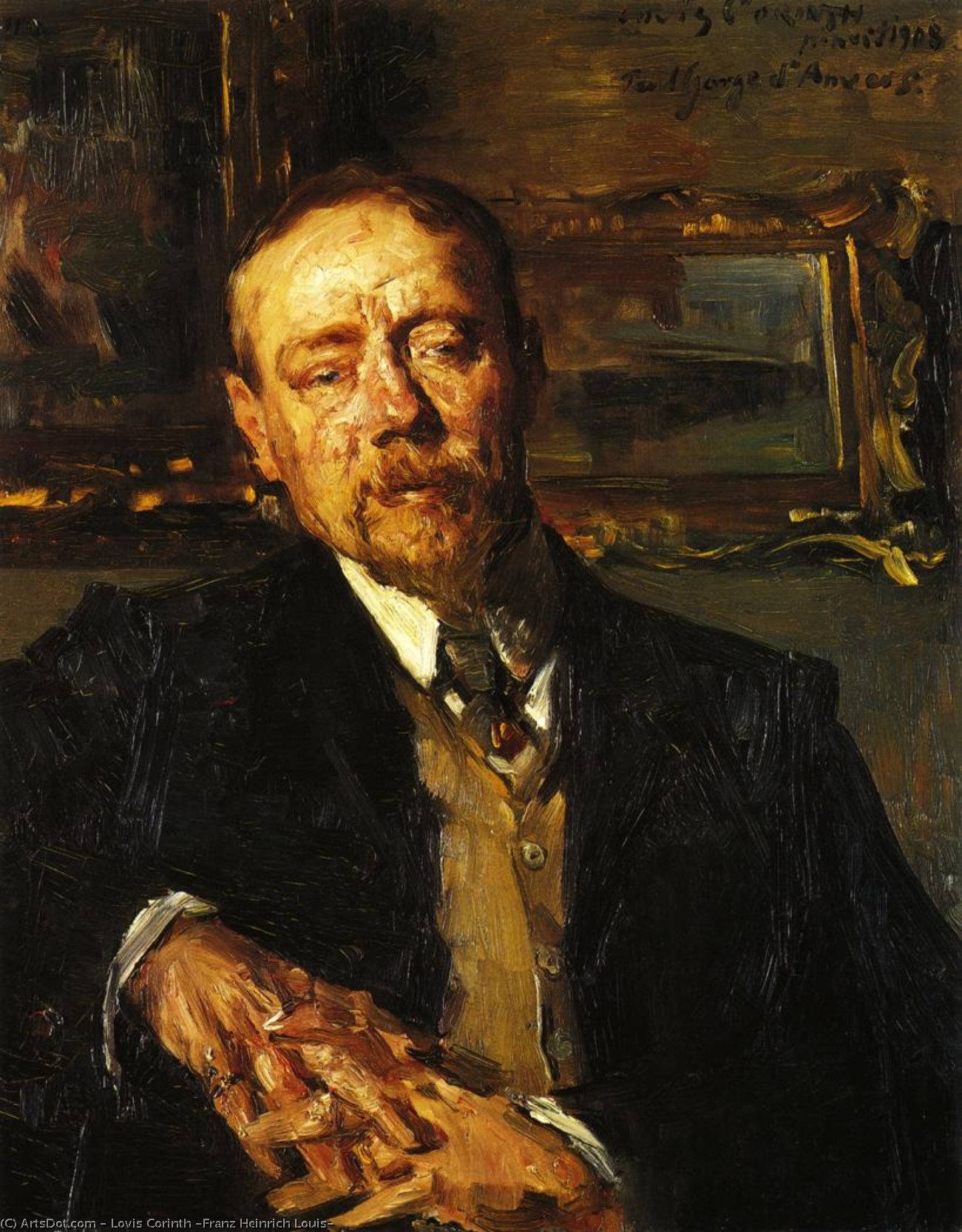
Lovis Corinth’s “Portrait of Eugène Gorge,” completed in 1908, exemplifies Expressionism's bold brushstrokes and emotive color palettes. Capturing Eugene Gorge’s contemplative gaze amidst studio details—a couch symbolizing creative introspection—this Munich masterpiece showcases Corinth’s masterful observation and symbolic artistry.
Tauwade
Nemačka
Lovis Corinth
Franz Heinrich Louis Corinth
Istražite umetnost Lovisa Korinta (1858-1925), nemačkog slikara koji je spaja impresionizam i ekspresionizam. Poznat po portretima, pejzažima i surovoj reprezentaciji života – uključujući 'Ubistvo u jato'. otkrijte njegov nasleđe kao predsednik Berlinske Sekecije.
Lovis Corinth, Franz Corinth, nemački slikar, impresionizam, ekspresion
Minhen
Nemačka
MIX & MATCH]
Istražite modernu i savremenu umetnost u Staatsgalerie Moderner Kunst, delu Pinakothek der Moderne. Pikaso, Matisse, Kandinski i Bauhaus dizajni čekaju vas! 🎨🇩🇪
Minhen muzej moderne umetnosti, moderna umetnost, savremena umetnost, Pinakothek der Moderne, Pikaso, Matisse, Kandinski, Bauhaus, nemačka umetnost, skulpture, fotografije, arhitektura, izložbe umetnosti
A Window Into Corinth’s Soul: Examining Lovis Corinth's Portrait of Eugène Gorge
Lovis Corinth’s “Portrait of the Painter Paul Eugène Gorge,” completed in 1908, transcends mere representation; it embodies a pivotal moment in German Expressionism and offers a profound glimpse into Corinth’s artistic vision. Housed within the Staatsgalerie Moderner Kunst in Munich, this oil on canvas painting isn't simply a likeness of another artist—it’s a carefully constructed meditation on identity, creativity, and the complexities of human experience.
- Artist: Lovis Corinth (Franz Heinrich Louis) – A Titan of Late Romanticism
- Year Created: 1908
- Medium: Oil on Canvas
- Dimensions: 80 x 65 cm
- Location: Staatsgalerie Moderner Kunst, Munich
Stylistic Innovation and Expressionist Influence
Corinth’s oeuvre is characterized by a distinctive blend of Impressionism's luminous color palettes and Expressionism’s emotive brushstrokes. “Portrait of Eugène Gorge” exemplifies this fusion perfectly. The artist eschews academic precision in favor of capturing the essence of his subject—Eugene Gorge—through bold, textured strokes that convey both psychological depth and palpable energy. Corinth’s masterful use of chiaroscuro – dramatic contrasts between light and shadow – sculpts Gorge's form, emphasizing musculature and conveying a sense of inner turmoil.
Detailed Observation and Symbolism
The painting’s meticulous attention to detail is remarkable. Corinth painstakingly renders Gorge’s facial features with astonishing accuracy, capturing subtle nuances of expression that hint at contemplation and perhaps melancholy. The inclusion of a couch in the background serves as more than just compositional element; it symbolizes the artist's studio—a space dedicated to introspection and creative endeavor. Furthermore, Gorge’s attire – formal suit and tie – speaks to his professional identity and reinforces the portrait’s status as a document of its time.
Historical Context: The Dawn of Expressionism
"Portrait of Eugène Gorge" stands at the cusp of artistic revolution. Corinth was actively engaged in exploring new stylistic approaches, rejecting the conventions of realism that dominated earlier generations. This painting reflects the broader anxieties and aspirations of the era—a desire to confront uncomfortable truths about human nature and to express emotions with uncompromising honesty. It’s a testament to Corinth's belief that art should serve as a conduit for psychological insight and emotional resonance.
A Legacy of Emotion and Artistic Integrity
Ultimately, “Portrait of Eugène Gorge” remains a compelling artwork because it captures something fundamental about the human condition: the struggle to define oneself amidst external pressures and the unwavering pursuit of artistic truth. Corinth’s legacy extends far beyond its aesthetic qualities; it embodies a commitment to emotional sincerity and intellectual rigor—values that continue to inspire artists and viewers alike.