A Masterpiece of Defiance: The Dramatic World of Lucas Cranach
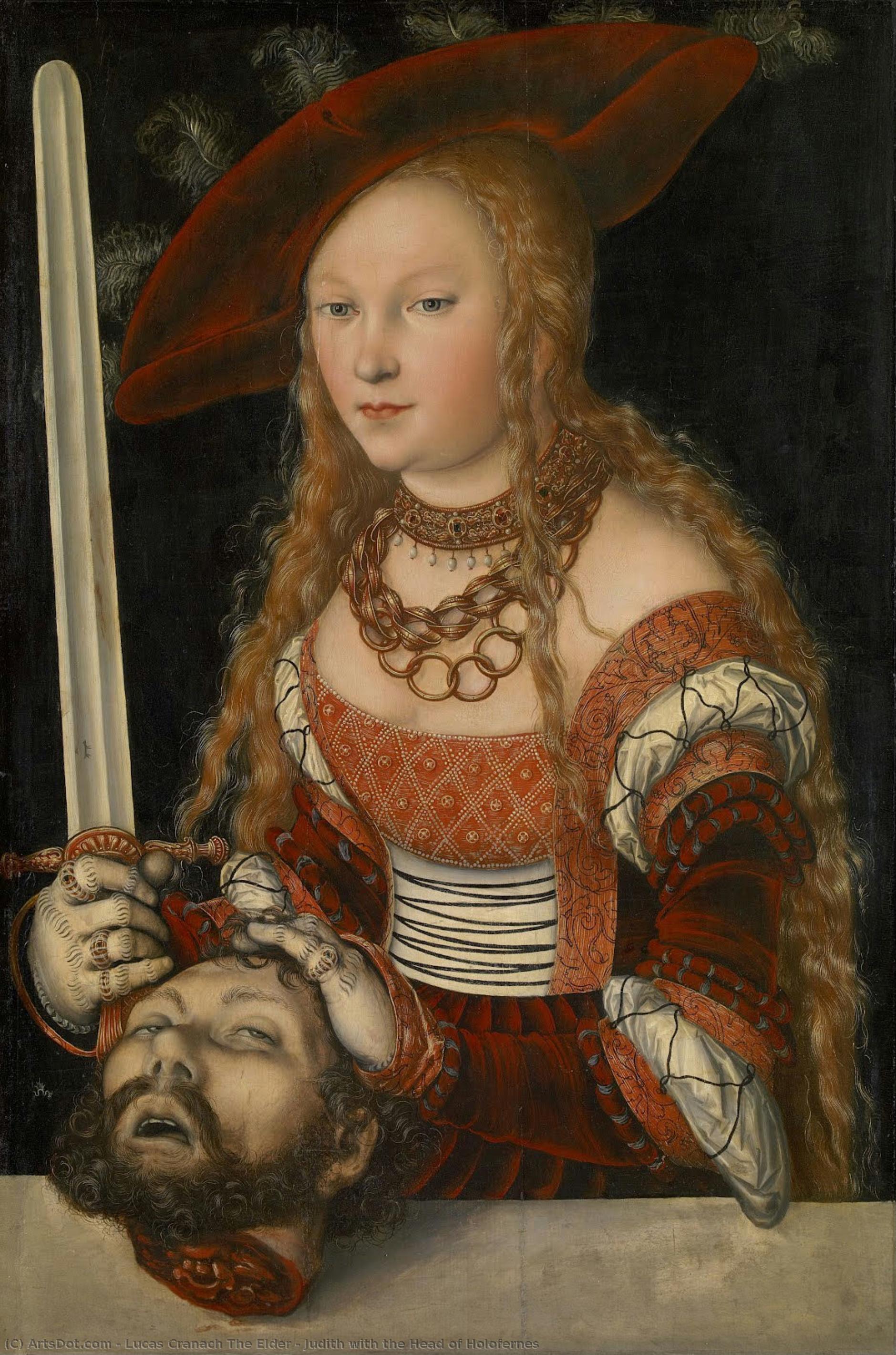
In the heart of the German Renaissance, amidst the religious tremors of the Reformation, Lucas Cranach the Elder captured a moment of profound psychological and political tension. His Judith with the Head of Holofernes is far more than a mere biblical illustration; it is a visceral encounter with courage and conviction. Painted around 1540, this work serves as a potent emblem of Protestant defiance during the tumultuous era of the Schmalkaldic League. When one gazes upon Judith, one does not simply see a heroine from scripture, but a symbol of righteous strength standing against overwhelming oppression. The painting breathes with the spirit of its time, reflecting the socio-political anxieties and the burgeoning humanist ideals that defined the Saxon court under Frederick III.
Cranach’s technical approach in this masterpiece distinguishes him from the more illusionistic masters of the Venetian school. Rather than pursuing deep, atmospheric perspective, he embraces a strikingly two-dimensional style that prioritizes decorative splendor and meticulous detail. This deliberate flatness serves to heighten the dramatic tension, drawing the viewer's eye directly to the central, harrowing act. Through the masterful use of chiaroscuro, Cranach sculpts form out of shadow, creating an atmosphere of palpable suspense. The textures are rendered with breathtaking precision—from the heavy, opulent folds of Judith’s gown to the unsettling, glistening flesh of the severed head. His palette is dominated by vibrant, commanding reds, a choice that mirrors the fervor of religious conviction and underscores the violent, transformative nature of the scene.
Symbolism and the Emotional Resonance of the Renaissance
Beyond its striking visual impact, the painting is a complex tapestry of layered symbolism. Judith herself stands as an icon of unwavering faith, her very presence a defiance of societal expectations to protect her people. Her gaze, directed toward the gruesome trophy in her hand, invites the viewer into a silent dialogue about the cost of liberty and the weight of duty. The composition creates a haunting duality: the serene, almost ethereal beauty of the woman contrasted against the brutal reality of Holofernes’ decapitation. This juxtaposition is designed to provoke deep contemplation, making the piece an intellectually stimulating addition to any serious collection.
For the discerning collector or interior designer, this reproduction offers more than just aesthetic beauty; it provides a focal point of historical gravity and emotional depth. The painting's ability to command a room lies in its narrative power—the way it captures the intersection of beauty and death, of grace and violence. Whether placed in a grand gallery or a sophisticated contemporary living space, Cranach’s work acts as a window into a transformative era of human history, offering an enduring sense of drama and a timeless testament to the strength of the human spirit.