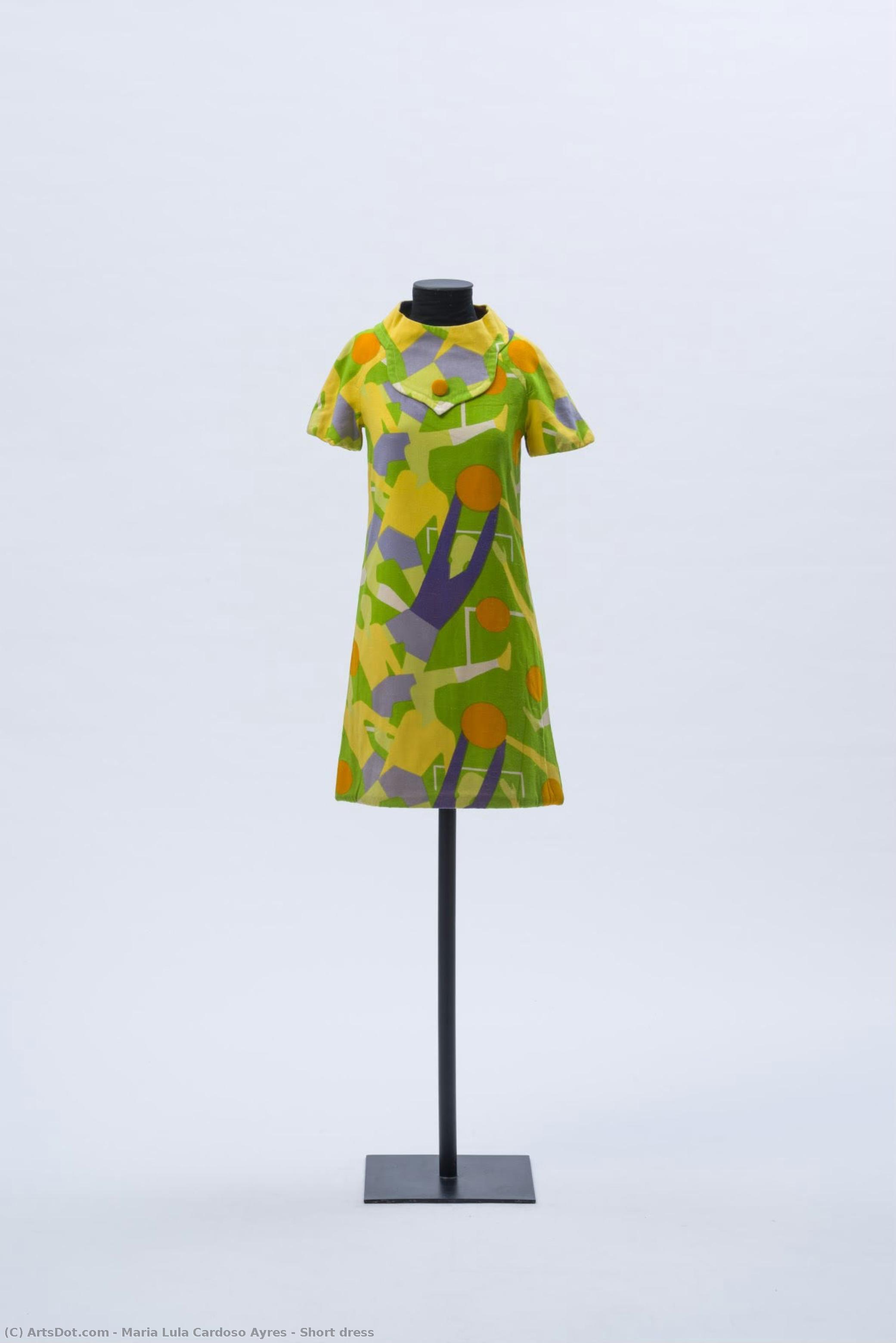
maria lula cardoso ayres (1932-2018) was a Brazilian artist known for vibrant textile art, short dresses & paintings reflecting Pernambuco culture. Founder of Recife's School of Fine Arts, she blended abstract and figurative styles, leaving a lasting
Posetite Muzej umetnosti São Paula Assis Chateaubriand: Značajno umetničko muzej koje prikazuje evropske i brazilske majstorske dela u arhitektskom čudu Linu Bo Bardiju. otkrijte raznovrsne kolekcije i živopisna kulturna iskustva.
Muzej umetnosti São Paula Assis Chateaubriand, Muzej umetnosti, São Paulo, brazilska umetnost, Renoir, Van Gogh, Lina Bo Bardi, arhitektura, moderna umetnost, evropska
Short Dress - A Reflection of Brazilian Modernism
The artwork "Short Dress," created by Maria Lula Cardoso Ayres in 1966, stands as an emblem of Brazilian textile art during the vibrant era of mid-century modernism. More than just a garment, it embodies the spirit of innovation and artistic dialogue that characterized São Paulo’s cultural landscape at the time—a testament to Pietro Maria Bardi's vision for MASP’s Rhodia Collection. This collection aimed to showcase the confluence between art and fashion, recognizing the transformative potential of collaborative projects driven by visionary minds like Lívio Rangan.
- Artist: Maria Lula Cardoso Ayres (1932-2018)
- Year Created: 1966
- Museum: Museu de Arte de São Paulo Assis Chateaubriand (MASP)
- Movement/Style: Abstract Expressionism & Figurative Art
- Material: Bouclê synthetic fabric
The dress itself is a masterful example of textural exploration. Crafted from bouclé synthetic fabric—a material championed by Rhodia during its promotional campaigns—Ayres skillfully manipulated the weave to achieve an undulating surface reminiscent of organic forms. This deliberate choice reflects the broader artistic trends of the period, where artists sought inspiration in nature and experimented with unconventional materials to convey emotion and dynamism. The fabric’s subtle sheen contributes to a luminous quality that enhances the dress's visual impact.
Composition & Color Palette: Embracing Bold Geometric Forms
The composition is strikingly simple yet profoundly effective, centering on a mannequin positioned against a pristine white backdrop—a technique favored by photographers of the time to maximize focus and minimize distractions. This symmetrical arrangement underscores the dress’s elegance and draws immediate attention to its design. Furthermore, Ayres employed a bold color palette dominated by yellow, accented with splashes of green, orange, and purple. These hues are distributed in an irregular pattern—a deliberate departure from rigid geometric forms—creating visual interest and mirroring the spirit of abstract expressionism prevalent during the period. The inclusion of grey adds depth to the overall aesthetic.
Symbolic Significance: Celebrating Brazilian Identity
“Short Dress” transcends its materiality, serving as a symbol of Brazilian cultural pride and artistic ambition. Ayres’s work aligns with São Paulo Museum of Art's Rhodia Collection’s mission—to explore the intersection between art and industry—demonstrating how creative endeavors can propel societal progress. The dress’s design embodies optimism and energy, reflecting the dynamism of Brazil during the 1960s—a time marked by rapid urbanization and cultural experimentation. Ayres's incorporation of geometric shapes—circles—further emphasizes this connection to modern artistic principles.
Technique & Craftsmanship: A Legacy of Innovation
Ayres’s technique showcases meticulous attention to detail, reflecting the dedication to craftsmanship that characterized Brazilian textile art in the mid-century era. The fabric was skillfully draped onto the mannequin, highlighting its texture and form—a testament to Ayres's artistic vision and her mastery of material manipulation. The resulting image captures a moment frozen in time, embodying the aesthetic ideals of MASP’s Rhodia Collection and securing Ayres’s place as a pioneer of Brazilian textile art.