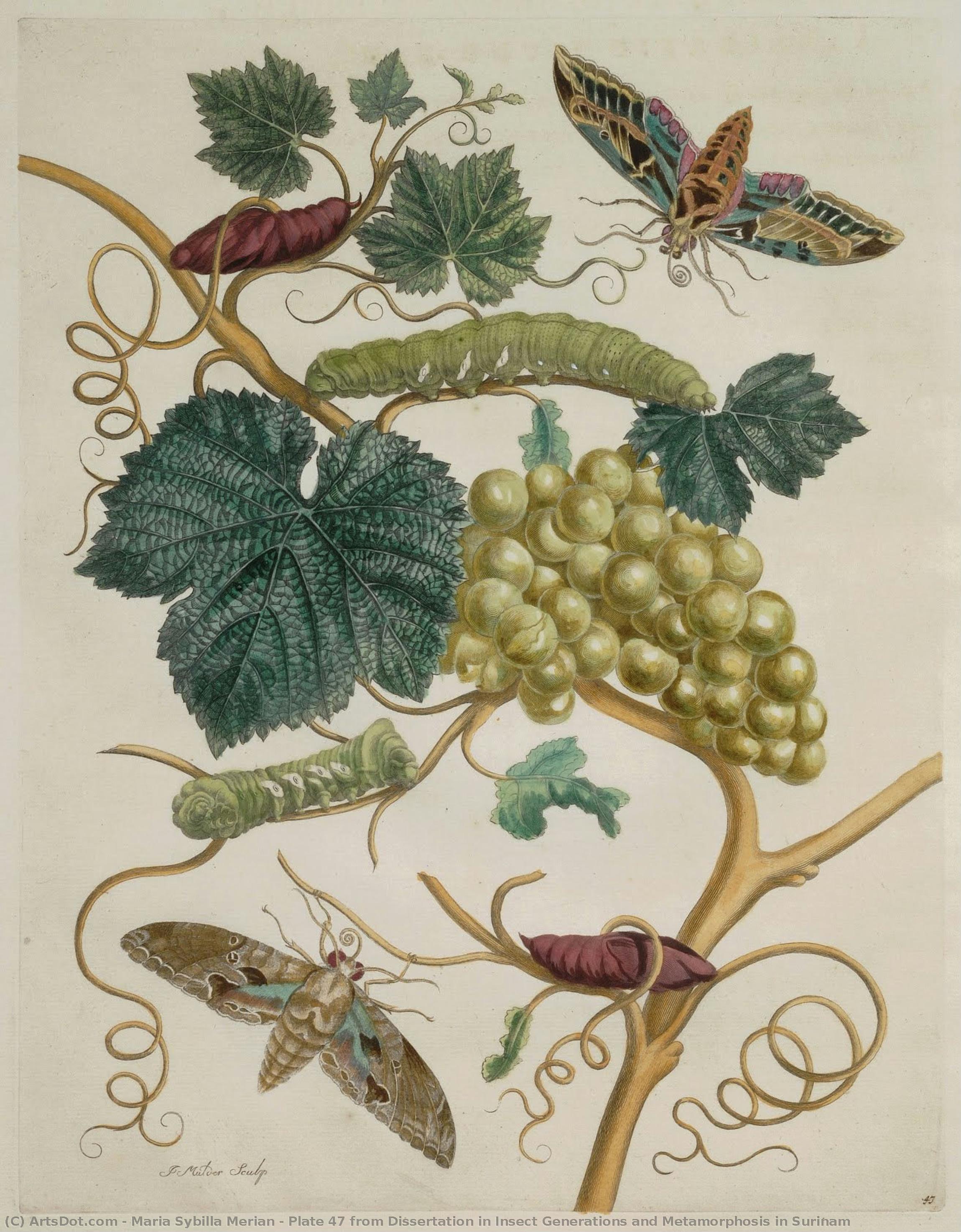
A Window Into Surinam’s Insect Realm: Exploring Maria Sibylla Merian's Plate 47
Maria Sybilla Merian stands as an unparalleled pioneer in the annals of scientific illustration—a woman who dared to challenge societal expectations and forge her own path toward groundbreaking discoveries. Born in Frankfurt in 1647, Merian’s life was marked by intellectual fervor and a relentless pursuit of knowledge that would ultimately reshape our understanding of entomology and botanical art alike. Her journey began amidst the vibrant tapestry of European trade and scholarship, where she honed her artistic skills under the tutelage of her father, Matthäus Merian the Elder—a celebrated engraver and publisher—and stepfather, Jacob Marrel, a masterful still life painter. This formative environment instilled in her not only technical proficiency but also an unwavering appreciation for meticulous observation and artistic expression.
- The Dissertation That Changed Perception: Merian’s ambition extended far beyond mere artistry; she embarked on a daring expedition to Surinam—then Dutch Guiana—in 1699, accompanied by her husband Andreas Sibyllae Theophila Lemniscus Bernoulli. This voyage represented an audacious step for women of the era, who faced considerable obstacles in pursuing scientific endeavors. Yet, Merian persevered, driven by an unwavering conviction that detailed botanical and entomological studies could illuminate the interconnectedness of nature and advance scientific understanding.
- A Symphony of Detail: Plate 47 from her magnum opus, “Dissertation in Insect Generations and Metamorphosis,” exemplifies Merian’s extraordinary artistic vision. The painting captures a microcosm of Surinam's biodiversity—a lush landscape populated by butterflies, grapes, leaves, and vines—each element rendered with breathtaking precision.
Style & Technique: Merian’s approach to illustration was revolutionary for its time. Rejecting the prevailing conventions of artistic representation, she embraced a style characterized by realism and scientific accuracy. Utilizing mezzotint engraving—a technique that allowed for tonal gradations and subtle shading—Merian painstakingly recreated the textures and colors of her subjects with unparalleled skill. The meticulous layering of ink on copper plates ensured that every detail was faithfully reproduced, creating an image that transcends mere visual beauty and embodies the spirit of scientific inquiry.
Historical Context:
The 17th century witnessed a burgeoning interest in natural history fueled by discoveries made during voyages of exploration. Scientists like Merian recognized the importance of documenting the natural world with artistic precision, arguing that illustrations could communicate complex scientific concepts more effectively than text alone. Her dissertation challenged prevailing theories about spontaneous generation and championed the concept of metamorphosis—the transformative process by which insects develop from larvae into adult forms—laying the groundwork for modern entomology.
Symbolism & Emotional Impact:
Beyond its technical brilliance, Plate 47 resonates with profound symbolic significance. The butterflies depicted represent transformation and renewal—themes central to Merian’s scientific observations and artistic sensibilities. Their vibrant colors convey a sense of wonder and delight, inviting viewers to contemplate the beauty and complexity of the natural world. Furthermore, the inclusion of grapes symbolizes abundance and fertility—a visual reminder of Surinam's rich agricultural heritage.
Where To Find It:
Plate 47 is currently housed at the National Museum of Women in the Arts (Washington, United States), offering visitors a chance to experience firsthand the legacy of Maria Sibylla Merian’s artistic and scientific achievements. Reproductions of this iconic artwork are available from reputable art dealers and online platforms, allowing collectors and interior designers alike to bring a piece of Surinam's botanical splendor into their homes.