A Window into a Lost World: Marianne North’s “The Chumpa or Champak”
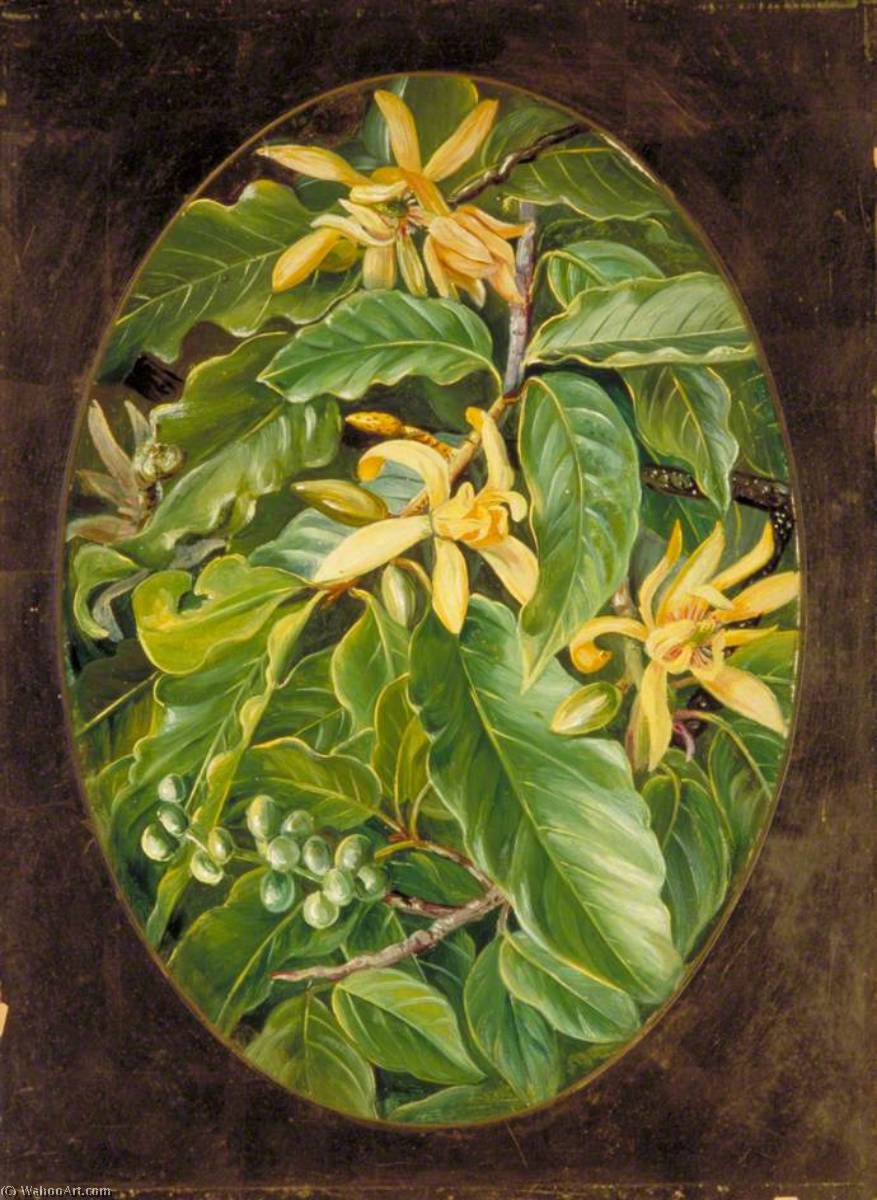
“The Chumpa or Champak,” painted in 1878 by the intrepid Victorian artist Marianne North, is more than just a botanical illustration; it's a vibrant portal to a remote corner of Southeast Asia. This captivating work transports us to the lush jungles of Siam (modern-day Thailand), where North meticulously captured the exquisite beauty of the Champak tree – *Magnolia champaca* – a species revered for its intoxicating fragrance and sacred significance in local traditions. The painting isn’t merely a depiction of flora; it's an immersive experience, brimming with the humid air, dappled sunlight, and exotic scents of this hidden world.

(Image source: Art UK)
A Pioneer’s Palette: Technique and Style
North's artistic approach was remarkably innovative for her time. Rejecting the prevailing academic styles, she embraced a vibrant, almost Impressionistic palette – a deliberate choice to capture not just the *appearance* of the Champak but also its essence. Her brushstrokes are loose and expressive, conveying movement and light with remarkable skill. She employed a technique known as “direct painting,” working directly onto cardboard, which allowed for quick execution and a sense of immediacy. The layering of colors is masterful, creating an astonishing depth and luminosity that seems to radiate from the canvas. Notice how she expertly renders the delicate textures of the leaves, the glossy sheen of the fruit, and the intricate patterns of the bark – all achieved with a remarkably subtle yet confident hand.
A Journey of Discovery: Context and Inspiration
Marianne North’s life was one of extraordinary adventure. Driven by an insatiable curiosity and a deep respect for the natural world, she embarked on a series of expeditions across Asia, Africa, and South America over nearly two decades. Unlike many artists of her era who relied on patrons or established institutions, North funded her travels herself, demonstrating remarkable independence and determination. Her journeys weren’t simply about collecting specimens; they were deeply personal explorations fueled by a desire to document the world's botanical diversity before it was irrevocably altered by colonization and industrialization. The Champak painting is a testament to this spirit of exploration – a vibrant snapshot of a fleeting moment in time, captured with meticulous detail and infused with North’s profound appreciation for beauty.
Symbolism and Significance
The Champak tree holds immense cultural significance in Southeast Asia. Its intoxicating fragrance has long been associated with spirituality and ritual, used in religious ceremonies and offerings. In Thai culture, it is considered a symbol of purity, fertility, and good fortune. North’s painting subtly reflects this symbolism, inviting the viewer to contemplate not only the beauty of the plant but also its deeper cultural meaning. The arrangement of the flowers and fruit – particularly the abundance of blossoms – speaks to themes of prosperity and renewal. The inclusion of banana-like fruits hints at the tropical setting and adds a touch of local flavor to this otherwise exotic scene.
A Legacy Preserved: The Marianne North Gallery
North’s dedication to documenting the world's flora culminated in the creation of her gallery at Kew Gardens, London – a remarkable collection of over 800 botanical paintings. This extraordinary legacy ensures that her work continues to inspire and educate generations of art lovers and scientists alike. “The Chumpa or Champak” stands as a particularly poignant example of North’s artistic vision, offering a glimpse into a lost world and celebrating the enduring beauty of the natural realm.