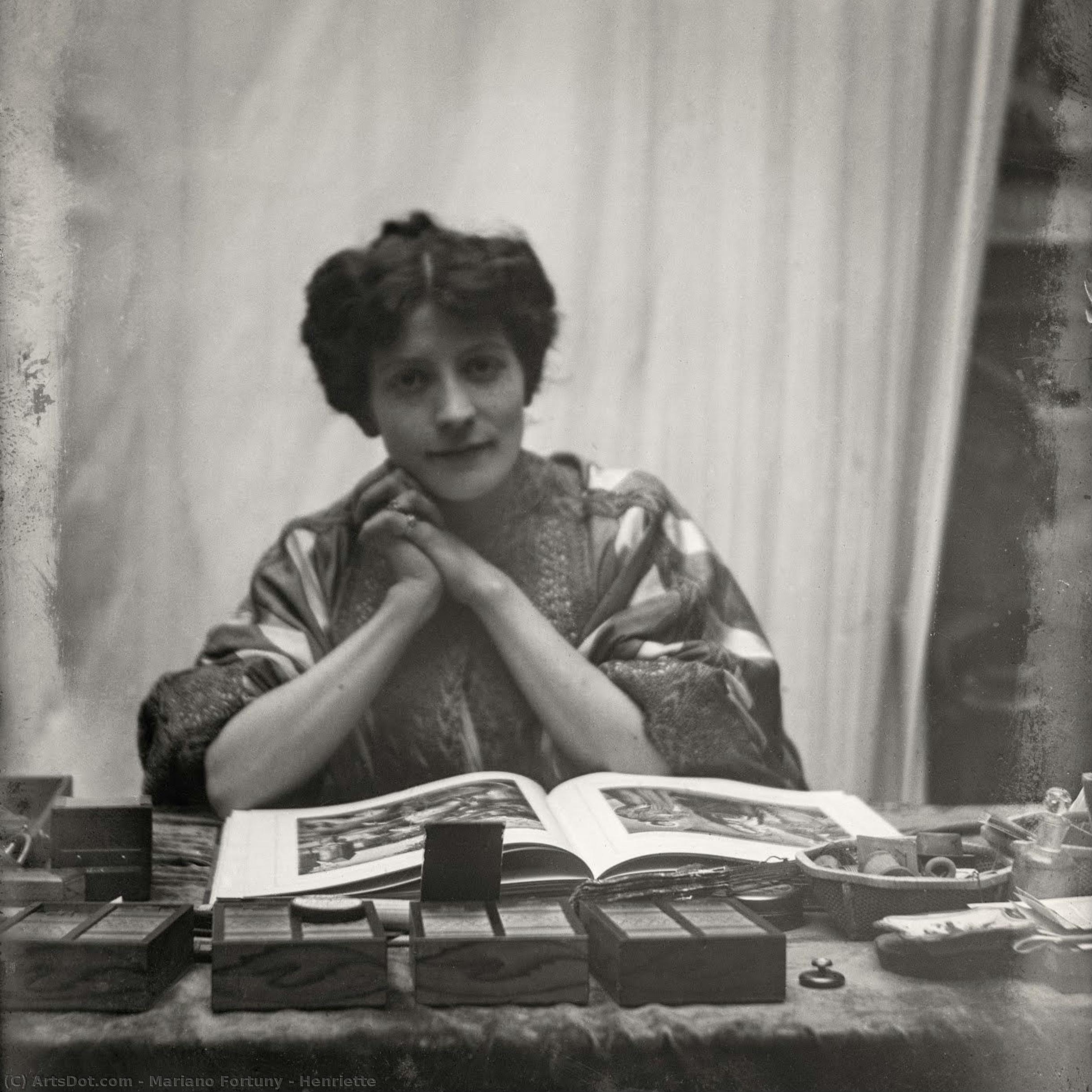
A captivating black and white portrait by Mariano Fortuny circa 1910 captures Henriette's contemplative gaze amidst scholarly pursuits, showcasing the Spanish artist’s early 20th-century style and a timeless study of intellect and emotion – discover this exquisite reproduction.
A Portrait of Quiet Contemplation: Mariano Fortuny’s “Henriette”
Mariano Fortuny's "Henriette," captured in 1910, is more than just a portrait; it’s a meticulously crafted tableau of intellectual pursuit and introspective beauty. Executed during a pivotal moment in artistic history – the early years of the 20th century – this black-and-white photograph embodies Fortuny's revolutionary approach to lighting and his fascination with creating immersive theatrical experiences, concepts that would later define his iconic textiles and decorative schemes. The image depicts Henriette, seated before an open book, a scene brimming with quiet contemplation and hinting at the profound knowledge contained within its pages. Fortuny’s meticulous attention to detail – from the grainy texture of the photograph itself to the delicate folds of her scarf – immediately draws the viewer into this intimate moment.
Technical Mastery: The Fortuny Process
- The photograph's stark monochrome palette, achieved through a wet plate collodion process, is not merely stylistic; it’s a testament to Fortuny’s groundbreaking techniques. This demanding photographic method, prevalent at the time, required immediate exposure and meticulous control over light and chemicals, resulting in an image characterized by its rich textures and subtle tonal variations. The grainy quality isn't a flaw but rather a direct consequence of this process, adding to the photograph’s tactile feel and documentary authenticity.
- Fortuny’s mastery extended beyond simply capturing an image; he engineered it. His innovative use of reflected light, detailed in his treatise “Eclairage Scenique,” is evident here – the gentle illumination highlighting the book's pages and casting soft shadows across Henriette’s face creates a sense of depth and drama, mimicking the effects achieved in his cyclorama domes for theatrical productions.
- The composition itself—a carefully balanced medium shot with the open book acting as a visual anchor—demonstrates Fortuny’s understanding of pictorial space and his ability to guide the viewer's eye through the scene.
Symbolism and Emotional Resonance
“Henriette” transcends a simple portrait; it’s laden with symbolic meaning. The open book represents knowledge, learning, and intellectual curiosity – qualities deeply valued in Fortuny's era. Henriette’s pensive expression, directed downwards, suggests deep thought or perhaps a touch of melancholy, inviting the viewer to share in her quiet introspection. The scattered objects on the table—boxes and other items—add layers of meaning, hinting at a creative workspace and the tools necessary for intellectual exploration. The overall effect is one of serene contemplation, a timeless image that speaks to the enduring human desire for knowledge and understanding.
Historical Context: Fortuny’s Vision
Mariano Fortuny's work emerged from a fascinating confluence of influences – his early training as a painter, his fascination with theatrical design (particularly his cyclorama domes), and his deep appreciation for the beauty of textiles. His invention of the fortuny cyclorama dome revolutionized stage lighting, allowing for seamless transitions between scenes and creating immersive environments. “Henriette” reflects this broader vision: a desire to capture not just likeness but also atmosphere and emotion, anticipating many of the principles that would later define modern portraiture. This photograph represents a crucial moment in Fortuny’s career, solidifying his reputation as an innovator and a master of light and composition.