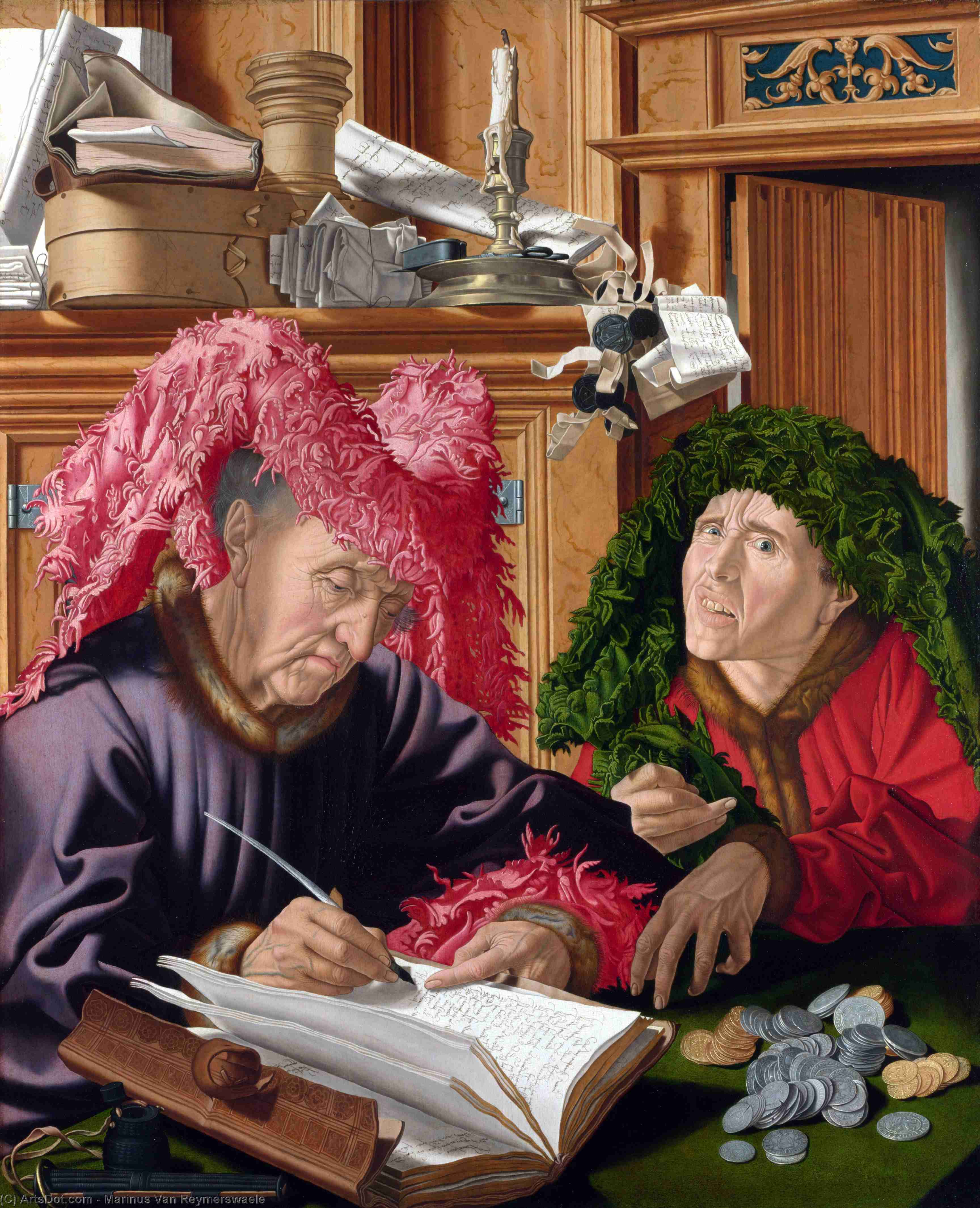
A striking Northern Renaissance satire of greed and corruption, this oil painting by Marinus van Reymerswaele captures two tax collectors at work, inviting you to bring this piece of history into your collection.
The painting "
Two Tax Gatherers" by
Marinus van Reymerswaele is a striking example of Northern Renaissance art, characterized by its vivid depiction of two tax collectors engaged in their work. Created in the 16th century, this masterpiece is a commentary on the greed and corruption of tax officials during that time.
Artistic Style and Technique
The painting showcases
Marinus van Reymerswaele's unique style, which blends elements of realism and satire. The use of oil on oak wood gives the piece a sense of depth and texture, while the attention to detail in the depiction of the tax collectors' clothing and surroundings adds to the overall sense of realism. You can find more information about
Marinus van Reymerswaele and his works on
Marinus van Reymerswaele.
Symbolism and Meaning
The painting is rich in symbolism, with the two tax collectors representing greed and corruption. The
National Gallery notes that the clothing worn by the tax collectors is old-fashioned, adding to the sense of satire and social commentary. The use of manuscripts and legal documents in the background serves as a reminder of the tax collectors' role in society.
- The painting is a prime example of Northern Renaissance art, characterized by its attention to detail and use of symbolism.
- The Two Tax Gatherers is a commentary on the social issues of the time, including greed and corruption.
- The painting's use of oil on oak wood gives it a sense of depth and texture, making it a unique piece in the world of art.
ArtsDot.com offers handmade oil painting reproductions of "
Two Tax Gatherers" by
Marinus van Reymerswaele, allowing art lovers to own a piece of history. You can also find more information about the artist and his works on
Two Tax Gatherers.
The "
Two Tax Gatherers" is a masterpiece that continues to captivate art lovers to this day, offering a glimpse into the social issues and artistic styles of the 16th century.