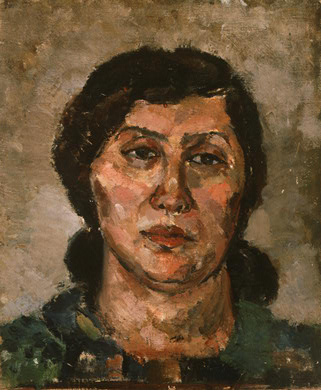
Head of Woman (Sonia Rothkowitz)

Explore Mark Rothko’s ‘Head of Woman (Sonia Rothkowitz)’ – a poignant early 20th-century portrait in earthy tones & expressive brushwork. Discover its emotional depth & unique style.


Марк Ротко (1903 - 1970)

Mark Rothko je bio američki umetnik koji je poznat po svojim velikim bojnim poljima – monumentalnim slikama koje su osvojile gledaoce intenzivnom emocionalnom snagom. Najvažnije njegove slike uključuju "No. 10 (1950)", Seagram Murale i Rothko Chapel, koje su revolucionisale umetnost druge polovine veka i ostavio nezaboravno mesto u istoriji moderne umetnosti.

Head of Woman (Sonia Rothkowitz): A Meditation on Grief and Color

Mark Rothko’s “Head of Woman (Sonia Rothkowitz),” painted in 1932, stands as a poignant testament to the artist's exploration of profound emotional themes. This early work exemplifies Rothko’s signature style – monumental rectangular blocks of color—a technique that prioritizes feeling over representation and invites contemplation rather than visual analysis.

  • Subject Matter: The portrait depicts Sonia Rothkowitz, Mark Rothko's wife, rendered in a simplified form against a subtly textured background. Rothko deliberately eschewed detailed anatomical accuracy, opting instead for an abstracted depiction that emphasizes the essence of human presence.
  • Style & Technique: Rothko’s method involved applying thick layers of oil paint—known as impasto—to create palpable textural surfaces. These blocks of color are not blended but juxtaposed side-by-side, generating a visual rhythm and layering effect that contributes to the artwork's meditative quality. The muted palette – predominantly browns, ochres, and greens – reinforces the melancholic mood inherent in the subject matter.
  • Historical Context: Rothko’s work emerged during the formative years of Abstract Expressionism, a movement characterized by spontaneity and emotional intensity. Influenced by Surrealism and Expressionist painting traditions, Rothko sought to convey universal human experience through color alone, rejecting traditional artistic conventions in favor of conveying feeling directly to the viewer.
  • Symbolism: The woman’s gaze is central to the artwork's symbolic resonance. Often interpreted as conveying sorrow or introspection, her eyes draw the viewer inward, prompting reflection on themes of loss and vulnerability—experiences deeply rooted in Rothko’s personal life following the untimely death of his father.
  • Emotional Impact: “Head of Woman (Sonia Rothkowitz)” achieves its impact through a masterful orchestration of color and texture. The subdued hues evoke a sense of quiet solemnity, while the impasto technique creates an almost tactile experience for the viewer. Ultimately, the painting invites contemplation on the complexities of human emotion and memory—a legacy that continues to inspire artists and collectors alike.

    Detailed Examination: Color Field Painting & Impressionistic Influence

    Rothko’s approach aligns closely with the principles of Color Field painting, pioneered by artists like Barnett Newman and Clyfford Still. This style abandons representational imagery altogether, focusing instead on large expanses of color to stimulate emotional response. However, subtle influences from Impressionism can be discerned in Rothko's use of diffused lighting and his careful consideration of tonal variations within the background—techniques that aim to capture the atmosphere and mood of a particular moment.

    Provenance & Significance

    Acquired by Kate Rothko Prizel and Christopher Rothko, Mark’s son, “Head of Woman (Sonia Rothkowitz)” holds considerable importance within Rothko's oeuvre. Its depiction of grief—a recurring motif in his artistic output—underscores the artist’s commitment to confronting difficult emotions through abstraction. Today, reproductions of this evocative artwork continue to resonate with audiences worldwide, serving as a reminder of the power of art to communicate profound psychological truths.

    Reproductions & Interior Design Considerations

    ArtsDot offers high-quality reproductions of “Head of Woman (Sonia Rothkowitz)” in various sizes and formats. When incorporating this artwork into interior design, consider its muted palette and textural surface to create a serene and contemplative space—a visual echo of Rothko’s artistic vision.