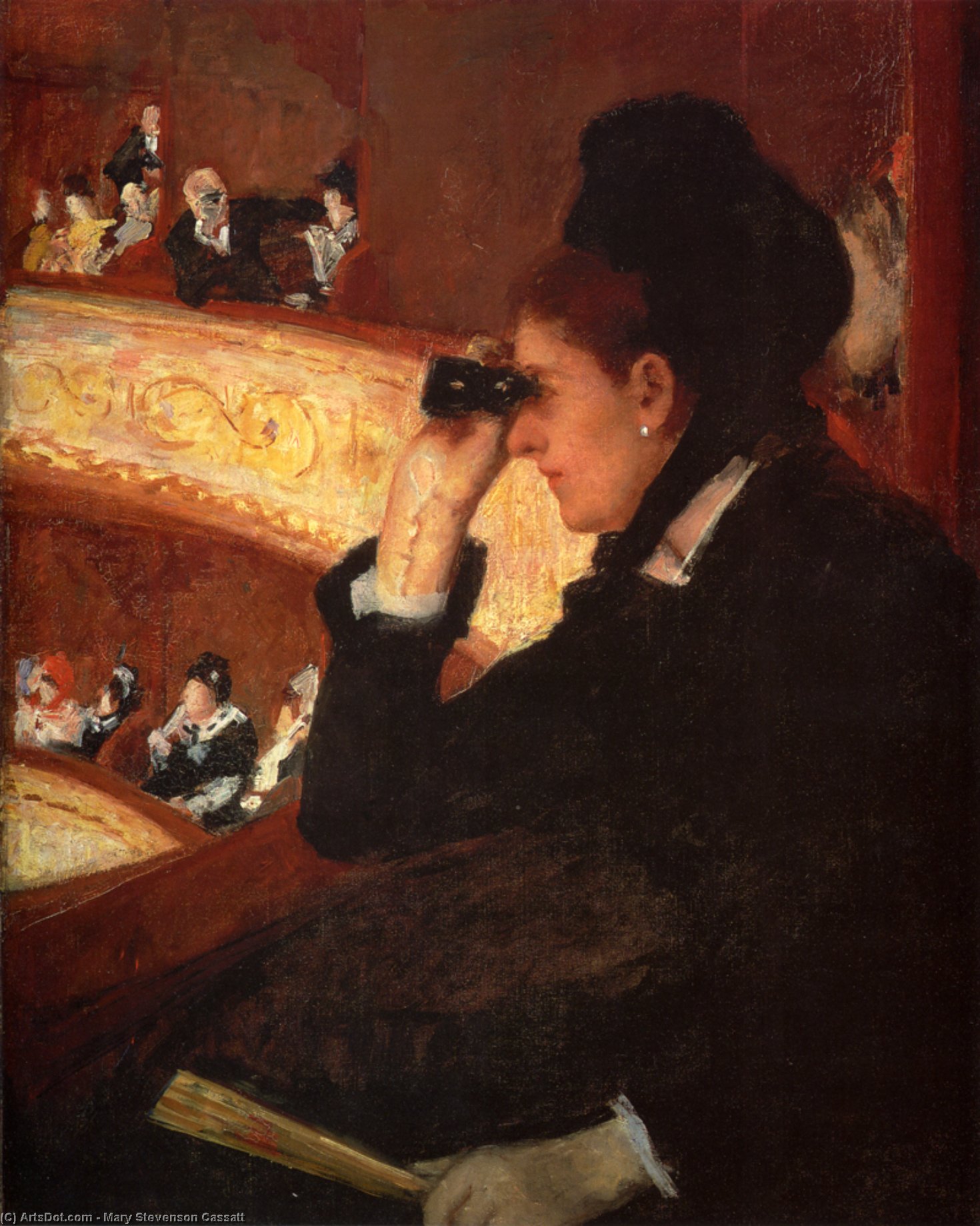
Mary Cassatt’s ‘The Opera’ captures an intimate moment of observation within a bustling 1878 opera house scene, showcasing the artist's signature Impressionistic style and focus on female subjects. Discover this beautiful hand-painted reproduction and elevate your space.
A Moment of Private Observation: Mary Cassatt's "The Opera"
Mary Stevenson Cassatt’s “The Opera,” painted in 1878, offers a captivating glimpse into the refined leisure of late 19th-century Parisian society. This intimate scene, rendered with meticulous detail and imbued with a quiet sense of observation, perfectly encapsulates Cassatt's signature style – her ability to capture fleeting moments of female experience with remarkable sensitivity and psychological depth. The painting depicts a woman seated in an opera house audience, a poised figure absorbed in the spectacle unfolding before her. She is adorned in a fashionable hat, a symbol of status and elegance during this era, and utilizes binoculars, suggesting a deliberate act of focused attention, perhaps scrutinizing a particular performer or detail on stage.
Impressionistic Technique and Delicate Brushwork
- Color Palette: Cassatt employs a muted yet luminous color palette characteristic of Impressionism. Soft blues, pinks, and creams dominate the scene, creating an atmosphere of refined elegance and subdued light – reflective of the opera house’s interior.
- Brushwork: The artist's brushstrokes are remarkably delicate and controlled, contributing to the painting’s overall sense of stillness and tranquility. She utilizes short, broken strokes to build up form and texture, particularly in the woman’s clothing and the surrounding drapery.
- Light and Shadow: Cassatt masterfully manipulates light and shadow to create a three-dimensional effect, enhancing the realism of the scene while maintaining an impressionistic quality. The subtle gradations of tone contribute to the painting's atmospheric depth.
Symbolism and Social Commentary
“The Opera” is more than just a depiction of a social gathering; it subtly engages with themes of female agency and observation within a patriarchal society. The woman’s act of focused viewing, aided by the binoculars, can be interpreted as a quiet assertion of her intellect and discerning eye – a subtle rebellion against the passive roles often assigned to women at the time. The inclusion of other spectators adds to this dynamic, suggesting a shared experience of appreciation and engagement with art and culture. The handbag placed near the spectator is a detail that speaks to the practicality and independence of women in this era.
Historical Context and Cassatt’s Legacy
Painted in 1878, “The Opera” reflects the burgeoning interest in Impressionism and its focus on capturing everyday life. Cassatt was a pioneer for American women artists, navigating the challenges of the art world while establishing herself as one of the leading figures of the movement. Her work, often depicting scenes of domesticity and female relationships, challenged conventional artistic subject matter and paved the way for future generations of female artists. This piece exemplifies her dedication to portraying the nuances of human emotion and experience with a profound understanding of light, color, and form – qualities that continue to resonate with viewers today.