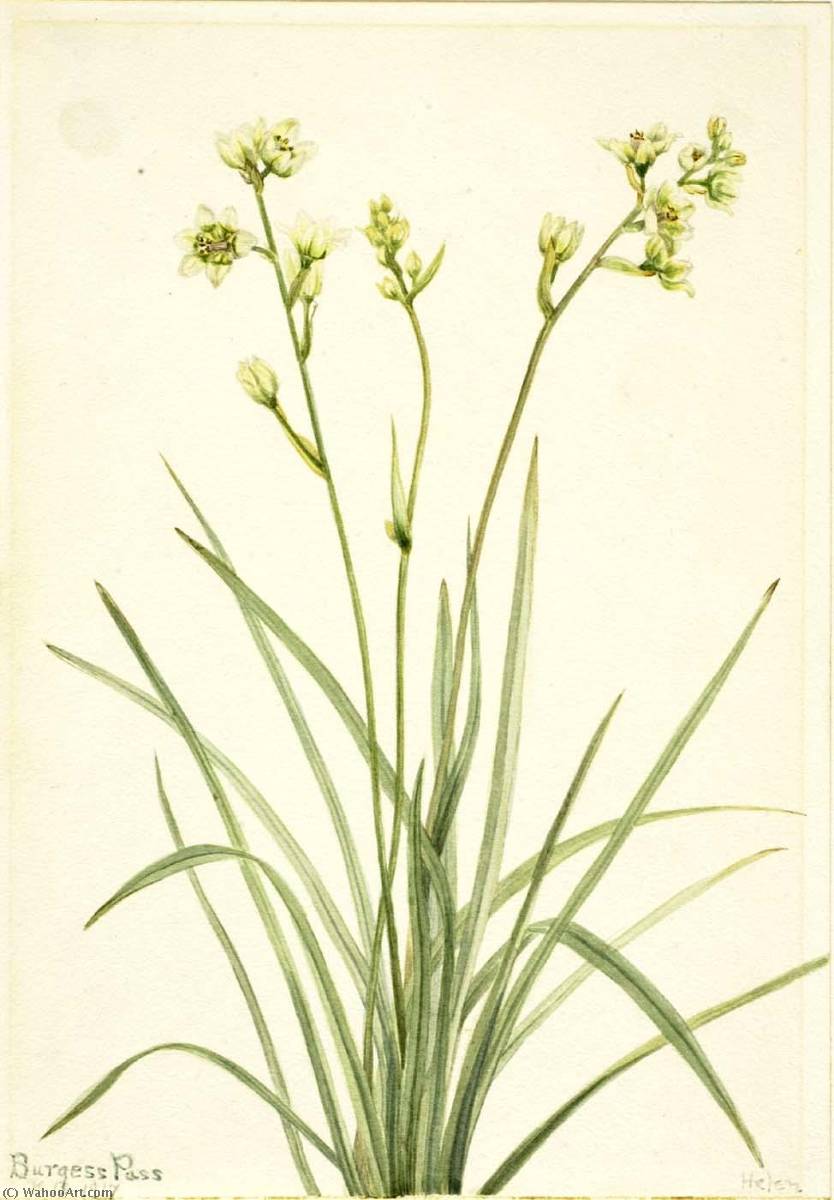
The
Mary Vaux Walcott painting,
Deathcamas (Zygadenus elegans), is a stunning example of botanical art. Created in 1917, this watercolor piece showcases the artist's attention to detail and mastery of color. The painting measures 26 x 18 cm and is currently housed at the
Smithsonian American Art Museum in the United States.
Artist Background
Mary Vaux Walcott was a talented artist and botanist, known for her beautiful and accurate depictions of plants. Her work is characterized by its precision and delicacy, making her one of the most renowned botanical artists of her time. To learn more about
Mary Vaux Walcott and her artwork, visit
ArtsDot.com.
Painting Details
The
Deathcamas (Zygadenus elegans) painting features a plant with green leaves and white flowers, showcasing the artist's use of color and composition. The watercolor technique used in this piece gives it a vibrant and lively appearance, making it a standout example of botanical art. For more information on
Mary Vaux Walcott's paintings, including
Northern Bedstraw (Galium boreale) and
Jacob's Ladder (Polemonium viscosum), visit
ArtsDot.com.
Importance of the Painting
The
Deathcamas (Zygadenus elegans) painting is not only a beautiful example of botanical art but also an important piece of
historical significance. It showcases the artist's contribution to the field of botany and her ability to accurately depict plants. To learn more about the
Smithsonian American Art Museum and its collection, visit
ArtsDot.com.
Some of the key features of this painting include:
- Accurate depiction of the plant's leaves and flowers
- Use of watercolor technique to create a vibrant and lively appearance
- Importance in the field of botanical art and history
In conclusion, the
Deathcamas (Zygadenus elegans) painting by
Mary Vaux Walcott is a masterpiece of botanical art that showcases the artist's skill and attention to detail. Its importance in the field of botany and history makes it a significant piece that continues to inspire and educate audiences today.