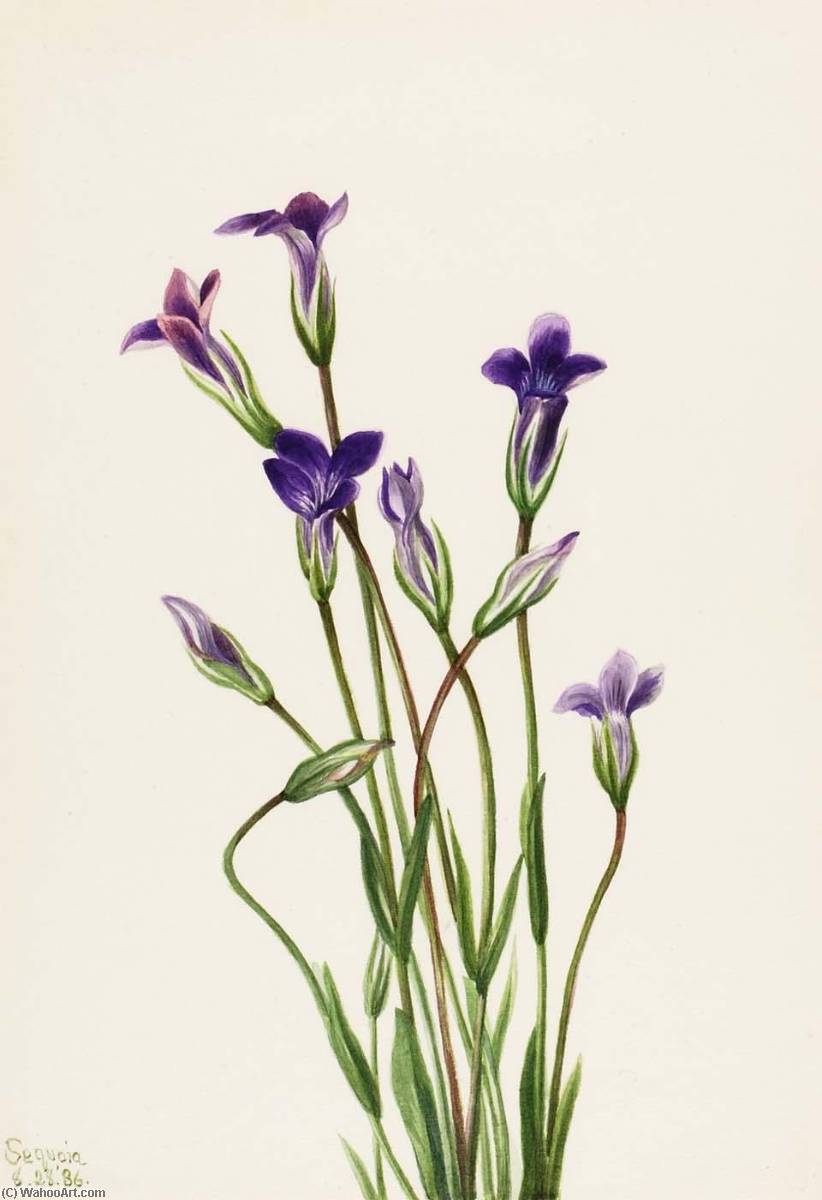
The painting
Gentian (Gentiana holopetala) by
Mary Vaux Walcott is a stunning example of botanical art, showcasing the delicate beauty of the gentian flower. Created in 1936, this watercolour piece measures 26 x 18 cm and is currently housed at the
Smithsonian American Art Museum in the United States.
A Closer Look at the Artist
Mary Vaux Walcott was a talented artist known for her detailed and accurate depictions of plants and flowers. Her work is characterized by its precision and attention to detail, making her one of the most renowned botanical artists of her time. To learn more about
Mary Vaux Walcott and her artwork, visit /art/list/?Filter=AQSAGN-Mary-Vaux-Walcott-Gentian-(Gentiana-holopetala).
The Painting's Significance
The
Gentian (Gentiana holopetala) painting is not only a beautiful piece of art but also an important example of botanical illustration. The gentian flower, with its delicate purple petals and long stems, is meticulously rendered in watercolour, showcasing the artist's skill and attention to detail. This painting is a testament to the importance of botanical art in understanding and appreciating the natural world.
- Botanical accuracy: The painting showcases the artist's commitment to accurately depicting the gentian flower, highlighting its unique characteristics and features.
- Delicate beauty: The watercolour technique used by Mary Vaux Walcott captures the delicate beauty of the gentian flower, making it a stunning example of botanical art.
- Historical significance: The painting is an important example of botanical illustration from the early 20th century, providing insight into the artistic and scientific practices of the time.
Handmade oil paintings reproductions of
Gentian (Gentiana holopetala) are available at https://ArtsDot.com, allowing art lovers to own a piece of this beautiful botanical artwork. To learn more about the
Smithsonian American Art Museum and its collection, visit /art/list/?Filter=A@D3BHKH-The-Museum-San-Niccolo-al-Carmine-(Siena-Italy).
The
Gentian (Gentiana holopetala) painting by
Mary Vaux Walcott is a true masterpiece of botanical art, showcasing the delicate beauty of the natural world. Its significance extends beyond its aesthetic appeal, providing insight into the artistic and scientific practices of the early 20th century.