The
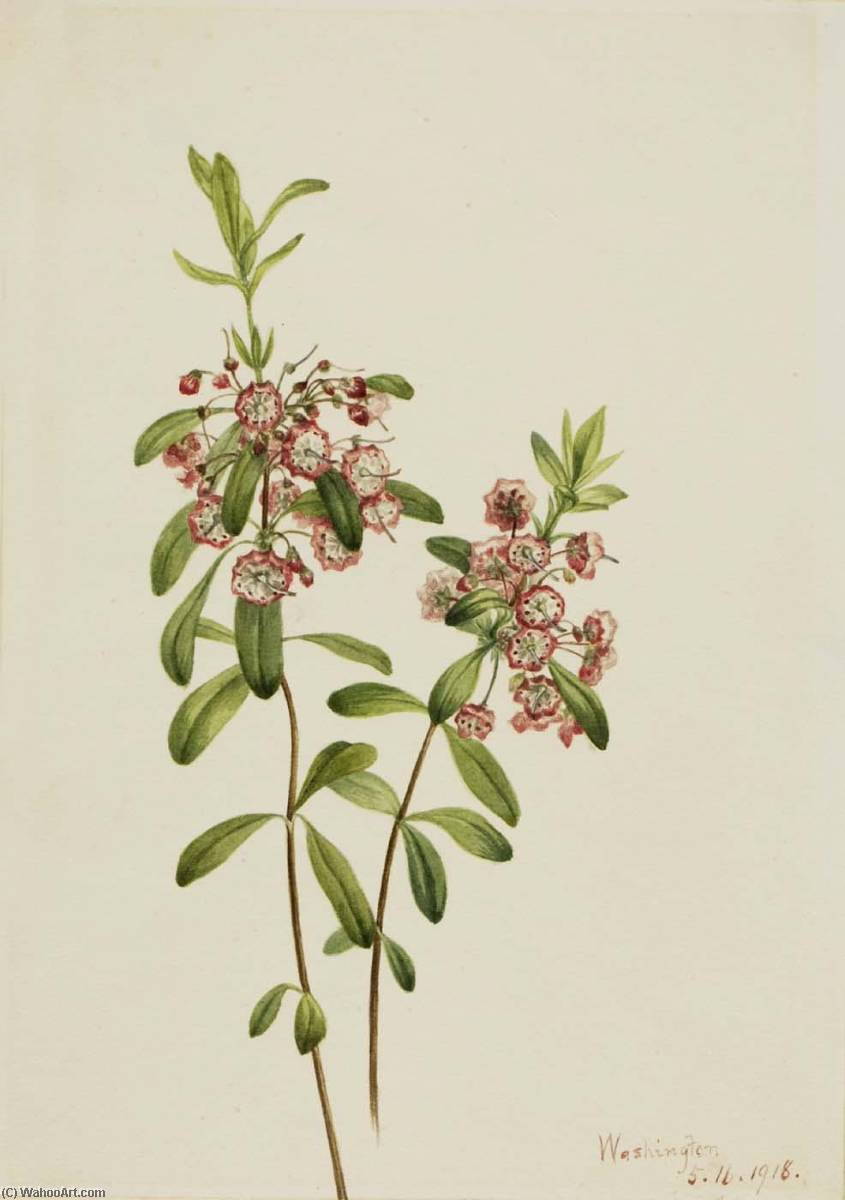
Lambkill (Kalmia angustifolia) is a stunning watercolor painting by
Mary Vaux Walcott, an American artist and botanist. Created in 1918, this beautiful piece is now part of the collection at the
Smithsonian American Art Museum in the United States. The painting measures 25 x 18 cm and is a perfect example of
watercolor technique, showcasing the artist's skill and attention to detail.
The Artist and Her Work
Mary Vaux Walcott was a talented artist who focused on botanical illustrations, creating detailed and accurate depictions of various plant species. Her work is characterized by its
precision and beauty, making her one of the most renowned botanical artists of her time. The
Lambkill (Kalmia angustifolia) is just one example of her impressive body of work, which can be found in various museums and collections, including the
Smithsonian American Art Museum.
The Painting's Significance
The
Lambkill (Kalmia angustifolia) is not only a beautiful painting but also an important work of art that showcases the artist's contribution to the field of botanical illustration. The painting's
attention to detail and
accuracy make it a valuable resource for botanists and art lovers alike. To learn more about
Mary Vaux Walcott and her work, visit
ArtsDot.com and explore the various paintings and artists featured on the site.
Handmade oil paintings reproductions of the
Lambkill (Kalmia angustifolia) and other artworks can be found on
ArtsDot.com, allowing art lovers to own a piece of history and beauty.
For more information on
Mary Vaux Walcott and her work, visit the
Smithsonian American Art Museum or explore the various resources available on
ArtsDot.com.