Мери Вокс Волкотт је био „Аудибон од ботанике“, позната по својим издивљитељским аквамастерским сликам цвећа и доприносу науци. Истражите њен детаљан ботанички уметност!
Откријте богатство америчке уметности на Музеју Смитсонијан Арт Метроу у Вашингтону ДЦ! Погледајте иконе чињеница, разнолике традиције и захваљуте изложбе у Згради Старе Патентске канцеларије.
Музеј Смитсонијан Арт Метроу, Вашингтон ДЦ, Америчка уметност, Галерија Рењвик, Зграда Старе Патентске канцеларије, Фредерик Керх, Георгија О’Кеф, Винслоу Хомер, Уметност племенита и ремек-дело
Посети Музе
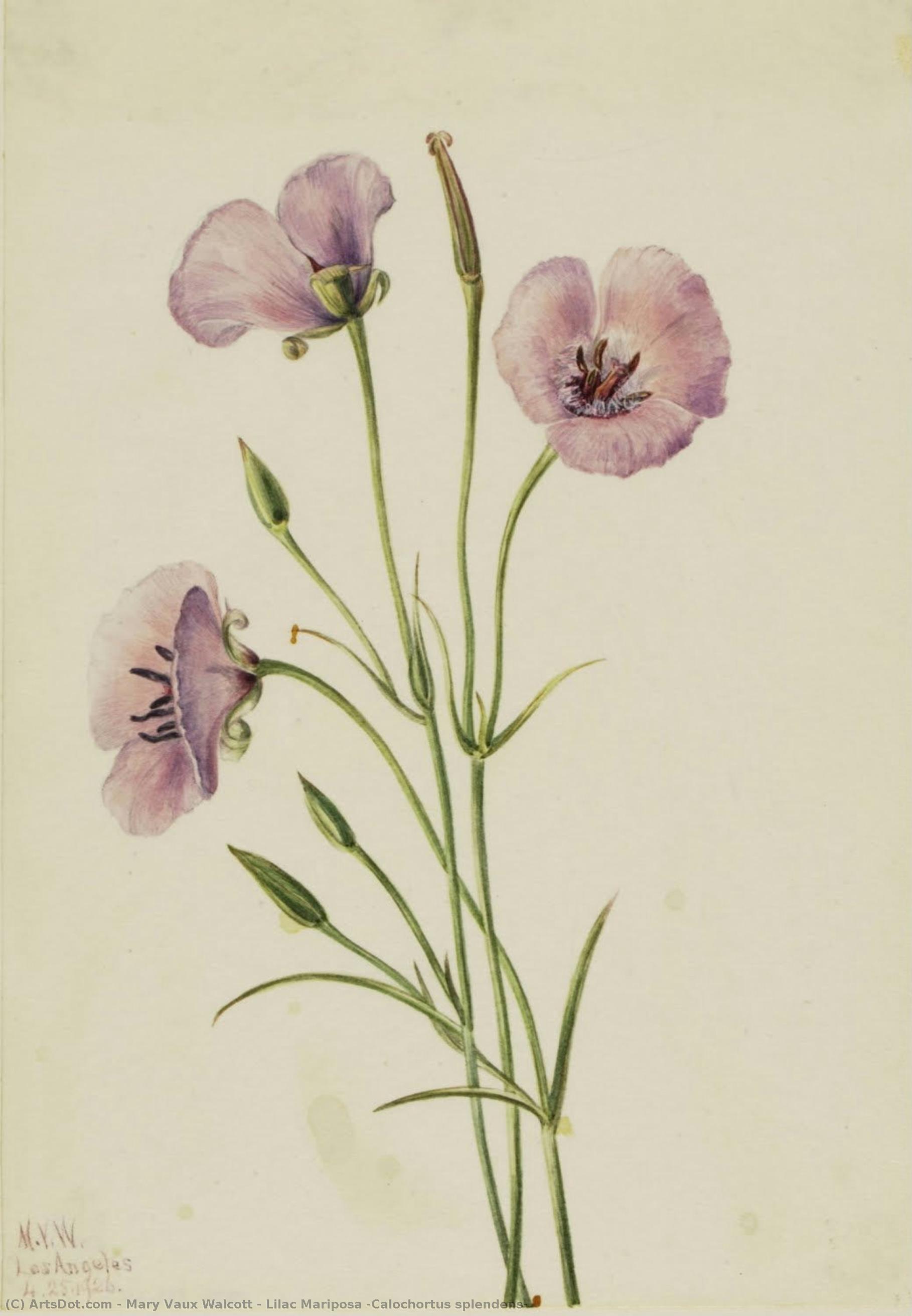
Lilac Mariposa (Calochortus splendens): A Moment Preserved in Watercolor
Mary Vaux Walcott’s “Lilac Mariposa,” painted in 1926, is more than just a botanical illustration; it's a delicate capture of fleeting beauty and the quiet reverence for the natural world. This exquisite watercolor on aged paper transports us to a time when scientific observation was intertwined with artistic passion – a period embodied by Walcott herself, often referred to as “the Audubon of Botany.” The piece centers around a single bloom of Calochortus splendens, commonly known as the Lilac Mariposa poppy, rendered with meticulous detail and a subtle palette that evokes both the vibrancy of springtime and the gentle patina of time. It’s a testament to Walcott's dedication to documenting North America’s flora with an artist’s eye and a scientist’s precision.
The Artist and Her Method
Mary Vaux Walcott was a pioneering figure in the world of botanical illustration. Unlike many of her contemporaries, she wasn't simply copying nature; she actively sought out rare specimens, often venturing into remote mountain regions – including the rugged Canadian Rockies – to observe and paint them firsthand. Her process involved painstaking layering of watercolor pigments, building up textures and shades with incredibly fine brushes. The aged paper contributes significantly to the artwork’s charm, suggesting a history and lending it an intimate, almost tactile quality. Notice how she utilizes subtle shading to define the delicate folds of the petals and leaves, creating a sense of volume and form despite the two-dimensional nature of watercolor. The shallow perspective draws the viewer into the immediate details of the flower, inviting contemplation of its intricate structure.
A Botanical Study with Quiet Grace
“Lilac Mariposa” is a prime example of Walcott’s scientific approach to art. The composition isn't dramatic or overtly symbolic; it focuses entirely on the flower itself, celebrating its inherent beauty and complexity. There are no implied narratives or allegorical meanings—only the pure observation and appreciation of nature. This deliberate restraint allows the viewer to connect with the artwork on a purely sensory level, appreciating the delicate hues of lavender and cream, the subtle variations in texture, and the overall sense of stillness. The soft lighting suggests an indoor setting, perhaps a study bathed in natural light, further enhancing the feeling of intimacy and quiet contemplation.
Historical Context and Legacy
Painted in 1926, “Lilac Mariposa” reflects a period of burgeoning interest in botany and natural history. Mary Vaux Walcott’s work was highly regarded by her peers and the Smithsonian Institution, where she later collaborated on a monumental five-volume series documenting North American wildflowers. Her dedication to accurate botanical illustration helped advance scientific understanding while simultaneously producing stunning works of art. Today, reproductions like this offer a window into a bygone era—a time when meticulous observation, artistic skill, and a deep respect for the natural world converged to create enduring beauty. The piece stands as a poignant reminder of Walcott’s legacy as “the Audubon of Botany,” a woman who seamlessly blended scientific rigor with an unparalleled talent for capturing the delicate wonders of the plant kingdom.