The Silent Prayer: Matthias Grünewald’s “Praying Woman”
Matthias Grünewald's "Praying Woman," painted around 1512-14, is not merely a portrait; it’s a profound meditation on faith, humility, and the yearning for divine connection. This intimate work, housed in the Ashmolean Museum in Oxford, transcends its simple subject matter to become a powerful symbol of spiritual devotion within the turbulent landscape of late medieval Germany. Grünewald, a pivotal figure bridging the Gothic and Renaissance eras, masterfully employed his signature style—characterized by dramatic emotional intensity and a remarkable sensitivity to light and shadow—to capture a moment of quiet contemplation that resonates deeply with viewers centuries later.
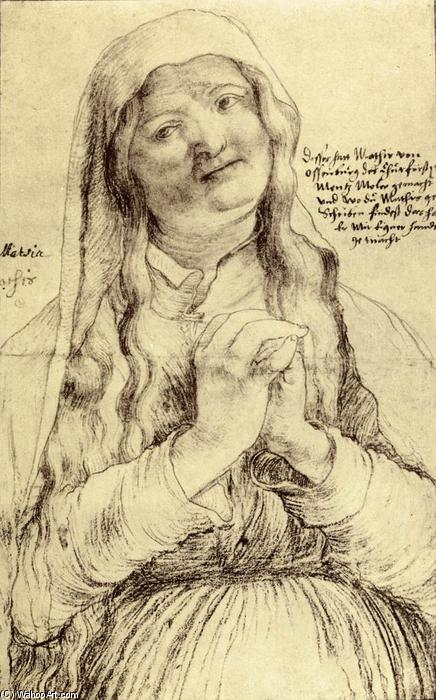
The painting depicts a woman in a veiled pose, her hands clasped together in prayer. Her gaze is directed upwards, lost in an unseen realm of spiritual experience. The composition is remarkably restrained, focusing entirely on the figure’s internal state rather than external details. Grünewald's meticulous attention to texture—the folds of her clothing, the delicate sheen of her veil—creates a palpable sense of physicality and vulnerability. This deliberate simplicity amplifies the emotional impact of the scene, inviting us to share in her silent plea.
A Master of Expressionism Before its Time
While often categorized as Northern Renaissance art, “Praying Woman” exhibits characteristics that foreshadow the rise of expressionism centuries later. Grünewald’s use of color is particularly striking—a muted palette dominated by earthy tones and deep blues—evokes a sense of solemnity and introspection. He skillfully employs chiaroscuro, contrasting areas of light and shadow to sculpt the figure's form and heighten the drama of her posture. This masterful manipulation of light not only reveals the contours of her face but also suggests an inner radiance emanating from her devotion.
The painting’s technique is equally noteworthy. Grünewald utilized chalk on yellowish paper, a medium that allowed for both delicate detail and expressive brushwork. The layering of thin washes creates a luminous quality, while the visible strokes of the chalk convey a sense of immediacy and spontaneity. This combination of meticulous observation and emotional intensity defines Grünewald’s unique artistic vision.
Symbolism and Spiritual Context
“Praying Woman” is deeply rooted in the religious beliefs and practices of its time. The act of prayer was central to medieval spirituality, offering a direct connection with God through contemplation and humility. The veil worn by the woman symbolizes modesty and reverence, while her upturned gaze represents an aspiration towards the divine. It’s believed that this painting may have been commissioned for a private chapel or devotional space, intended to inspire reflection and foster a sense of spiritual communion.
Furthermore, Grünewald's work reflects the anxieties and uncertainties of his era. The late 15th and early 16th centuries were marked by religious upheaval, political instability, and growing skepticism towards established authority. “Praying Woman” can be interpreted as a poignant expression of faith in the face of these challenges—a testament to the enduring power of spiritual devotion.
A Timeless Portrait of Inner Grace
More than six centuries after its creation, "Praying Woman" continues to captivate and inspire. Its quiet intensity, masterful technique, and profound symbolism transcend temporal boundaries, offering a glimpse into the heart of human spirituality. Whether viewed as a devotional masterpiece or a poignant study of human emotion, this painting remains a testament to Matthias Grünewald’s genius—a timeless portrait of inner grace and unwavering faith.