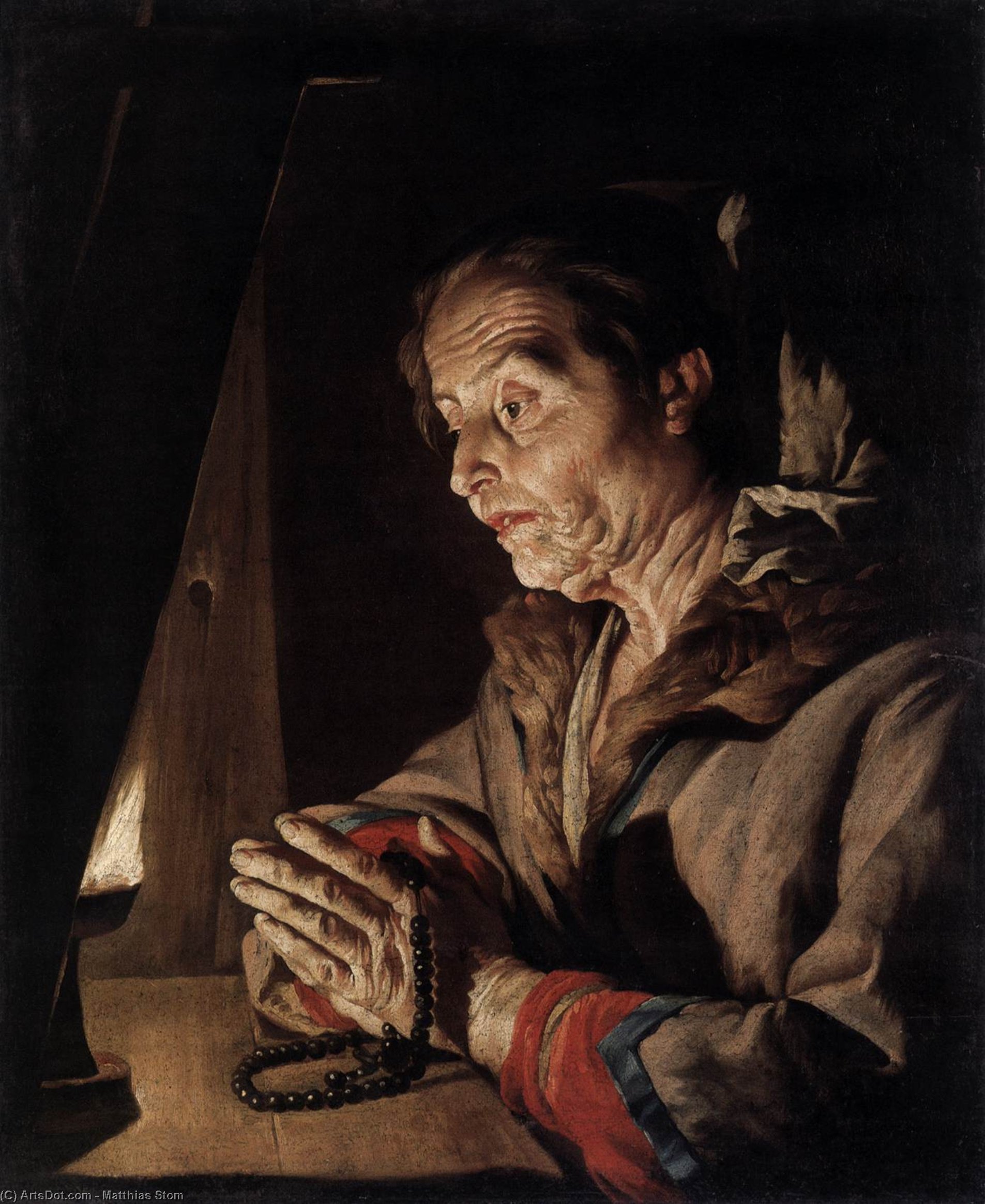
Experience dramatic chiaroscuro in Matthias Stom's Old Woman Praying, a masterpiece of Utrecht Caravaggism capturing solemn devotion from the 17th century; discover this evocative piece today.
Matthias Stom (oko 1600–posle 1652) bio je holandski slikar zlatnog doba i majstor Utrehtskog karaverđizma. Poznat po dramatičnom kjaroskuru i realističnim prikazima biblijskih scena pod uticajem Karavađija i Ribere.
Otkrijte Metropoliten muzej umetnosti u Njujorku! Istražite preko 5000 godina umetnosti iz celog sveta – od drevnih artefakata do modernih remek-dela. Posetite ili virtuelno i uživajte!
Old Woman Praying by Matthias Stom
Matthias Stom (c. 1600 – after 1652) remains an artist shrouded in mystery, a Dutch Golden Age painter whose life’s trajectory defied easy categorization. Primarily active in Italy during his formative years, he nonetheless carried the indelible imprint of Utrecht Caravaggism—a movement characterized by dramatic chiaroscuro and uncompromising realism—back to his homeland. While biographical details stubbornly resist definitive resolution – scholars debate possible Flemish roots – Stom's distinctive artistic vision secured him a place within art history as a master of evocative religious imagery. This painting, “Old Woman Praying,” exemplifies this mastery perfectly.
A Masterpiece of Utrecht Caravaggism
Painted around 1640, "Old Woman Praying" embodies the core tenets of Utrecht Caravaggism. Influenced profoundly by Caravaggio and Ribera, Stom eschewed the flamboyant allegories favored by many Northern Baroque artists, opting instead for a solemn depiction of faith—specifically, prayer. The artist’s meticulous attention to detail is immediately apparent; the woman's face conveys deep concentration, illuminated by a subtle interplay of light and shadow that captures the essence of contemplative devotion. This masterful use of chiaroscuro isn’t merely stylistic flourish but serves as a crucial element in conveying the spiritual significance of the scene.
Detailed Composition and Symbolism
The painting’s composition is carefully considered. A simple chair and bench provide grounding, anchoring the figure within a domestic setting—a deliberate choice that underscores the universality of prayer and its connection to everyday life. Dominating the foreground are two rosary beads resting on a table, symbolizing piety and remembrance. The woman's hands clasped together in prayer represent humility and supplication before God. Stom’s skillful rendering of textures – the folds of the dress, the weathered surface of the chair—further enhances the realism of the image, immersing the viewer in the atmosphere of devotion.
Historical Context and Artistic Legacy
“Old Woman Praying” emerged during a period marked by religious fervor and artistic experimentation in Italy. Stom’s exposure to Ribera's dramatic style undoubtedly influenced his approach to painting, fostering an unwavering commitment to portraying human emotion with unflinching honesty. Unlike many of his contemporaries who embraced theatrical grandeur, Stom prioritized conveying spiritual depth through understated realism—a stylistic decision that aligns seamlessly with the broader artistic currents of the Baroque era. The painting’s enduring appeal lies in its ability to resonate with viewers across centuries, capturing the timeless beauty and solemn contemplation inherent in acts of faith. Its presence within the Metropolitan Museum of Art ensures that Stom's contribution to art history continues to inspire admiration and scholarly inquiry.
Reproductions for Interior Design
A high-quality reproduction of “Old Woman Praying” can bring a sense of serenity and contemplative beauty into any interior space. ArtsDot offers exceptional reproductions crafted with archival inks on premium canvas, faithfully capturing the painting’s nuanced tonal palette and textural richness. Consider framing it in a neutral tone to complement its solemn mood—allowing this masterpiece of Utrecht Caravaggism to serve as a focal point for reflection and contemplation.