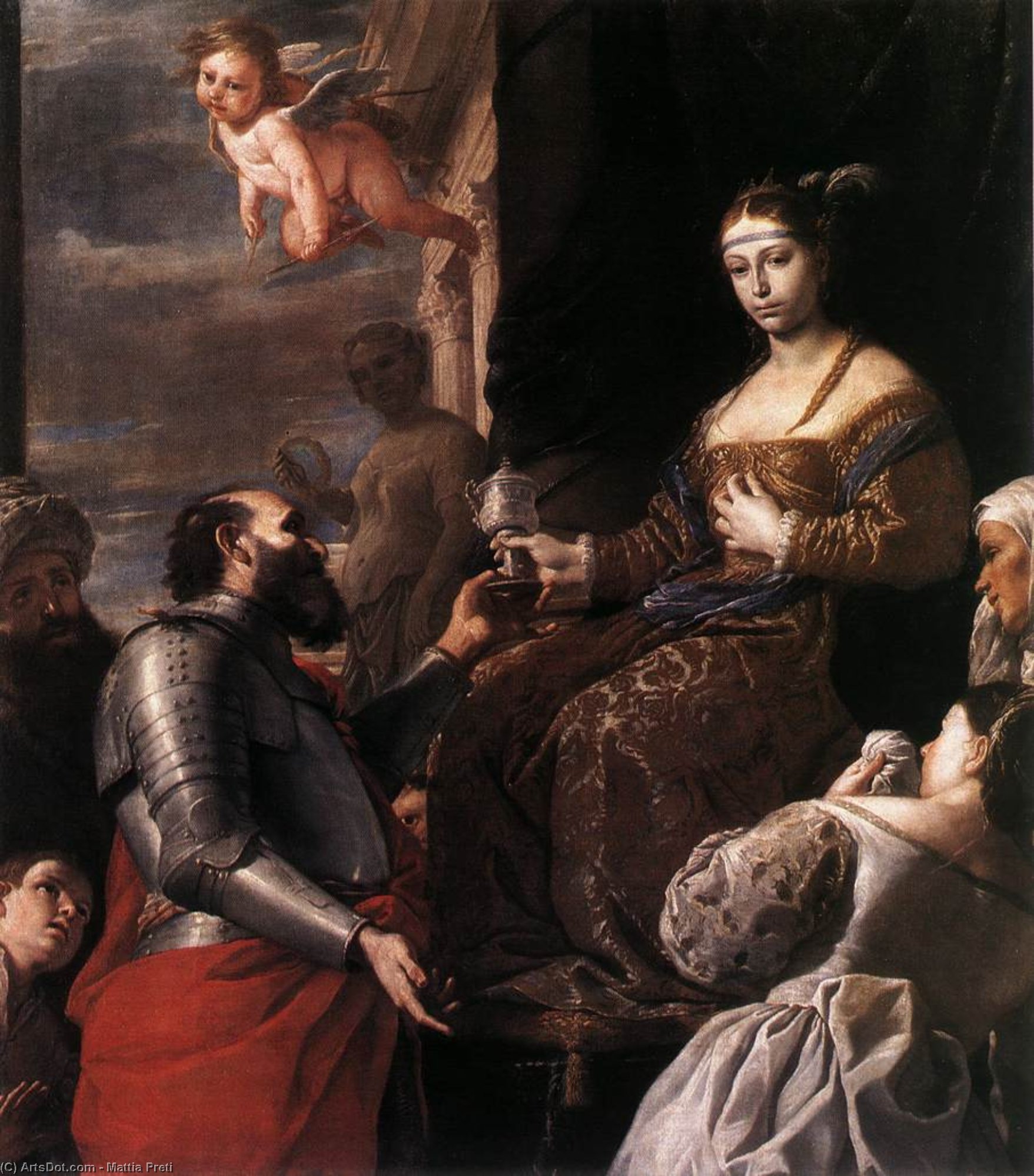
Mattia Preti’s ‘Sophonisba Receiving the Goblet,’ painted in 1670, showcases his masterful use of chiaroscuro to portray Queen Sophonisba's fatal acceptance of poison. Inspired by Caravaggio’s style, this artwork exemplifies Baroque drama and realism.
Sophonisba Receiving the Goblet by PRETI, Mattia
The painting “Sophonisba Receiving the Goblet” by Mattia Preti stands as a testament to Baroque drama and masterful observation—a scene plucked from Roman history that transcends mere depiction to embody profound emotional resonance. Executed in 1670 during Preti’s prolific period in Malta, this monumental canvas (measuring 198 x 174 cm) exemplifies the artist's signature style: a calculated fusion of Caravaggist influence and meticulous realism designed to elicit visceral response from the viewer.
The composition centers around Sophonisba Barca, daughter of Hamilcar Barca—a Carthaginian general who spearheaded resistance against Rome during the Second Punic War—as she accepts a goblet proffered by Masinissa, King of Numidia, allied with Rome. This gesture symbolizes the precarious balance between alliance and betrayal, mirroring the political tensions of the era. Preti’s masterful use of chiaroscuro – the dramatic contrast between light and dark – immediately draws attention to Sophonisba's face—illuminated by a single candle—revealing an expression of serene composure despite the impending doom surrounding her acceptance of the poisoned chalice. The artist skillfully renders textures with remarkable accuracy, capturing the folds of Sophonisba’s gown and Masinissa’s regal attire with painstaking detail.
Beyond its narrative power, “Sophonisba Receiving the Goblet” is laden with symbolic significance. The goblet itself represents temptation and deceit—a visual metaphor for the fatal decision that leads to Sophonisba's demise. The angels flanking the figures serve as reminders of divine judgment—suggesting that even earthly ambition is subject to a higher authority. Preti’s palette leans heavily towards earthy tones—ochres, browns, and reds—creating an atmosphere of solemn grandeur and reinforcing the painting’s emotional impact.
The artwork's historical context illuminates its deeper meaning. Painted during a period marked by intense political maneuvering and military campaigns, “Sophonisba Receiving the Goblet” reflects the anxieties of Roman leadership regarding alliances and betrayals. Preti skillfully captures this tension—transforming a historical event into an enduring meditation on human vulnerability and moral responsibility. It’s a painting that compels contemplation—inviting viewers to consider not only what is depicted but also what it communicates about the complexities of power, desire, and fate.
- Artist: Mattia Preti
- Year: 1670
- Medium: Oil on Canvas
- Location: Malta