A Vision of Rococo Splendor
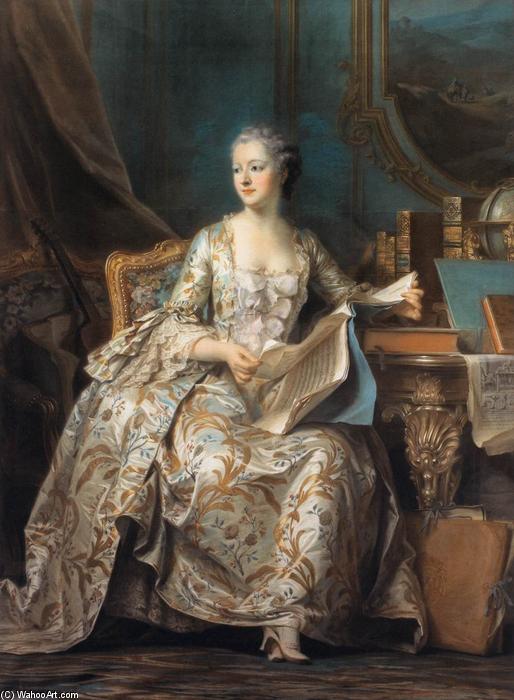
In the soft, luminous glow of Maurice Quentin de La Tour’s 1755 masterpiece, Marquise de Pompadour, we encounter more than a mere portrait; we step into the very heart of the French Rococo era. This exquisite pastel work captures Jeanne Antoinette Poisson, the legendary Marquess de Pompadour, not just as a figure of political influence, but as the ultimate icon of 18th-century grace. As the official mistress of King Louis XV, her presence at court was a masterclass in intellectual charm and aesthetic refinement. Through La Tour’s unparalleled skill, the canvas breathes with the vitality of a woman who was simultaneously a patron of the arts and a cornerstone of Parisian high society.
The portrait serves as a breathtaking window into an age of aristocratic indulgence, where every fold of silk and every delicate dusting of powder whispered of luxury. For the discerning collector or interior designer, this piece offers an unparalleled sense of historical depth, bringing the opulence of the Louvre’s halls into a contemporary living space. It is a work that does not merely decorate a room but transforms it, inviting conversation through its rich narrative of power, beauty, and the fleeting elegance of a bygone epoch.
The Mastery of Pastel and Light
What distinguishes this portrait from the heavy, somber oil paintings of previous generations is La Tour’s extraordinary command over the medium of pastel. Unlike the laborious layering required by oils, pastel allowed the artist to work with an immediate, almost tactile luminosity. He meticulously applied pigments to prepared paper, blending hues with a delicate touch to achieve subtle tonal gradations that mimic the softness of human skin and the airy lightness of silk. This technique creates an ethereal quality, where light seems to dance across the surface of the Marquise’s gown, highlighting the intricate patterns and shimmering textures.
The artist’s ability to manipulate shadow and light—the chiaroscuro of the pastel world—lends the subject a lifelike presence that is almost startling. The soft pinks, creams, and golds are not merely colors but atmospheric elements that evoke the warmth of a sunlit salon. For those seeking a reproduction that captures true artistry, the magic lies in these fine details: the way the light catches the edge of a book held in her hand, or the way the blue-and-gold background recedes to create a sense of profound depth and architectural grandeur.
Symbolism and Emotional Resonance
Beyond the surface beauty, every element within the composition is steeped in meaning. The inclusion of a book in the Marquise’s hands is a deliberate nod to her celebrated intellect and her role as a champion of Enlightenment thought. She is presented not merely as an object of beauty, but as a woman of substance and learning. This duality—the marriage of physical allure with mental acuity—is what gives the portrait its enduring emotional impact. It evokes a sense of admiration that transcends time, making the subject feel both intimately present and legendary.
The surrounding environment, characterized by richly decorated walls and the subtle reflection in a large mirror, reinforces the themes of vanity, prestige, and the multifaceted nature of identity. To display such a work is to embrace a legacy of sophistication. Whether placed in a grand library or a refined modern suite, the Marquise de Pompadour acts as an anchor of elegance, offering a timeless connection to the heights of French cultural achievement and providing a focal point of unparalleled prestige for any curated collection.