Max Liebermann (1847-1935): Vodeći nemački impresionista poznat po živopisnim scenama modernog života, prodornim portretima i mirnim prizorima iz vrta. Istražite njegovo nasleđe!
Откријте британску и интернационалну уметност на Тхе Тате Бритен! Истражите векове шемастера, од Тернера до модерних икона – посета је бесплатна у Лондону у рецијевској галерији.
Тхе Тате Бритен, Лондонска уметност, британска уметност, Тернер, Пре-Рафаелити, Милбанк, Архитектура, Модерна уметност, Скулптура, Картине, Штампе, Галерија, Музеј, Уметничка колекција, Стирлинг
Тхе Тате Бритен
Велика
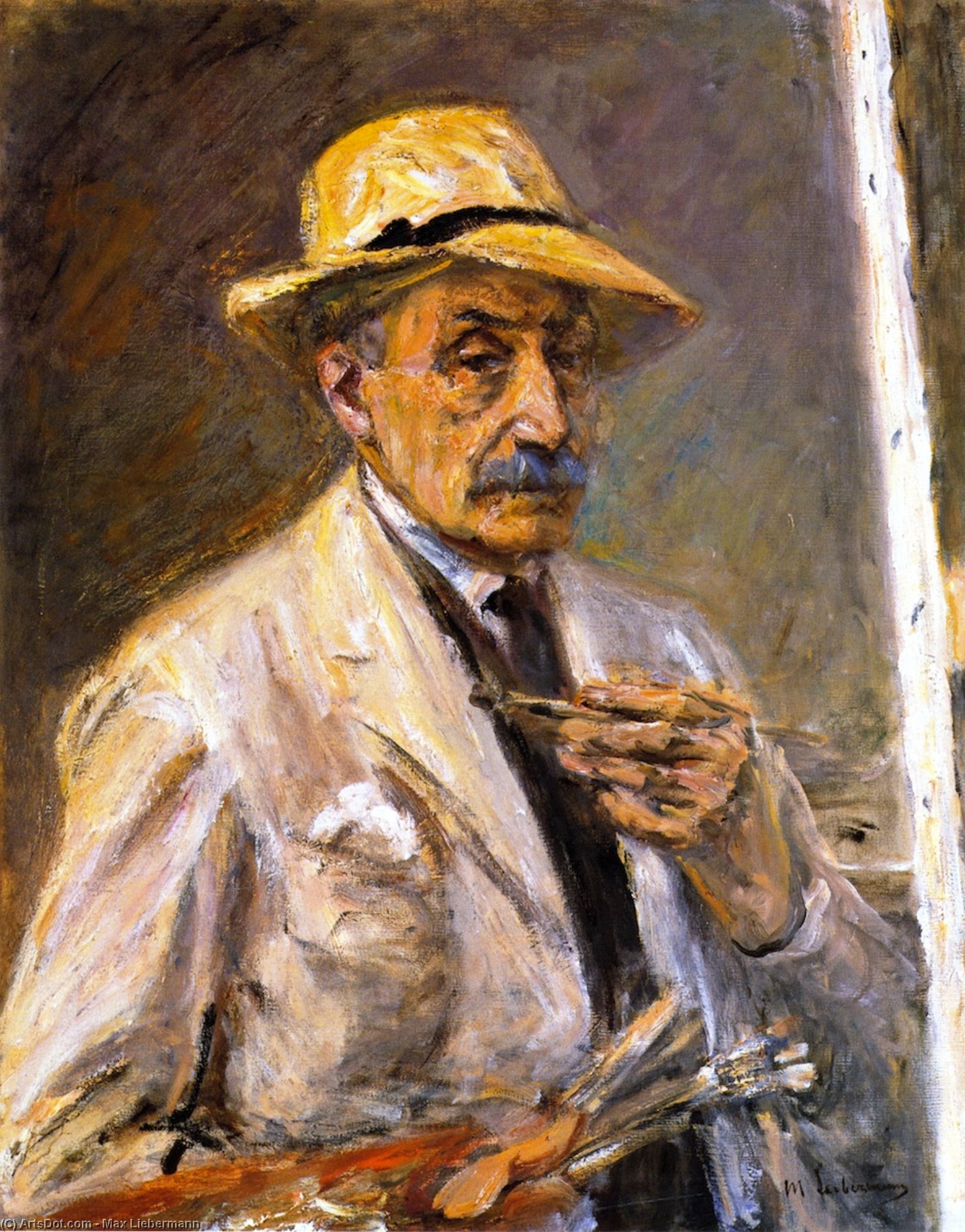
A Portrait of Reflection: Max Liebermann's "Self Portrait in Smock with Hat, Brush, and Palette"
Max Liebermann’s “Self Portrait in Smock with Hat, Brush, and Palette,” painted in 1934, is more than a simple depiction of an artist; it’s a poignant meditation on observation, craft, and the very nature of artistic expression. Created during a pivotal period in Liebermann's career – a time when he was firmly established as one of Germany’s leading Impressionists – this oil-on-canvas work offers a rare glimpse into the mind of a master, inviting us to share his quiet contemplation.
- Subject and Composition: The painting immediately draws the eye to Liebermann himself, presented with an almost unnerving directness. His serious gaze, framed by a felt hat and the tools of his trade – a brush and palette – establishes a powerful connection between the viewer and the artist’s inner world. The inclusion of a partially visible figure in the background subtly suggests the influence of everyday life on artistic creation, hinting at the subjects that often occupied Liebermann's attention.
- Technique and Style: Liebermann’s masterful brushwork is immediately apparent. He employs short, broken strokes – a hallmark of Impressionism – to capture the play of light and shadow across his attire and the surfaces he depicts. The subtle blending of colors creates an atmospheric effect, imbuing the scene with a sense of depth and realism while simultaneously conveying the fleeting nature of perception.
Echoes of Impressionism: Historical Context
Painted in 1934, “Self Portrait” reflects Liebermann’s long and distinguished career within the burgeoning Impressionist movement. Born in Berlin in 1847, Liebermann initially pursued a more conventional path – law and philosophy – before discovering his true passion for art through studies in Weimar, Paris, and the Netherlands. These experiences profoundly shaped his artistic vision, leading him to embrace the techniques of capturing fleeting moments with an acute sensitivity to light and color, a core tenet of Impressionism. The painting stands as a testament to his dedication to this style, showcasing his ability to translate observed reality into evocative brushstrokes.
Symbolic Layers: Interpreting the Details
Beyond its technical brilliance, the painting is rich in symbolic detail. The white shirt and tie beneath Liebermann’s jacket – a deliberate choice – suggests an adherence to traditional artistic values while simultaneously hinting at his intellectual background. The palette itself, placed prominently near the bottom right corner, serves as a constant reminder of the artist's profession and the fundamental element of his craft. Even the presence of the partially visible figure in the background adds another layer of complexity, prompting questions about the source of inspiration for Liebermann’s work.
A Legacy of Light: Emotional Impact
“Self Portrait in Smock with Hat, Brush, and Palette” transcends a simple self-portrait; it's an invitation to contemplate the artist's process and the profound connection between observation, skill, and artistic vision. The painting’s quiet intensity and masterful execution evoke a sense of introspection and admiration for Liebermann’s dedication to his craft. It remains a powerful example of Impressionism’s ability to capture not just what is seen, but also how it feels – a timeless testament to the enduring power of art.