A Divine Encounter in Gold and Shadow
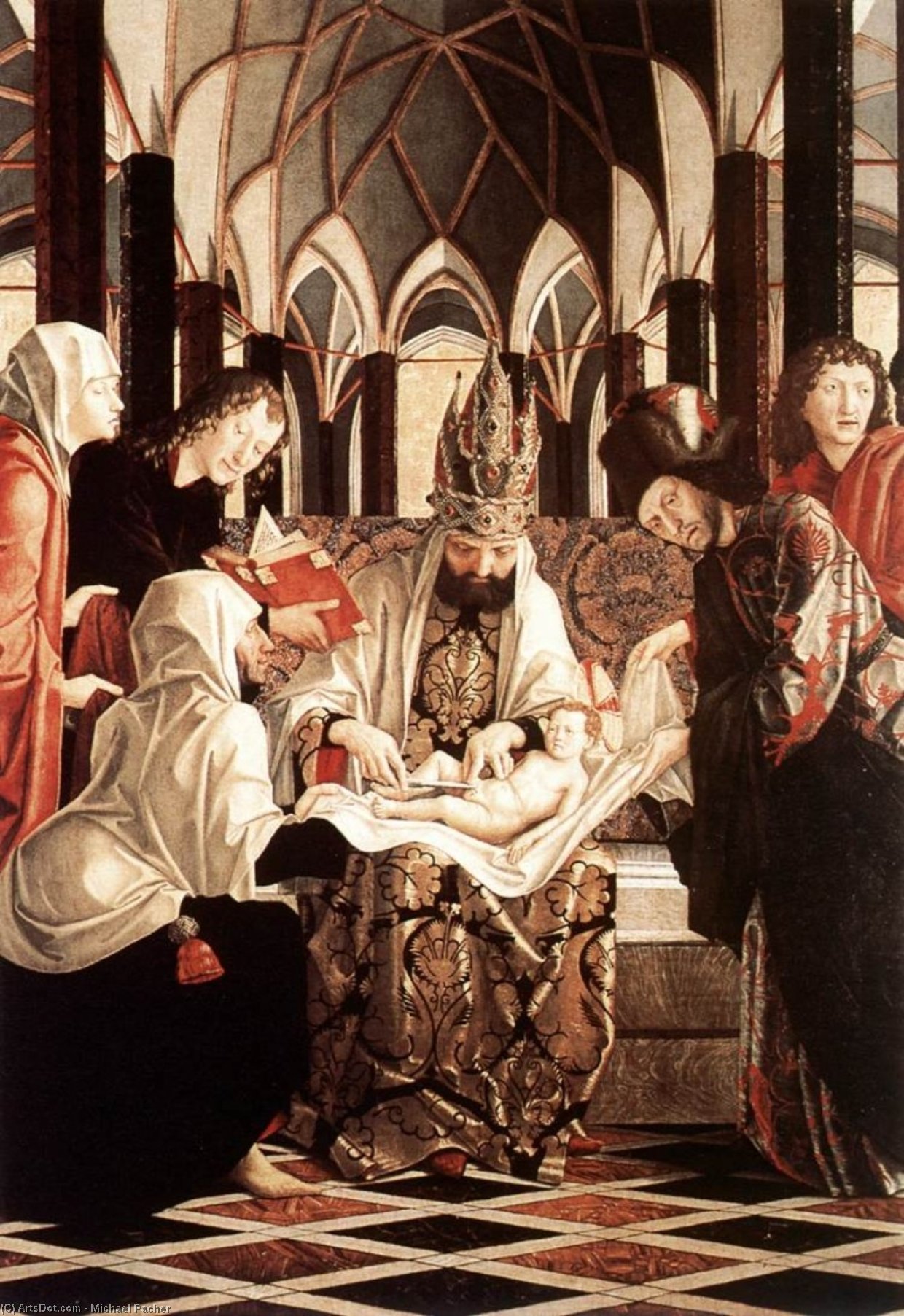
In the quiet majesty of the St Wolfgang Altarpiece: Circumcision, we are transported back to the year 1479, into a world where the sacred and the earthly collide with breathtaking intensity. This masterpiece by the Tyrolean master Michael Pacher is far more than a mere religious depiction; it is an immersive window into the soul of the Late Gothic era. As your eyes first meet the canvas, you are struck by a profound sense of solemnity. The scene unfolds within an opulent, Gothic-style chamber, where intricate vaulted ceilings and soaring arches create a cathedral-like atmosphere that commands reverence. At the heart of this architectural marvel lies the central drama: the presentation of the infant Jesus. Through a masterful use of chiaroscuro, Pacher illuminates the holy child, casting a divine glow that pierces through the rich, dramatic shadows of the chamber, drawing every viewer into the intimate gravity of the moment.
The technical brilliance of this work lies in Pacher’s unique ability to bridge two artistic worlds. Having been profoundly influenced by the revolutionary perspective of Andrea Mantegna during his travels to Italy, Pacher employs a rigorous linear perspective that breathes life and three-dimensional depth into the wood panel. This spatial precision allows the viewer to step through the ornate arches and navigate the complex layers of the scene. The technique is a triumph of the Early Netherlandish tradition; by layering thin, translucent glazes of oil paint, the artist achieves a luminous quality that makes the golds, deep reds, and earthy browns appear to glow from within. Every fold of heavy drapery and every delicate facial feature is rendered with a meticulousness that speaks to the painstaking devotion required of a Renaissance craftsman.
Symbolism and the Architecture of Faith
Beyond its visual splendor, the painting serves as a complex tapestry of theological meaning. The composition is intentionally pyramidal, a structural choice that provides an unshakable sense of stability and divine order. With the infant Jesus positioned at the apex, the hierarchy of the universe is made visible to the observer. The surrounding figures, including the imposing presence of King Herod, form a broad, grounded base that represents the weight of earthly power and the complexities of human history. This juxtaposition between the fragile, luminous infant and the heavy, ornate surroundings symbolizes the intersection of divine authority with the temporal world. The rich color palette—dominated by regal golds and deep crimsons—further reinforces themes of sanctity, sacrifice, and the enduring majesty of faith.
For the discerning collector or interior designer, this reproduction offers more than just a decorative element; it provides a focal point of profound historical and emotional resonance. The artwork’s ability to evoke both awe and introspection makes it an ideal centerpiece for spaces designed for contemplation, such as a private library, a formal study, or a grand salon. To possess a piece of this caliber is to invite the meticulous detail of the Renaissance into a modern environment, creating a dialogue between the timeless beauty of the 15th century and the sophisticated aesthetics of today. It is an invitation to experience the dramatic light, the intricate textures, and the enduring spiritual legacy of Michael Pacher’s incomparable vision.