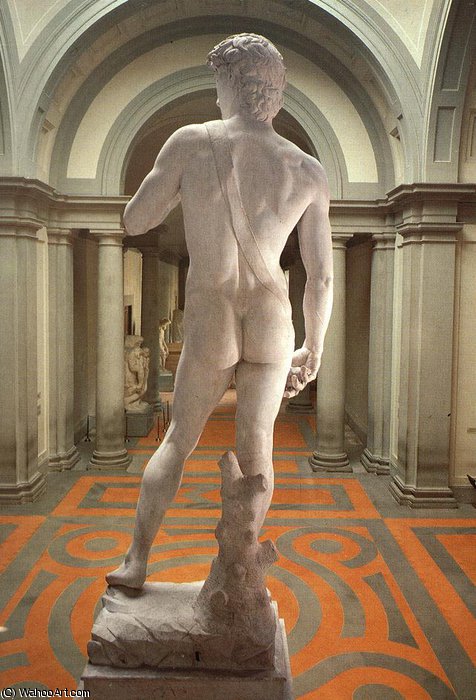
Explore Michelangelo’s iconic David! This Renaissance masterpiece showcases exquisite detail & human form. Own a unique art reproduction of this timeless sculpture.
Majstor renesanse Mikelanđelo Buonaroti (1475-1564) ostavio je neizbrisiv trag svojim skulpturama kao što su David i Pietà, veličanstvenim freskama na plafonu Sikstinske kapele i revolucionarnim arhitektonskim rešenjima. Istražite njegov genijalni stil!
Michelangelo Buonarroti’s David – A Testament to Human Form and Renaissance Ideals
Michelangelo Buonarroti, a name synonymous with the High Renaissance, resonates through centuries as a testament to human artistic potential. Born on March 6, 1475, in Caprese Michelangelo, nestled in the Tuscan hills of Italy, his life was an extraordinary convergence of talent, ambition, and divine inspiration. Though initially met with resistance from his father regarding an artistic path, young Michelangelo’s innate gift for drawing proved undeniable, setting him on a course to redefine the boundaries of sculpture, painting, and architecture. His early apprenticeship under Domenico Ghirlandaio provided foundational skills in fresco and draftsmanship, but it was within the Medici gardens—a haven of classical antiquity—that his artistic soul truly awakened. Immersed in the study of Greek and Roman sculptures, Michelangelo absorbed the principles of anatomy, proportion, and idealized beauty that would become hallmarks of his style. This formative experience profoundly shaped his approach to art, establishing him as a master of capturing the human form with unparalleled realism and grace.
The Sculpture’s Anatomy and Technique: A Marvel of Renaissance Precision
David stands as arguably Michelangelo's most celebrated sculpture, completed between 1501 and 1504 during his tenure in Florence under the patronage of Lorenzo de Medici—the Magnificent. Crafted from Carrara marble – a material revered for its purity and luminosity – David embodies the humanist ideals that dominated Renaissance thought. Michelangelo meticulously studied human anatomy, dissecting cadavers to achieve an astonishing level of accuracy. The statue’s musculature is rendered with breathtaking detail, reflecting Leonardo da Vinci's anatomical studies and demonstrating Michelangelo’s commitment to scientific observation alongside artistic expression. His technique involved employing a combination of chiseling and polishing—a laborious process that demanded immense patience and skill—resulting in a surface texture that captures the subtle nuances of marble veining, enhancing the sculpture’s visual impact and conveying its timeless elegance.
Historical Context: Symbolism Rooted in Biblical Narrative
David's subject matter derives from the biblical tale of David slaying Goliath – a narrative symbolizing courage, faith, and triumph over adversity. Michelangelo skillfully captured this dramatic moment, portraying David poised before his colossal opponent with unwavering resolve. The statue’s posture—a deliberate reference to classical depictions of heroic figures—emphasizes David’s strength and dignity while simultaneously conveying vulnerability beneath the surface. Furthermore, the sculpture's placement within the Medici gardens served as a deliberate homage to antiquity, aligning Michelangelo’s work with the broader Renaissance fascination for reviving Greco-Roman artistic traditions. It was intended to inspire awe and contemplation, reflecting the humanist belief in human potential and celebrating the beauty of the human form.
Emotional Impact: An Icon of Human Dignity
David transcends mere representation; it embodies an enduring symbol of human dignity and resilience. Michelangelo’s masterful execution captures not only physical perfection but also psychological depth—a palpable sense of determination and inner fortitude. The statue's gaze directs upwards, symbolizing David’s unwavering faith and confronting the challenge ahead with courage. Its serene expression contrasts sharply with the violence depicted in the biblical story, prompting viewers to consider themes of moral virtue and spiritual fortitude. As a result, David continues to resonate powerfully across cultures and eras, serving as an inspiration for artists and audiences alike—a testament to Michelangelo’s ability to transform stone into emotion and elevate sculpture to its highest form.