A Fragmented Vision of Eternal Sorrow
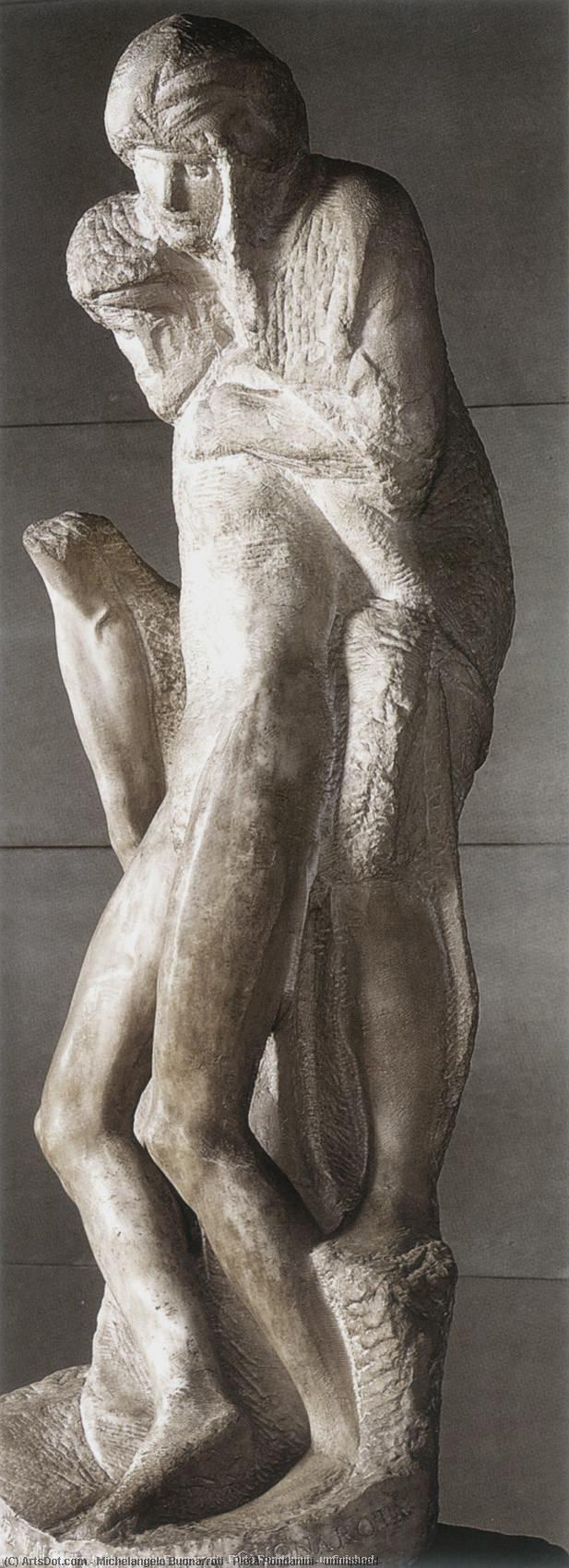
In the twilight of his life, amidst the heavy shadows of mortality, Michelangelo Buonarroti embarked on a final, profound dialogue with marble. The Pietà Rondanini is not merely an unfinished sculpture; it is a haunting, ethereal testament to a master grappling with the very essence of human suffering and divine grace. Unlike the polished perfection of his earlier works, this late masterpiece, begun in 1552, possesses a raw, skeletal beauty that transcends the boundaries of traditional Renaissance aesthetics. As one gazes upon the intertwining forms of the Virgin Mary and her son, there is an immediate, visceral sense of a soul attempting to break free from the physical weight of stone, leaving behind a trace of what might have been a completed triumph.
The subject matter—the lamentation of Christ—is a cornerstone of Christian iconography, yet Michelangelo breathes a singular, introspective life into this familiar scene. Here, the figures do not possess the robust, muscular vitality seen in his David; instead, they appear fragile, almost translucent, as if being slowly reclaimed by the ether. The composition focuses on the profound connection between mother and son, where the boundaries between their bodies seem to blur through a masterful use of light and shadow. For the discerning collector or lover of fine art, this piece offers a rare window into the artist's late-stage evolution, moving away from anatomical bravado toward a spiritual minimalism that anticipates the expressive freedom of future centuries.
The Alchemy of Marble and Motion
To study the technique of the Pietà Rondanini is to witness the struggle of the creator against his medium. Michelangelo utilized a subtractive method, yet in this final work, the "unfinished" nature—the non finito—becomes its most powerful stylistic element. The surface of the marble fluctuates between smooth, polished planes and rugged, tool-marked textures that catch the light in unpredictable ways. This deliberate or perhaps interrupted texture creates a sense of movement, as if the figures are caught in a moment of spiritual ascension or descent. The way the drapery falls, less like heavy fabric and more like flowing liquid, demonstrates an unparalleled command over the density of Carrara marble.
For interior designers and curators seeking to introduce a sense of profound depth into a space, this sculpture serves as a focal point of immense gravity. A high-quality reproduction of this work does not merely decorate a room; it anchors it with a sense of history and contemplative silence. The interplay of the rough-hewn stone and the delicate facial expressions invites viewers to linger, making it an ideal centerpiece for galleries or sophisticated living environments that prioritize intellectual and emotional resonance over mere ornamentation.
A Legacy of Divine Compassion
Beyond its technical brilliance, the Pietà Rondanini is a profound meditation on the concept of compassion. The symbolism embedded in the slumped posture of the figures and the delicate, almost ghostly grip of the hands speaks to a universal experience of grief and the hope for redemption. It is a work that bridges the gap between the earthly and the divine, making it an enduring icon of the High Renaissance. Owning or displaying a reproduction of this masterpiece allows one to surround themselves with the echoes of Michelangelo’s final, most intimate thoughts—a permanent reminder of the beauty found within fragility and the eternal strength found in sorrow.