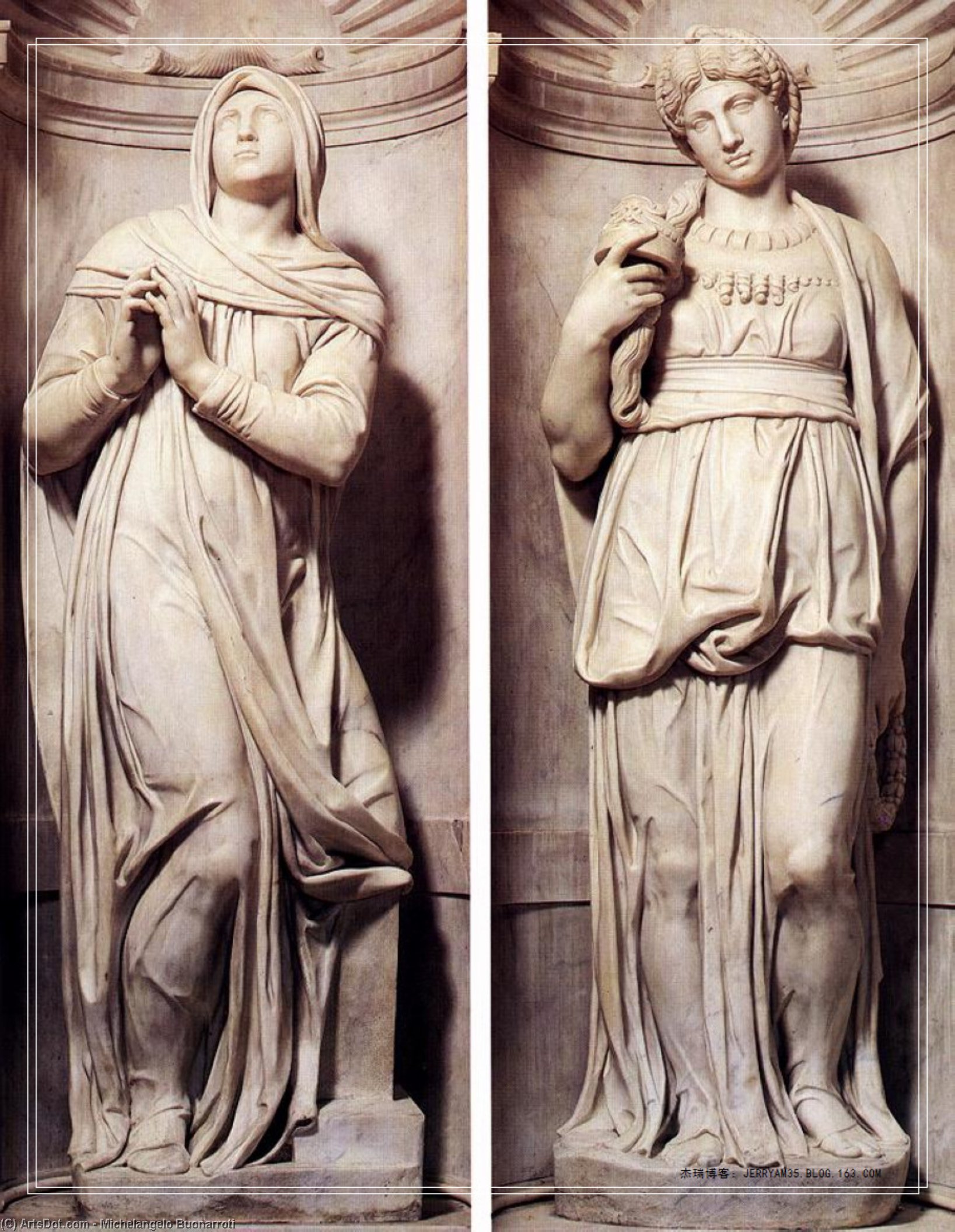
Rachel and Leah by Michelangelo Buonarroti: A Renaissance Masterpiece
Michelangelo Buonarroti’s ‘Rachel and Leah,’ sculpted in 1545 during his mature period, stands as an unparalleled achievement of the High Renaissance—a testament to artistic innovation and profound human emotion. Situated within the monumental Tomb of Julius II at San Pietro in Vincoli, Rome, this sculpture transcends mere representation; it embodies a complex interplay of biblical narrative and artistic virtuosity.
Historical Context and Creation
The creation of ‘Rachel and Leah’ occurred amidst the fervor of Renaissance artistic patronage—Pope Julius II commissioned Michelangelo to undertake an ambitious project aimed at commemorating his papacy. This undertaking necessitated meticulous planning, technical mastery, and unwavering dedication – qualities that Michelangelo possessed in abundance. Influenced by the rediscovery of classical Greek and Roman sculpture, Michelangelo sought to emulate the idealized forms and serene expressions characteristic of antiquity, elevating his craft to new heights.
Depiction and Artistic Significance
The sculpture portrays two figures from the biblical tale of Jacob’s wives—Rachel and Leah—captured in exquisite marble detail. Michelangelo skillfully conveys their individual personalities through subtle gestures and facial expressions, demonstrating an extraordinary understanding of human anatomy and psychology. Rachel, depicted with upward gaze and graceful posture, symbolizes faith and contemplation, while Leah embodies resilience and strength—a portrayal that resonates deeply with humanist ideals prevalent during the Renaissance.
Composition, Style, and Technique
Michelangelo’s compositional brilliance is evident in the harmonious balance achieved between the two figures. Employing the innovative “non-finito” technique – leaving portions of the marble unpolished – Michelangelo deliberately introduced an element of spontaneity and immediacy into his work, highlighting the underlying form while suggesting an ongoing creative process. The smooth, flowing lines characteristic of classical sculpture contribute to the sculpture’s elegance and grace, emphasizing idealized human forms and serene expressions.
Symbolism and Legacy
‘Rachel and Leah’ transcends its biblical subject matter, serving as a powerful emblem of contrasting life experiences—spiritual devotion versus earthly responsibility. Michelangelo's masterful rendering captures these themes with remarkable sensitivity, reflecting broader Renaissance artistic concerns about the human condition. Today, reproductions of this masterpiece are available at
https://ArtsDot.com, allowing admirers worldwide to experience the enduring beauty and intellectual depth of Michelangelo’s genius.