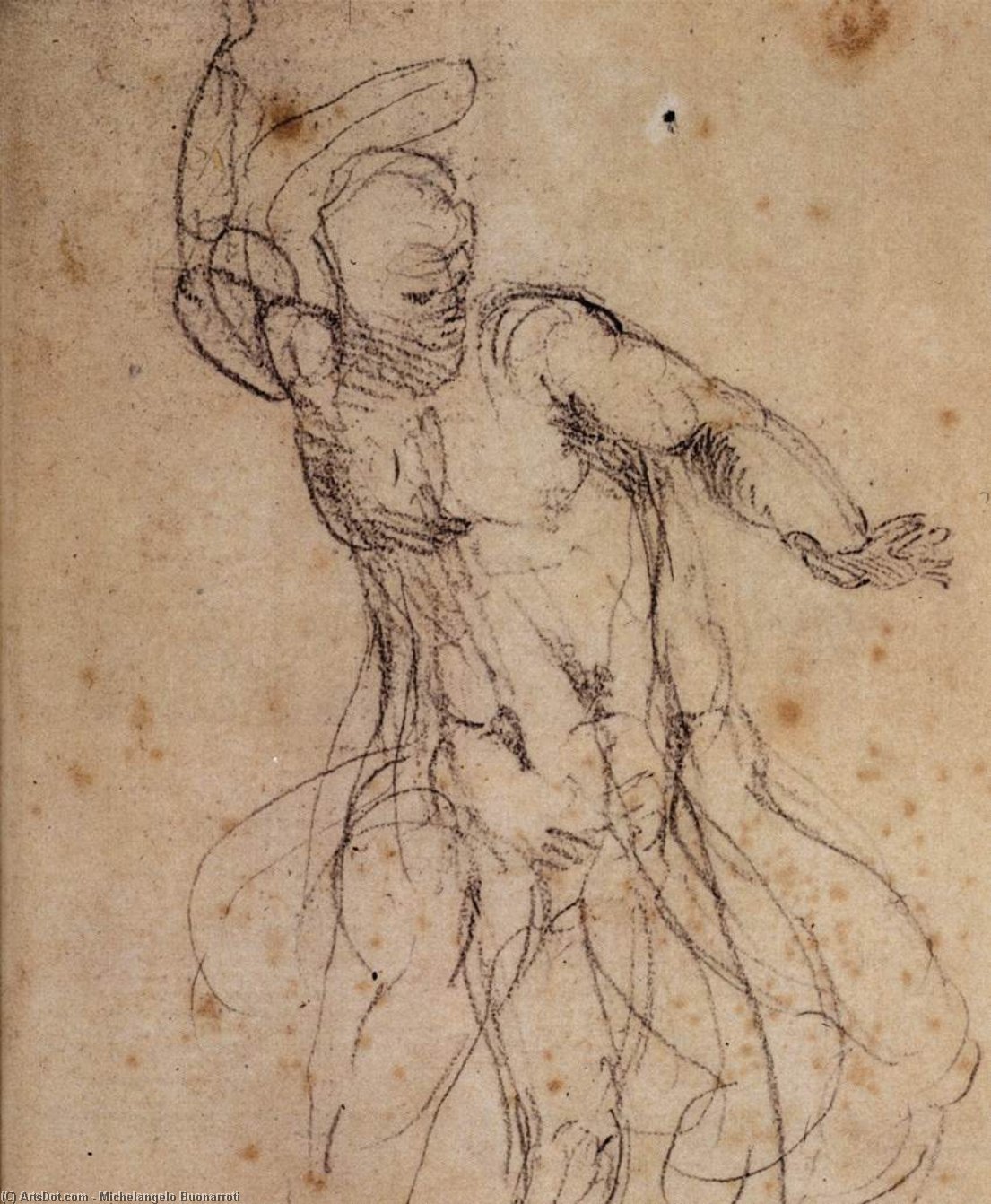
Resurrection of Christ: A Masterpiece by Michelangelo
- Title: Resurrection of Christ
- Artist: Michelangelo Buonarroti
- Date: 1532
- Medium: Pencil drawing
- Location: Casa Buonarroti Museum, Florence, Italy
The Artistic Vision and Technique
Michelangelo's "Resurrection of Christ" is a remarkable pencil drawing that exemplifies his unparalleled skill in depicting the human form and conveying powerful emotions. Created in 1532, this piece resides within the esteemed Casa Buonarroti Museum in Florence. The drawing portrays a dynamic scene – a figure seemingly ascending or performing an athletic feat with arms raised, capturing a moment of intense energy and movement. Michelangelo's mastery lies in his meticulous use of pencil lines to define muscles and convey the subject’s dynamism. The composition is striking; it exudes a sense of upward motion and spiritual liberation. The intricate detailing and precise shading create a three-dimensional effect, bringing the figure to life on paper.
Historical Context and Significance
This drawing emerged during a period of significant artistic and religious exploration in Renaissance Italy. Michelangelo, already renowned for his sculptures like David and the Sistine Chapel frescoes, continued to push the boundaries of artistic expression. The Casa Buonarroti Museum itself holds immense historical value, established by Michelangelo's great-nephew to preserve the artist’s legacy. The museum provides invaluable insight into Michelangelo’s development as an artist and his profound influence on Western art. This particular drawing is believed to have been part of a series exploring themes of resurrection and ascension, possibly intended for a larger artistic project.
Symbolism and Emotional Impact
Beyond its technical brilliance, "Resurrection of Christ" carries deep symbolic weight. The figure's upward movement represents spiritual transcendence and the triumph over earthly limitations. The muscular physique, characteristic of Michelangelo’s style, imbues the scene with a sense of power and vitality. The drawing evokes feelings of awe, hope, and liberation. It invites viewers to contemplate themes of faith, renewal, and the enduring human spirit. The use of pencil allows for subtle gradations of tone, enhancing the emotional depth and creating an intimate connection between the viewer and the artwork.
A Timeless Masterpiece
"Resurrection of Christ" stands as a testament to Michelangelo's genius and his ability to capture profound human experiences through art. Its enduring appeal lies in its technical mastery, historical significance, and powerful emotional resonance. For those seeking to bring the beauty and inspiration of Renaissance art into their homes or collections, a high-quality reproduction offers a unique opportunity to appreciate this timeless masterpiece.