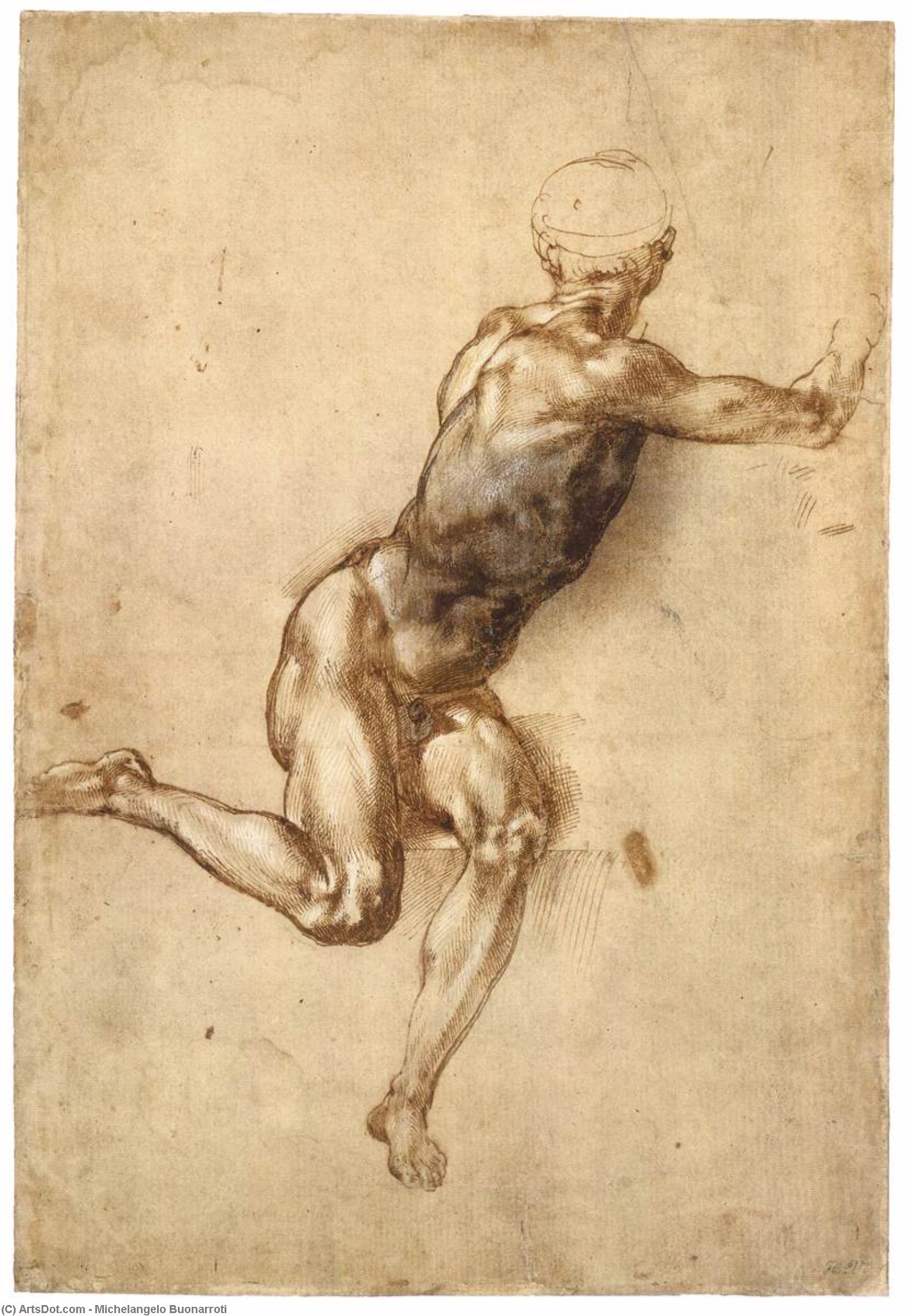
Sitting Male Nude (recto) by Michelangelo Buonarroti
- Title: Sitting Male Nude (recto)
- Artist: michelangelo buonarroti
- Date: 1504
- Size: 420 x 285 cm
- Current Location: British Museum, London, United Kingdom
Background and Context
The "Sitting Male Nude (recto)" was created in 1504 during Michelangelo's early career. This period saw him working on significant projects, including the iconic sculpture David. The drawing is part of a series of studies for his fresco "The Battle of Cascina," commissioned by the Florentine Republic to adorn the Palazzo Vecchio. This project aimed to inspire civic virtue and patriotism among the citizens of Florence. It's important to note that “The Battle of Cascina” was ultimately never completed, but these preparatory drawings offer invaluable insight into Michelangelo’s creative process. The drawing reflects a time of political upheaval in Florence, with the Republic striving to maintain its independence amidst larger European powers.
Artistic Technique and Significance
Executed primarily in pen, this drawing showcases Michelangelo's mastery of line and shading. He skillfully captures the muscular physique and dynamic pose of the male figure. The study demonstrates a deep understanding of human anatomy, a hallmark of his artistic style. The "Sitting Male Nude (recto)" is not merely a technical exercise; it reflects Michelangelo’s fascination with the idealized form of the human body – a cornerstone of Renaissance art inspired by classical antiquity. The use of pen allows for intricate detailing and subtle gradations in tone, creating a sense of volume and depth despite the monochromatic nature of the work. The figure's pose suggests both strength and vulnerability, hinting at the complexities of human existence.
Symbolism and Emotional Impact
While seemingly straightforward as an anatomical study, the "Sitting Male Nude (recto)" carries symbolic weight within the context of Renaissance art. The nude male form was often associated with classical ideals of beauty, heroism, and intellectual prowess. Michelangelo's meticulous rendering elevates this figure beyond a mere physical representation; it becomes an embodiment of human potential. The drawing evokes feelings of admiration for the human body’s capabilities and a sense of awe at Michelangelo’s ability to capture its essence on paper. The implied movement in the pose suggests vitality and energy, contributing to the overall emotional impact.
Conservation and Relevance Today
Housed within the esteemed collection of the British Museum in London, the "Sitting Male Nude (recto)" is meticulously preserved, allowing future generations to appreciate its beauty and historical significance. Michelangelo's works continue to inspire artists and designers today. His studies of the human form have profoundly influenced artistic movements from the Renaissance to contemporary sculpture. The drawing serves as a powerful reminder of the enduring appeal of classical ideals in modern art and underscores Michelangelo’s lasting legacy as one of history’s greatest masters.