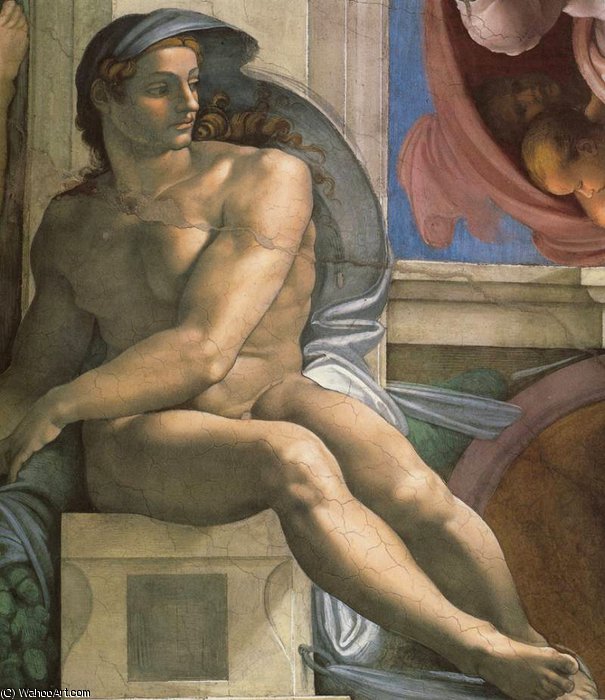
Sistine Chapel Ceiling Ignudi next to Separation of Land and the Persian Sybil

Explore Michelangelo's masterpiece: 'Sistine Chapel Ceiling Ignudi'. Witness the divine artistry & human form within this iconic Renaissance fresco.


Mihailo Anđelo (1475 - 1564)

Majstor renesanse Mikelanđelo Buonaroti (1475-1564) ostavio je neizbrisiv trag svojim skulpturama kao što su David i Pietà, veličanstvenim freskama na plafonu Sikstinske kapele i revolucionarnim arhitektonskim rešenjima. Istražite njegov genijalni stil!

Sistine Chapel Ceiling Ignudi next to Separation of Land and the Persian Sybil

  • Subject: The artwork depicts a scene from Michelangelo's fresco on the Sistine Chapel ceiling, showcasing nude male figures (ignudi) positioned alongside depictions of the "Separation of Land" and the prophetic figure of the "Persian Sybil."
  • Style: High Renaissance. This period is characterized by its emphasis on classical ideals, humanism, realism, and harmonious composition. Michelangelo's work exemplifies these traits with his masterful depiction of the human form and intricate storytelling.

Michelangelo Buonarroti: The Artist Behind the Masterpiece

  • Birth Year: 1475
  • Death Year: 1564
  • Biography: Michelangelo di Lodovico Buonarroti Simoni was a true polymath, excelling in sculpture, painting, architecture, and poetry. Born in Florence, Italy, he became an influential figure during the High Renaissance period. His work on the Sistine Chapel ceiling is considered one of the greatest achievements in Western art. He was known for his "terribilità"—his ability to instill a sense of awe in viewers of his art.

Technique and Historical Context

  • Technique: Fresco painting. This technique involves applying pigments to wet plaster, allowing the colors to bind with the plaster as it dries. The Sistine Chapel ceiling is an immense fresco project, requiring meticulous planning and execution.
  • Historical Context: Commissioned by Pope Julius II between 1508 and 1512, the Sistine Chapel ceiling was intended to adorn the papal chapel in Vatican City. It reflects the artistic and intellectual fervor of the High Renaissance, a period marked by renewed interest in classical art and philosophy. The frescoes depict scenes from the Book of Genesis, illustrating key moments in Christian theology.

Symbolism and Emotional Impact

  • Ignudi: These idealized nude figures are not merely decorative; they represent strength, beauty, and divine inspiration. Their presence adds a sense of dynamism and classical grandeur to the scene.
  • Separation of Land: This depiction illustrates God's creation of dry land from the primordial waters, symbolizing order emerging from chaos.
  • Persian Sybil: As one of the five Sibyls depicted on the ceiling, she represents prophecy and divine wisdom. Her expression conveys a sense of profound contemplation and connection to the spiritual realm.
  • Emotional Impact: The artwork evokes feelings of awe, wonder, and reverence. Michelangelo's masterful use of anatomy, perspective, and color creates a visually stunning and emotionally powerful experience for the viewer. The sheer scale and complexity of the fresco inspire a sense of humility and appreciation for human artistic achievement.

Bringing Renaissance Art Home

  • Reproductions: High-quality reproductions allow art enthusiasts to appreciate Michelangelo's masterpiece in their own homes or offices. These reproductions capture the essence and beauty of the original artwork, providing a lasting source of inspiration.
  • Cinquecento Art Movement: The Sistine Chapel ceiling is a prime example of the Cinquecento art movement, which flourished in Italy during the 16th century. This period was characterized by its emphasis on classical ideals, humanism, and artistic innovation.