A Divine Vision Captured in Fresco: Michelangelo’s Sistine Chapel Ceiling
The Sistine Chapel ceiling stands as an unparalleled testament to artistic genius and a cornerstone of Western art history. Commissioned by Pope Julius II in 1508, Michelangelo Buonarroti embarked on a monumental undertaking—a project that would redefine the boundaries of fresco painting and solidify his legacy as one of the Renaissance’s greatest masters. More than just decorative embellishment, this expansive mural embodies theological contemplation and celebrates humanity's relationship with God, offering viewers an unforgettable glimpse into the creative spirit of its time.
- Subject Matter: The ceiling depicts nine scenes from Genesis—the Creation of Adam being arguably the most iconic—narrating the biblical story from beginning to end. These images are meticulously rendered, capturing pivotal moments in God’s divine plan and conveying profound spiritual messages.
- Style & Technique: Michelangelo employed the fresco technique, a demanding process requiring painstaking preparation and rapid execution before the plaster dried. This method necessitated an intimate understanding of material properties and demanded unwavering concentration from the artist. The result is breathtaking—a vibrant tapestry of color and form that has endured for centuries, showcasing Michelangelo’s unparalleled mastery of anatomy and perspective.
- Historical Context: Painted during a period of papal patronage and artistic fervor, the Sistine Chapel ceiling reflects the humanist ideals prevalent in Renaissance Florence. It represents a deliberate effort to elevate religious art beyond mere illustration, aiming instead to inspire awe and reverence for God’s majesty.
The Ignudi: Embodied Perfection Amidst Divine Narrative
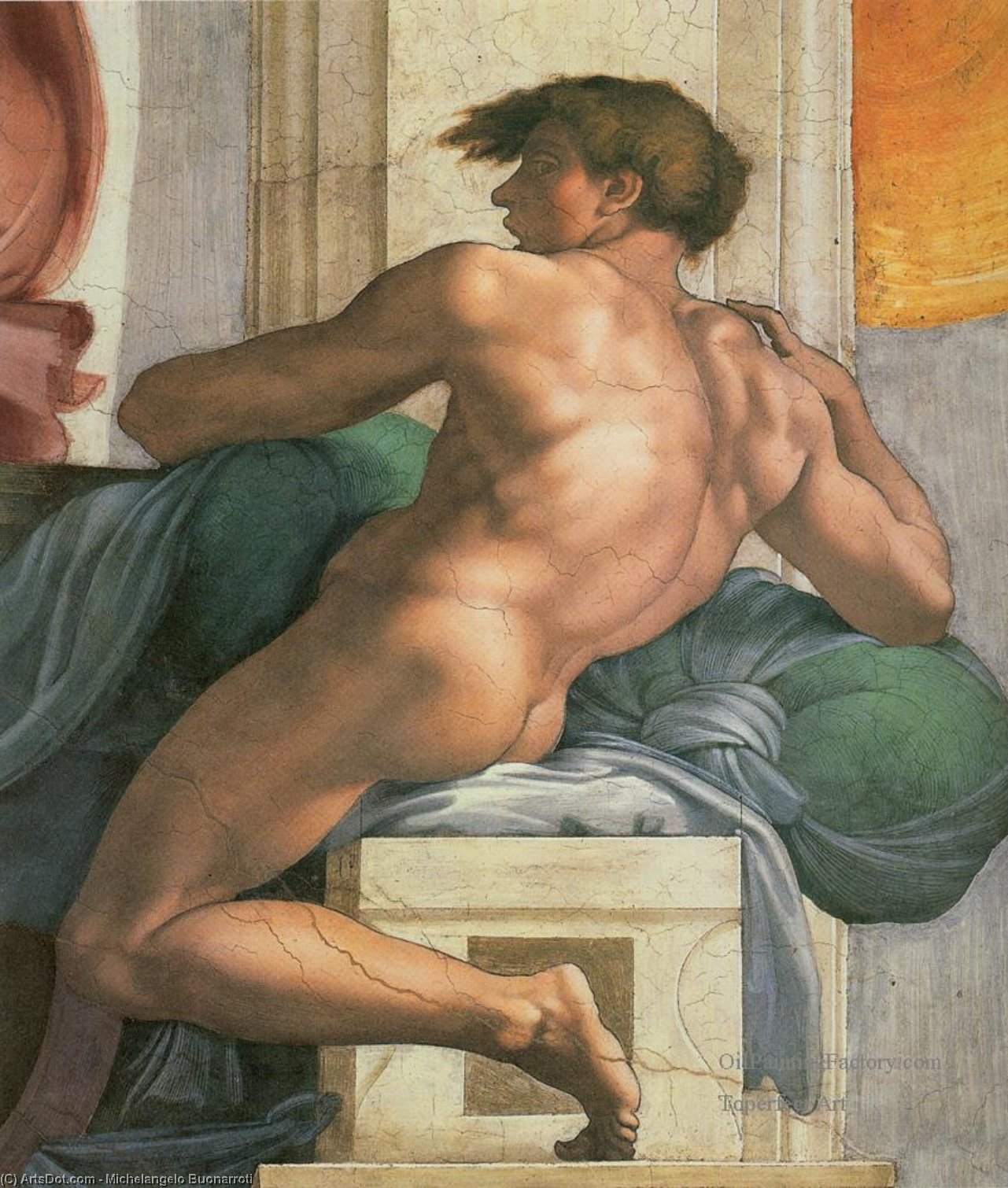
Among the numerous figures adorning the ceiling are twelve “Ignudi”—naked male sculptures—positioned strategically around the central panels depicting The Creation of Adam and The Separation of Land from Water. These statues, sculpted with astonishing anatomical accuracy, embody idealized beauty and represent humanity’s potential for spiritual transcendence. Michelangelo's meticulous attention to detail—the musculature, posture, and subtle expressions—elevates them beyond mere decoration, transforming them into symbols of divine grace and human aspiration. Their placement reinforces the overarching narrative, emphasizing God’s creation of humankind as a reflection of his own perfection.
Symbolism & Emotional Impact
The Sistine Chapel ceiling transcends its visual splendor to evoke profound emotional responses in viewers. The vibrant colors—particularly blues and reds—were chosen deliberately to convey feelings of majesty, passion, and divine illumination. Michelangelo’s masterful composition guides the eye across the expansive mural, immersing the spectator in a realm of spiritual contemplation. More than just an artistic achievement, it serves as a powerful reminder of humanity's place within the cosmos and invites reflection on fundamental questions concerning faith and morality. The enduring fascination with this masterpiece speaks to its ability to capture the essence of Renaissance humanism—a belief in the dignity of humankind and the transformative power of art.
A Legacy Enduring Through Time
Michelangelo Buonarroti’s Sistine Chapel ceiling remains an unparalleled symbol of artistic excellence, continuing to inspire awe and admiration across generations. Its meticulous execution, profound symbolism, and enduring beauty solidify its position as one of the greatest achievements in Western art history—a testament to Michelangelo's genius and a timeless celebration of human creativity.