Michelangelo Buonarroti: A Renaissance Titan
Michelangelo di Lodovico Buonarroti Simoni, born March 6, 1475, in Caprese Michelangelo, Tuscany, stands as one of the most monumental figures in Western art history. His prodigious talent for sculpture and painting cemented his legacy as an unparalleled innovator—a true embodiment of the Renaissance ideal. From humble beginnings – a family struggling to maintain solvency – Michelangelo ascended to become Florence’s foremost artist, shaping the cultural landscape of his time and influencing generations of subsequent creatives. Giorgio Vasari famously declared him “supreme in not one art alone but in all three,” encapsulating the breadth of his artistic genius.
Early Life and Training (1475-1496)
- Michelangelo’s father, Ludovico Buonarroti Simoni, initially resisted an artistic vocation for his son, recognizing Michelangelo's exceptional aptitude for drawing.
- At age 13, he apprenticed with Domenico Ghirlandaio in Florence, mastering fresco techniques and honing his observational skills—a formative experience that instilled a lifelong fascination with classical forms.
- He swiftly gravitated towards sculpture, studying the sculptures of Donatello and Lorenzo Ghiberti in the Medici gardens – an encounter profoundly impacting his artistic sensibilities.
Early Period: Establishing Mastery (1490-1505)
- Around 1496, Michelangelo received his first major commission: the sculpture of *The Pietà*, completed in 1499. This masterpiece—housing in St. Peter's Basilica—demonstrated his unparalleled ability to convey profound emotion through marble carving and captured the sublime beauty of human anatomy with breathtaking precision.
- His subsequent landmark work was *David* (1501-1504), sculpted for Florence’s Piazza della Signoria, symbolizing Florentine republican ideals and embodying Michelangelo's mastery of idealized form.
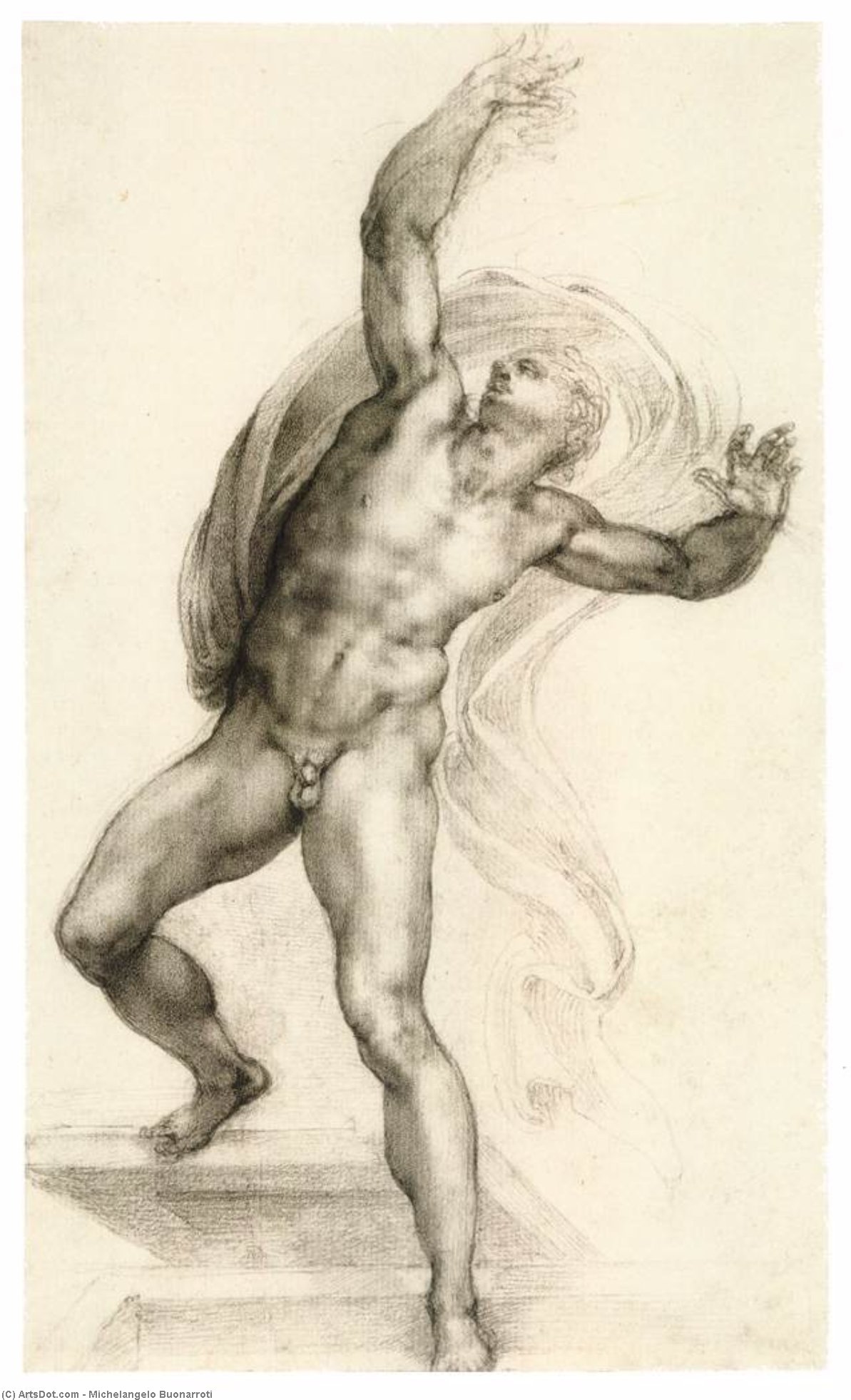
The Risen Christ: A Study in Resurrection
Painted in 1532,
The Risen Christ measures 373 x 221 cm and resides in the esteemed
Royal Collection at Windsor Castle in the United Kingdom. This chalk drawing exemplifies Michelangelo’s remarkable skill in capturing religious themes with subtle shading and texture—a testament to his artistic vision.
Background and Context
Painted during a period of intense spiritual fervor following Luther's Reformation,
The Risen Christ reflects Michelangelo’s engagement with humanist ideals blended with Christian iconography. Its commission stemmed from Cardinal Giovanni Gastaldi—a devout supporter of Michelangelo—who envisioned it as a centerpiece for the chapel of St. Mary Magdalene in Windsor Castle. The drawing's creation coincided with Michelangelo’s exile from Rome, marking a pivotal moment in his artistic journey and demonstrating resilience amidst adversity.
Composition and Symbolism
The central figure of Christ dominates the composition, depicted in an ascension pose—arms outstretched towards heaven and eyes gazing upwards—symbolizing the triumphant return of Jesus after his crucifixion. Surrounding figures—including St. Mary Magdalene and Nicodemus—engage in various activities—such as wiping Christ’s face and examining his wounds—adding depth to the scene without detracting from the central narrative. The dynamic posture conveys a palpable sense of movement and energy, mirroring the divine act of resurrection itself.
Artistic Techniques
Michelangelo's masterful use of chalk—a medium rarely employed by Renaissance artists—creates a dramatic effect, drawing the viewer’s gaze to Christ’s torso—which is rendered with astonishing realism through meticulous shading and textural detail. Tiny stippled strokes of chalk build up the body surface, achieving an illusion of volume that transcends mere pigment—a technique characteristic of Michelangelo's groundbreaking approach to drawing. The resulting image possesses a luminous quality—capturing the ethereal glow of divine grace.
Significance in Art History
The Risen Christ is not merely a religious icon—but rather an artistic milestone—demonstrating Michelangelo’s innovative spirit and his ability to convey profound narratives through deceptively simple techniques. It stands as a cornerstone of Renaissance sculpture—inspiring artists for centuries to come and securing its place among the most celebrated artworks of all time.
Other Notable Works by Michelangelo Buonarroti
Conclusion
The Risen Christ by Michelangelo Buonarroti embodies the artist’s unparalleled skill in portraying religious themes with breathtaking emotional depth—a testament to his enduring legacy as one of history's greatest masters. As part of the
Royal Collection, it continues to captivate audiences worldwide—inspiring awe and reverence for Michelangelo’s genius. For those eager to explore more masterpieces by Michelangelo Buonarroti, visit
The Royal Collection at ArtsDot.