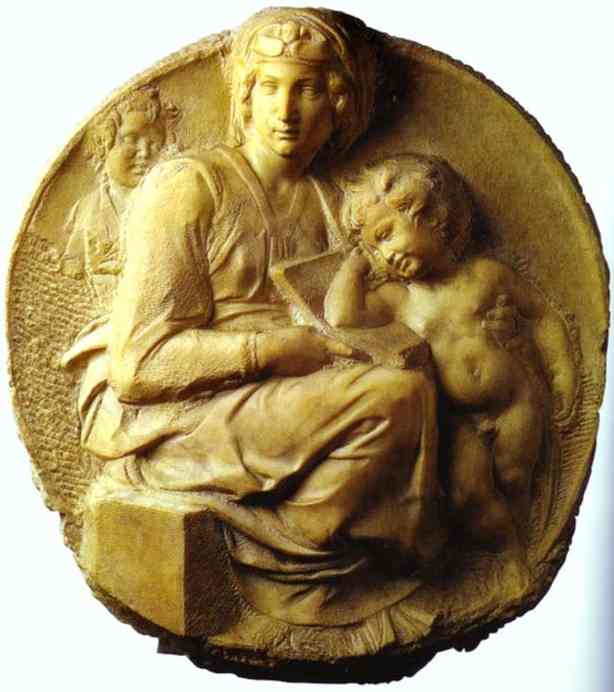
Michelangelo's Tondo Pitt (c. 1503-1505) is a captivating marble relief depicting the Virgin Mary, infant Jesus, and John the Baptist – a High Renaissance masterpiece.
The Tondo Pitti: A Renaissance Masterpiece
The Tondo Pitti is a renowned marble relief sculpture created by Michelangelo Buonarroti between 1503 and 1505. This circular artwork, also known as the Madonna of the Medici, exemplifies the High Renaissance style and showcases Michelangelo's exceptional skill in sculpting.
Subject Matter and Composition
The Tondo Pitti depicts the Virgin Mary holding the infant Jesus, with Saint John the Baptist present. The composition is circular (a "tondo"), a format popular during the Renaissance that allowed for a dynamic arrangement of figures within a contained space. Mary sits on a low block, her gaze directed towards the viewer, creating an immediate connection. The infant Jesus leans against his mother, and Saint John the Baptist appears in the background, seemingly observing the scene. Michelangelo's masterful use of perspective and anatomy brings these figures to life with remarkable realism.
Style and Technique
The sculpture embodies the ideals of the High Renaissance: a focus on humanism, naturalism, and classical influences. Michelangelo’s technique is evident in the meticulous detail of the drapery folds and the expressive faces of the figures. Notably, parts of the relief are left unfinished, revealing the marks of Michelangelo's tools – a deliberate choice that adds to the work's raw beauty and sense of immediacy. This "unfinishedness" highlights the artist’s process and invites viewers to contemplate the creative journey.
Historical Context and Symbolism
Created during a period of significant artistic flourishing in Florence, the Tondo Pitti reflects the cultural values of the time. The work was commissioned by Bartolomeo Pitti, likely for private devotion. Symbolically, the open book on Mary’s lap represents wisdom and knowledge, while Saint John's presence foreshadows Jesus' future role. The winged cherub above Mary’s head symbolizes her awareness of divine prophecies. The circular shape itself can be interpreted as representing eternity and perfection.
Emotional Impact and Legacy
The Tondo Pitti evokes a sense of serene contemplation and maternal tenderness. Michelangelo's ability to convey emotion through marble is truly remarkable, creating a work that resonates with viewers across centuries. The sculpture’s influence on subsequent generations of artists is undeniable, solidifying its place as a cornerstone of Renaissance art and a testament to Michelangelo’s genius.