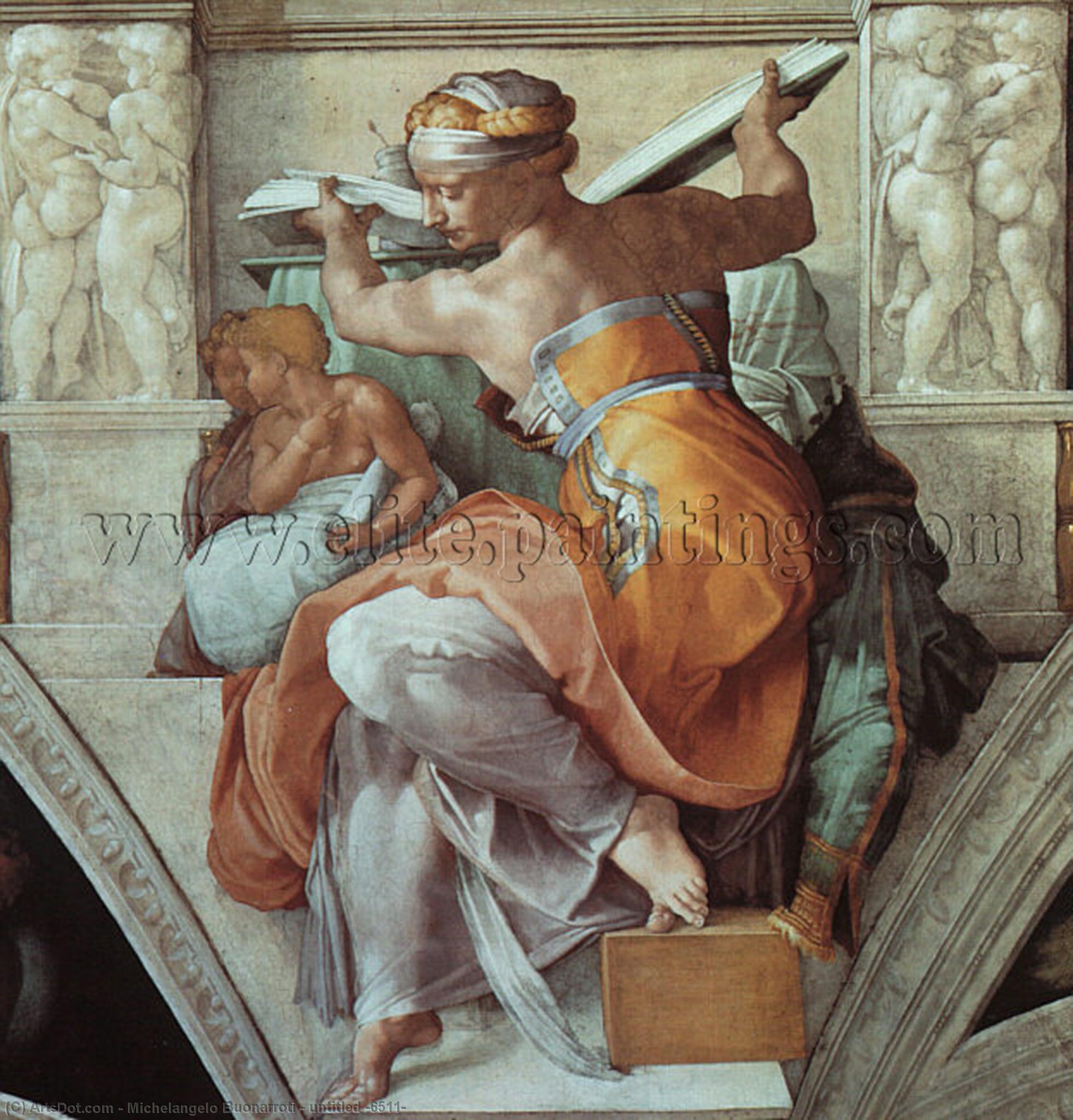
Discover 'untitled (6511)' by Michelangelo Buonarroti. This intriguing painting features a woman with a book and scissors, surrounded by figures, hinting at everyday life or historical narrative.
Majstor renesanse Mikelanđelo Buonaroti (1475-1564) ostavio je neizbrisiv trag svojim skulpturama kao što su David i Pietà, veličanstvenim freskama na plafonu Sikstinske kapele i revolucionarnim arhitektonskim rešenjima. Istražite njegov genijalni stil!
A Glimpse into Renaissance Life: Decoding Michelangelo’s Untitled Composition
The artwork known simply as “untitled (6511)” by the masterful Michelangelo Buonarroti presents a captivating scene that, while lacking explicit documentation, resonates with the spirit of the High Renaissance and invites compelling interpretation. The painting depicts a woman, elegantly attired in an orange dress and adorned with a gold necklace, engaged in a moment of focused attention. She holds a book in one hand and a pair of scissors in the other – objects that immediately suggest themes of knowledge, creation, or perhaps even domesticity intertwined with intellectual pursuit. Her gaze is directed outward, hinting at a narrative unfolding beyond the canvas’s edge, drawing the viewer into her world. The presence of additional figures—two on the left and one to the right—along with a suitcase near the bottom corner, adds layers of complexity, suggesting travel, interaction, or perhaps a scene plucked from everyday life elevated by Michelangelo's artistic touch.
Michelangelo’s Unexpected Genre Scene
While celebrated primarily for his monumental sculptures like *David* and the breathtaking frescoes adorning the Sistine Chapel ceiling, this painting reveals a less-explored facet of Michelangelo’s genius. He was, above all, an observer of humanity, deeply invested in portraying the human form and emotional states with unparalleled realism and psychological depth. This composition, though differing significantly from his more famous works, demonstrates that same keen observation. It is unusual for Michelangelo to engage in what appears to be a genre scene—a depiction of ordinary people engaged in everyday activities. However, even within this seemingly simple setting, the artist’s mastery shines through. The subtle modeling of the figures, the careful attention to drapery, and the overall composition speak to his rigorous training and innate talent. It's plausible that this work was a study for a larger project or perhaps a private commission, offering a rare glimpse into Michelangelo’s artistic explorations beyond his grand religious and civic commissions.
Symbolism and Interpretation: A Renaissance Woman’s World
The symbolism within the painting is rich and open to interpretation. The book represents learning, wisdom, and access to knowledge—qualities highly valued during the Renaissance. The scissors, traditionally associated with craft and creation, could symbolize agency, independence, or even a willingness to shape one's own destiny. The orange dress, a vibrant hue, might signify prosperity or social standing. Considering Michelangelo’s era, it is tempting to view this woman as embodying the ideals of the Renaissance humanist movement—a celebration of human potential and intellectual curiosity. The suitcase suggests a journey, either literal or metaphorical, hinting at change, exploration, or the pursuit of new opportunities. The other figures present could be family members, companions, or individuals involved in her story, adding to the narrative ambiguity and inviting viewers to construct their own interpretations.
The Enduring Legacy: Bringing Renaissance Masterpiece into Your Space
Owning a hand-painted reproduction of Michelangelo’s “untitled (6511)” is an opportunity to bring a piece of Renaissance history into your home or office. The painting's intimate scale and intriguing subject matter make it suitable for various interior settings, from cozy studies to elegant living rooms. Its warm color palette and subtle details will add depth and sophistication to any space. More than just a decorative element, this artwork serves as a conversation starter—a reminder of the artistic brilliance of Michelangelo and the enduring power of Renaissance ideals. It’s an invitation to contemplate the lives of those who came before us and to appreciate the beauty and complexity of the human experience.