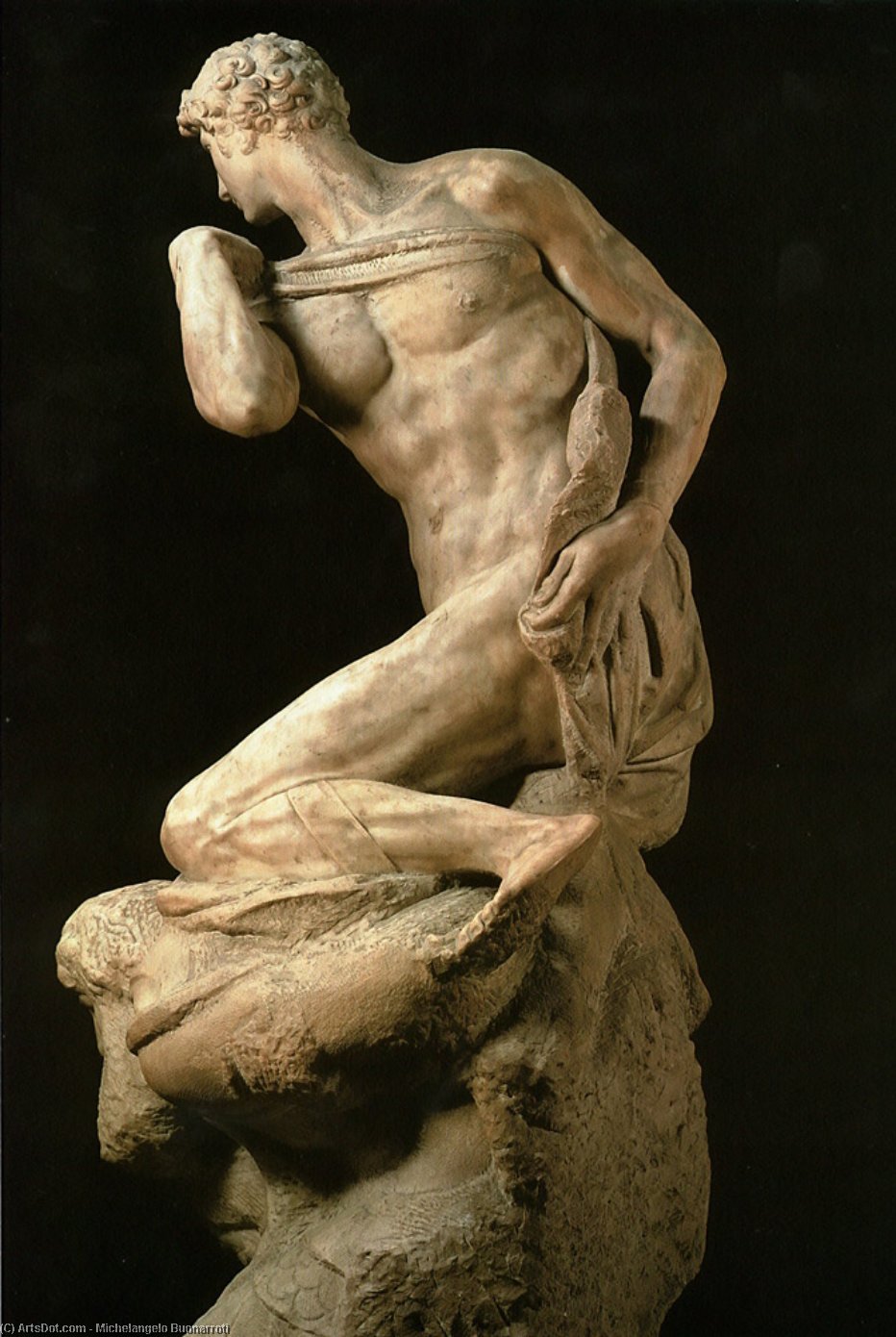
Explore Michelangelo’s ‘Victory’ sculpture! A dynamic marble masterpiece of Renaissance art, showcasing powerful form & emotion. Ideal for collectors & art enthusiasts.
Majstor renesanse Mikelanđelo Buonaroti (1475-1564) ostavio je neizbrisiv trag svojim skulpturama kao što su David i Pietà, veličanstvenim freskama na plafonu Sikstinske kapele i revolucionarnim arhitektonskim rešenjima. Istražite njegov genijalni stil!
A Masterpiece of Mannerism: Michelangelo’s “Victory”
This sculpture, known as *Victory*, is a compelling testament to Michelangelo Buonarroti's unparalleled skill and innovative approach to form. Carved from marble around 1530-1534, it embodies the transition from High Renaissance classicism towards the more dynamic and emotionally charged style of Mannerism. Currently housed in the Palazzo Vecchio, Florence, this work continues to captivate viewers with its complex composition and powerful presence.
Subject & Composition
The sculpture depicts a nude male figure – often interpreted as a triumphant warrior or a personification of Victory itself – standing over a defeated foe. The youth’s pose is strikingly dynamic, exhibiting a *figura serpentinata* (serpentine figure) characterized by twisting and spiraling forms. He kneels upon the older, bearded man, his weight shifted dramatically, creating a sense of instability and contained energy. This isn't a static celebration; it’s a moment frozen in the aftermath of conflict, imbued with psychological tension. The unfinished state of the sculpture – particularly the face and details of the conquered figure – adds to its enigmatic quality.
Style & Technique
*Victory* showcases Michelangelo’s mastery of marble carving. He expertly renders anatomical detail, emphasizing musculature and conveying a sense of physical power. The drapery is not merely decorative but actively contributes to the sculpture's movement and emotional impact, swirling around the figure and accentuating his form. The work demonstrates a departure from the balanced harmony of High Renaissance art; instead, it embraces exaggeration, complexity, and a heightened sense of drama – hallmarks of Mannerism.
Historical Context & Commission
The sculpture’s origins are somewhat debated. It is believed to have been initially conceived as part of the ambitious (and ultimately unfinished) tomb project for Pope Julius II. However, its precise purpose remains unclear. The work's strong Mannerist characteristics link it to other sculptures created for later iterations of the tomb around 1532. Its eventual placement in the Palazzo Vecchio suggests a civic or political significance, potentially representing Florentine strength and resilience.
Symbolism & Interpretation
The oak wreath adorning the victorious figure’s head is particularly significant. Oak leaves were associated with strength, endurance, and civic virtue – qualities highly valued in Renaissance Florence. The contrast between the youthful victor and the aged, defeated opponent could symbolize triumph over adversity or the renewal of power. Some scholars suggest a connection to Tommaso dei Cavalieri, a young nobleman who became the object of Michelangelo’s deep affection; the sculpture may have been inspired by his beauty and grace.
Emotional Impact & Legacy
*Victory* evokes a complex range of emotions – triumph, vulnerability, even a hint of melancholy. The unfinished nature of the work invites contemplation and allows viewers to project their own interpretations onto the scene. The sculpture’s influence on subsequent generations of artists was profound. Its dynamic composition and expressive power served as a model for sculptors throughout the Mannerist period and beyond, solidifying Michelangelo's reputation as one of history’s greatest artistic geniuses. It remains a powerful symbol of human potential and the enduring legacy of Renaissance art.