A Moment Frozen in Dutch Light: Nicolaes Maes’s “The Idle Servant”
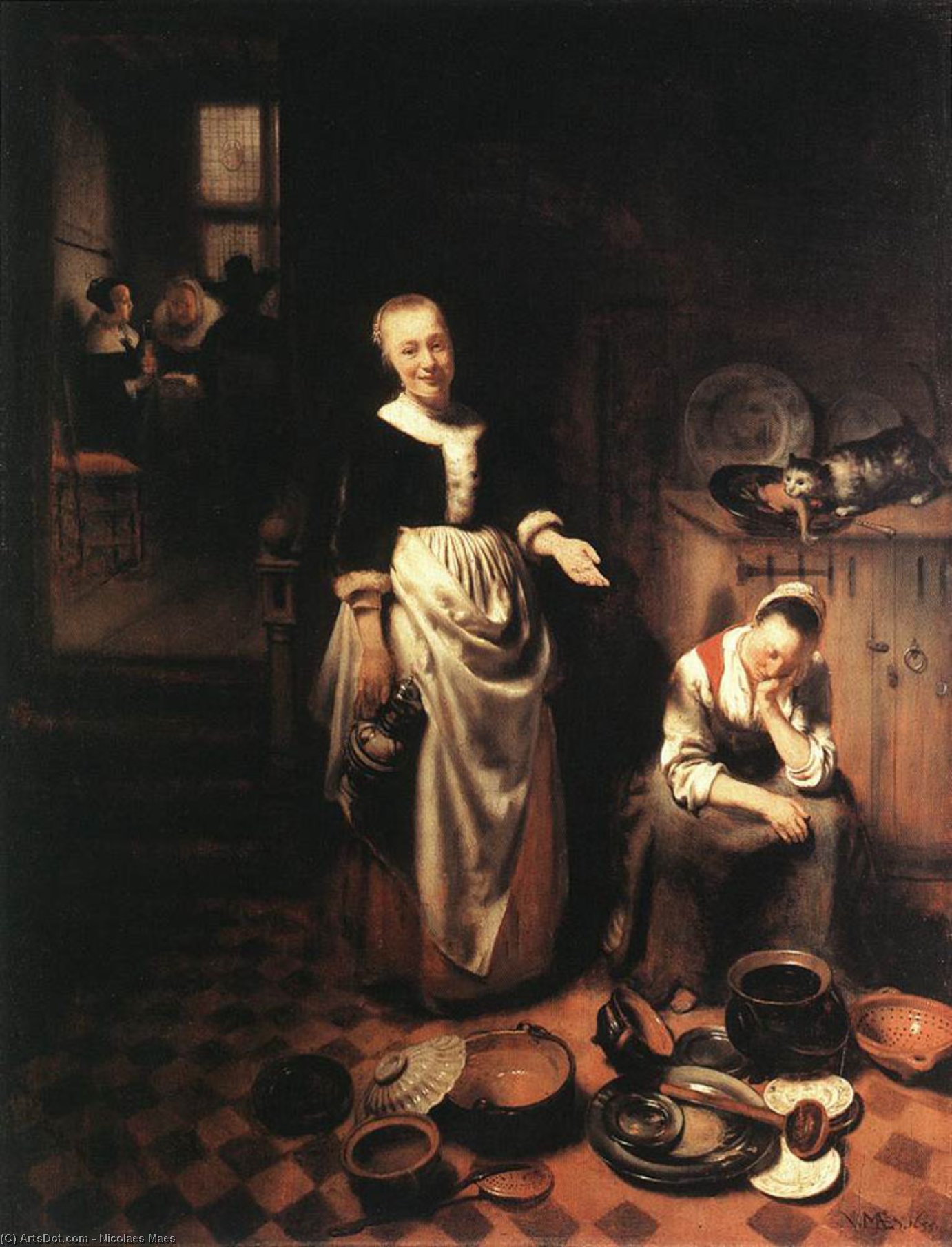
Nicolaes Maes's "The Idle Servant," painted in 1655, isn’t merely a depiction of two women enjoying a domestic moment; it’s a carefully constructed tableau brimming with subtle social commentary and the masterful use of light characteristic of the Dutch Golden Age. This intimate genre scene, now housed at the National Gallery in London (NG207), offers a captivating glimpse into the lives of a wealthy household, revealing both the comforts and the unspoken expectations of 17th-century Dutch society. The painting immediately draws the eye with its rich palette – deep reds, browns, and ochres dominate, punctuated by the warm glow emanating from an unseen fireplace, creating a sense of cozy domesticity that belies the underlying narrative.
Maes’s artistic lineage is inextricably linked to Rembrandt van Rijn. His apprenticeship under the master instilled within him a profound understanding of *chiaroscuro*, the dramatic interplay of light and shadow – a technique brilliantly employed here to sculpt form, define space, and draw attention to key elements. Notice how Maes uses pools of light to illuminate the seated woman’s face, highlighting her languid repose, while simultaneously shrouding the standing figure in a softer, more diffused glow. This masterful manipulation of light isn't simply aesthetic; it serves to subtly convey mood and character, hinting at the quiet resignation and perhaps even a touch of amusement present within the scene.
The Dance of Leisure and Duty
At first glance, “The Idle Servant” appears to be a simple portrayal of two women engaged in conversation. However, closer observation reveals a complex interplay of social dynamics. The woman standing, presumably the mistress of the house, is instructing or perhaps gently scolding the seated maid, who is lost in a drowsy reverie. This interaction isn’t overtly confrontational; rather, it's imbued with a quiet understanding – a recognition that even within the confines of domestic life, there are unspoken rules and expectations.
The scattered bowls, cups, and spoons surrounding the women aren’t merely props; they represent the labor involved in preparing a substantial meal. The maid’s slumber is a direct consequence of this effort, highlighting the contrast between leisure and duty – a central theme explored throughout the painting. Maes cleverly uses the arrangement of these objects to create depth and visual interest, drawing the viewer's eye into the heart of the scene. The placement of some bowls closer to the women suggests immediate needs, while others further away hint at the larger task at hand.
Symbolism and Social Commentary
Beyond its domestic setting, “The Idle Servant” offers a subtle critique of social hierarchies and gender roles. The maid’s apparent idleness is juxtaposed with the mistress's active role in overseeing the household – a reflection of the prevailing societal expectations for women during this period. The painting subtly suggests that while leisure was valued, it was always contingent upon fulfilling one’s duties within the home. The cat stealing a fowl further emphasizes this theme, representing a carefree disregard for responsibility.
Furthermore, the inclusion of the “doorkijkje” – a small window or opening in the background – is a deliberate artistic device employed by Maes and his contemporaries. This technique invites the viewer to step into another room, creating a sense of voyeurism and expanding the narrative beyond the immediate scene. It’s as if we are invited to observe a larger, unseen drama unfolding within the confines of the house.
A Masterpiece of Dutch Genre Painting
“The Idle Servant” stands as a testament to Nicolaes Maes's skill and artistry – a captivating example of Dutch Golden Age genre painting. Its masterful use of *chiaroscuro*, its nuanced portrayal of human interaction, and its subtle social commentary combine to create a work that is both visually stunning and intellectually stimulating. Reproductions by ArtsDot.com offer an exceptional opportunity to experience the beauty and depth of this remarkable painting, bringing its intimate world into your home with unparalleled fidelity.