A Window Into Baroque Grandeur
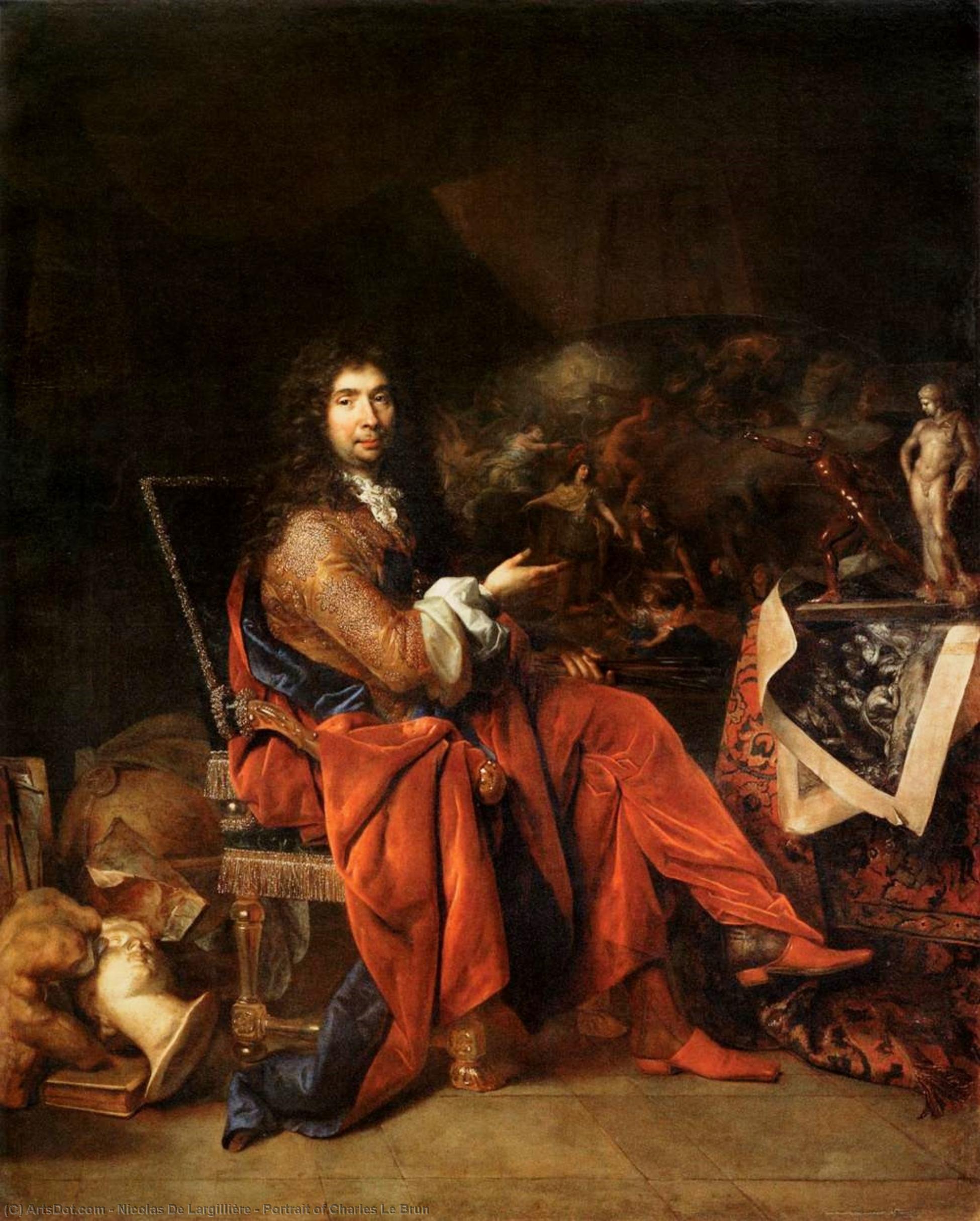
In the heart of the French Baroque era, few images capture the intersection of intellectual prestige and aristocratic splendor as poignantly as Nicolas de Largillière’s “Portrait of Charles Le Brun.” Completed in 1683, this masterpiece serves as much more than a mere likeness of a man; it is a profound window into the artistic fervor that defined the reign of Louis XIV. The painting presents Le Brun, the celebrated court painter and director of the Royal Academy, seated with an air of effortless confidence. Draped in a sumptuous crimson robe that shimmers with intricate embroidery, he embodies the elevated social status afforded to those who shaped the visual identity of the Grand Siècle. Beneath this vibrant outer layer, a darker blue garment peeks through, subtly suggesting a depth of inner contemplation and the quiet gravity of a scholar.
Largillière’s technical mastery is on full display through his sophisticated use of oil on canvas. By employing meticulous layering and glazing techniques, the artist achieves a remarkable luminosity that breathes life into the subject's skin tones and the heavy textures of the fabric. Every detail—from the subtle furrow of Le Brun’s brow to the way light dances across the contours of his face—is rendered with painstaking precision. This interplay of light and shadow does more than define form; it creates a psychological landscape, inviting the viewer to gaze into the eyes of a man whose intellect was as sharp as his brushwork was fluid.
Symbolism and the Art of Self-Fashioning
Beyond the surface beauty of the portrait lies a rich tapestry of symbolic meaning designed to communicate Le Brun’s enduring legacy. The inclusion of an open book is no mere decorative choice; it serves as a powerful emblem of erudition, anchoring Le Brun within the humanist traditions of the Baroque period. He is presented not just as a craftsman, but as a thinker and a theorist. Similarly, the presence of a delicate vase in the background acts as a silent testament to beauty and refinement, mirroring the aesthetic ideals of the French court. In an era where every object held a narrative weight, Largillière skillfully surrounds his subject with attributes that celebrate achievement rather than mere occupation.
What makes this work particularly revolutionary is how Largillière reimagines the "state portrait" for the artist. Rather than placing Le Brun in a sterile studio setting, the artist surrounds him with objects that symbolize his triumphs—classical casts and sketches that represent the foundations of his style. This approach elevates the status of the painter to that of a nobleman, making the piece an essential study in self-fashioning. For the discerning collector or interior designer, this painting offers more than just visual elegance; it provides a narrative of prestige and intellectual depth that can transform any space into a gallery of historical significance.
An Enduring Legacy for the Modern Collector
The emotional impact of “Portrait of Charles Le Brun” lies in its dignified serenity. It captures a moment of stillness amidst the opulence of an era, offering a sense of permanence and grace that transcends centuries. The painting’s rich color palette—dominated by deep crimsons, royal blues, and warm highlights—makes it a versatile and commanding centerpiece for sophisticated interiors. Whether placed in a library, a formal study, or a grand salon, a high-quality reproduction of this work brings with it the weight of history and the breathtaking beauty of French Baroque mastery.