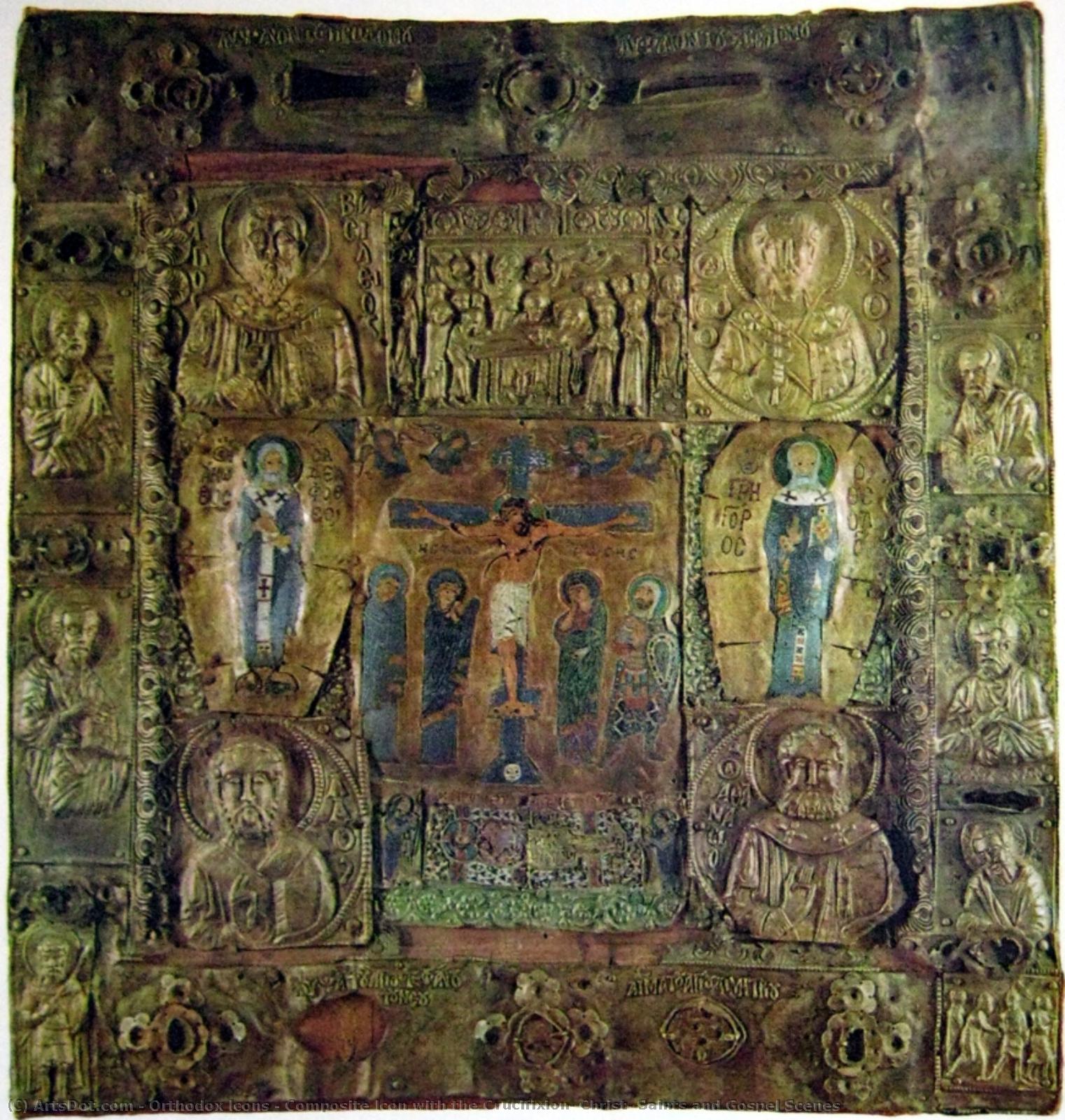
This artwork exemplifies Orthodox iconography's focus on conveying divine grace through stylized representations rather than realistic detail.
‘Composite Icon with the Crucifixion, Christ, Saints and Gospel Scenes’ is a captivating Middle Byzantine icon created around 1050 by Orthodox Icons. Executed in enamel style, it embodies the profound religious traditions of Byzantium and showcases intrica
A Window into the Eternal: The Byzantine Splendor of the Composite Icon
To gaze upon the Composite Icon with the Crucifixion, Christ, Saints and Gospel Scenes is not merely to observe a relic of the past, but to encounter a window into the eternal. Crafted around 1050, this breathtaking masterpiece serves as a profound visual meditation on faith, grace, and the divine. Hailing from the Middle Byzantine era—a period defined by intense religious fervor and unparalleled artistic innovation—this work transcends its physical medium of enamel and gold. It invites the viewer into a sacred landscape where the boundaries between the earthly and the celestial begin to blur, offering a spiritual sanctuary that remains as potent today as it was in the eleventh century.
The icon’s aesthetic is defined by the luminous, ethereal technique of Byzantine enamel painting. This meticulous process involved layering translucent pigments onto gilded metal surfaces, a method that allows light to penetrate the colors and reflect from beneath, creating an inner radiance that seems to pulse with life. The artist’s hand is evident in the painstaking application of successive coats, building depth and vibrancy through sheer patience. Gold leaf is utilized not merely as decoration but as a theological tool; it crowns the central crucifix and the halos of the saints, symbolizing the uncreated light of divine glory. This interplay of shimmering gold and deep, jewel-like tones ensures that the icon captivates the eye even in the dimmest light, making it an extraordinary focal point for any curated collection.
Sacred Narratives and Symbolic Depth
Beyond its technical brilliance, the icon functions as a complex tapestry of sacred narrative. At its heart lies the Crucifixion, the foundational event of Christian theology representing ultimate sacrifice and the promise of redemption. Yet, this central drama is surrounded by a celestial assembly of saints and gospel scenes, each meticulously placed to guide the viewer through a journey of contemplation. The figures are rendered in the classic Byzantine style, where facial expressions are deliberately serene and stylized. Rather than capturing fleeting human emotions, the iconographer sought to portray hesychia—a state of holy stillness and spiritual peace. Every gesture, from the tilt of a head to the positioning of a hand holding an illuminated scroll, is a coded language of piety designed to evoke reverence.
For the discerning collector or interior designer, this piece offers more than historical significance; it provides an emotional anchor. The icon’s ability to command a room through its intricate detail and profound gravity makes it a versatile inspiration for spaces dedicated to reflection, quietude, or high-concept classical design. Whether presented as a standalone masterpiece or integrated into a larger gallery of sacred art, the Composite Icon brings with it an aura of timelessness. It is a rare opportunity to possess a fragment of the Byzantine soul, a work that continues to breathe life into the traditions of the Eastern Orthodox world and offers a luminous connection to the very dawn of Christian iconography.