A Portrait of Playful Melancholy: Picasso’s Arlequin sur un Canapé Rouge
- Pablo Picasso's “Arlequin sur un Canapé Rouge” (Harlequin on a Red Sofa) stands as a quintessential example of Picasso’s exploration into the complexities of human emotion and artistic experimentation during his formative years.
- Painted in 1912, this artwork marks a pivotal moment in Picasso's stylistic evolution—a decisive break from Impressionism and Realism toward the burgeoning Cubist movement. It embodies the spirit of intellectual curiosity that characterized Picasso’s relentless pursuit of new visual languages.
Subject Matter and Composition: A Clown Among Dignified Lines
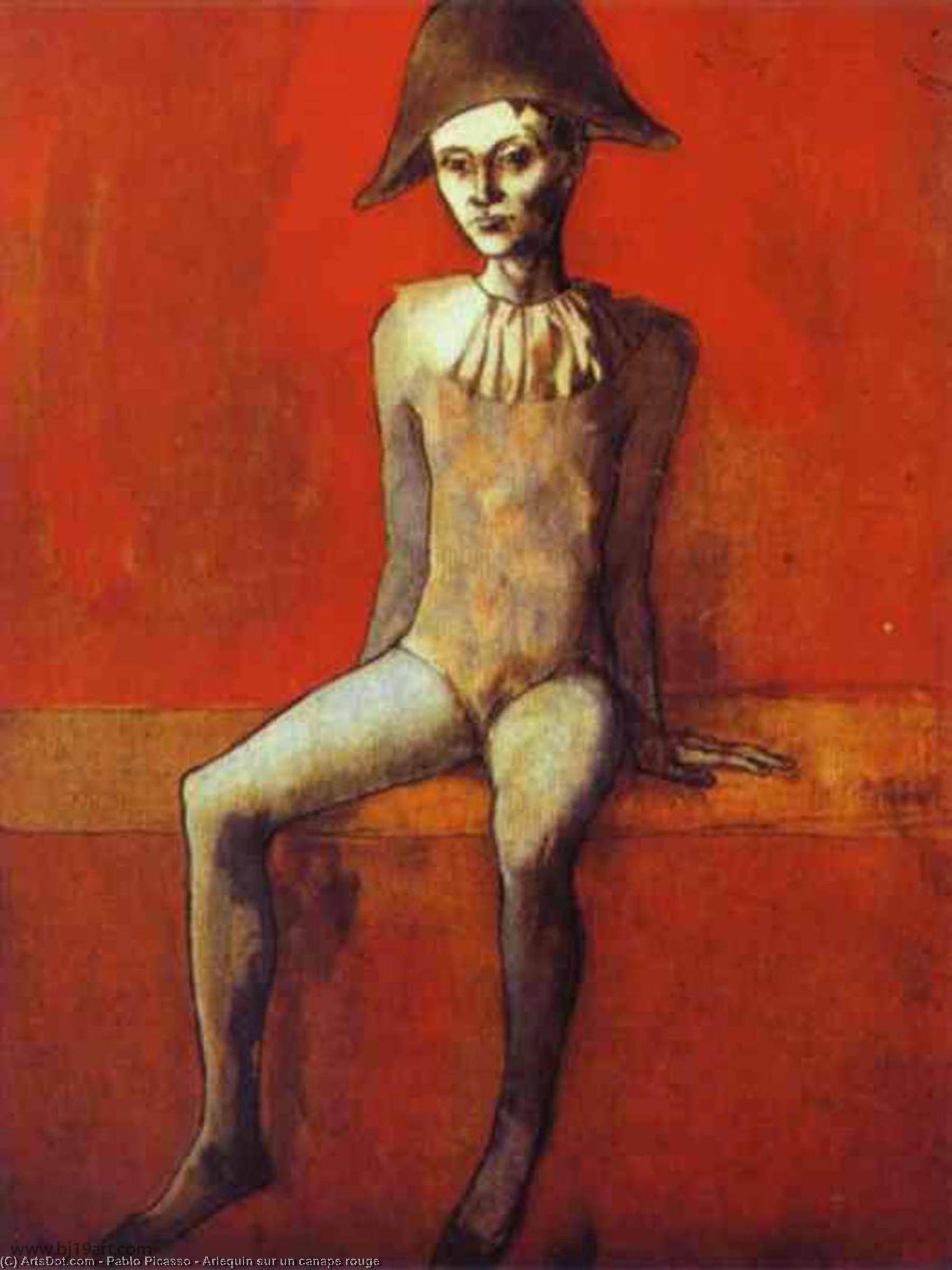
The painting depicts a man dressed in a flamboyant clown costume—a harlequin suit adorned with bold geometric patterns—seated on a simple red sofa. This juxtaposition is deliberately unsettling; the joyous vibrancy of the clown attire clashes against the austere backdrop, creating an immediate tension that speaks to Picasso’s fascination with duality and contradiction. The figure's posture exudes relaxation yet simultaneously conveys a subtle sense of vulnerability, mirroring the artist’s own preoccupation with themes of solitude and introspection.
Style and Technique: Fragmented Perspectives and Bold Color
Picasso employed Cubist principles—specifically Analytical Cubism—to dissect the human form into fragmented planes. Rather than striving for accurate representation, he prioritized conveying multiple viewpoints simultaneously, capturing the essence of the subject through geometric abstraction. The color palette is restrained yet impactful; Picasso utilizes a dominant red hue to emphasize the sofa and create visual contrast with the clown’s costume. However, subtle shades of ochre and white are incorporated into the figure's clothing, adding depth and nuance to the composition.
Historical Context: The Avant-Garde Embrace of Emotion
“Arlequin sur un Canapé Rouge” emerged during a period of intense artistic innovation—the early years of Cubism. Artists like Picasso, Georges Braque, and Juan Gris were rejecting traditional artistic conventions in favor of exploring new ways to depict reality. This movement was fueled by philosophical debates surrounding the nature of perception and consciousness, influenced by thinkers such as Sigmund Freud and Henri Bergson. Picasso’s decision to portray a clown—a figure traditionally associated with humor and merriment—was deliberately subversive, challenging viewers to confront uncomfortable truths about human existence.
Symbolism and Emotional Impact: Beyond Surface Appearance
The clown motif transcends mere visual spectacle; it symbolizes the masks we wear in social interactions and the hidden anxieties beneath a façade of composure. Picasso’s masterful use of color and geometric abstraction serves to heighten the emotional resonance of the image, inviting contemplation on themes of melancholy, isolation, and the inherent instability of human experience. “Arlequin sur un Canapé Rouge” remains a powerful testament to Picasso's ability to distill complex psychological states into striking visual form—a timeless masterpiece that continues to captivate audiences today.