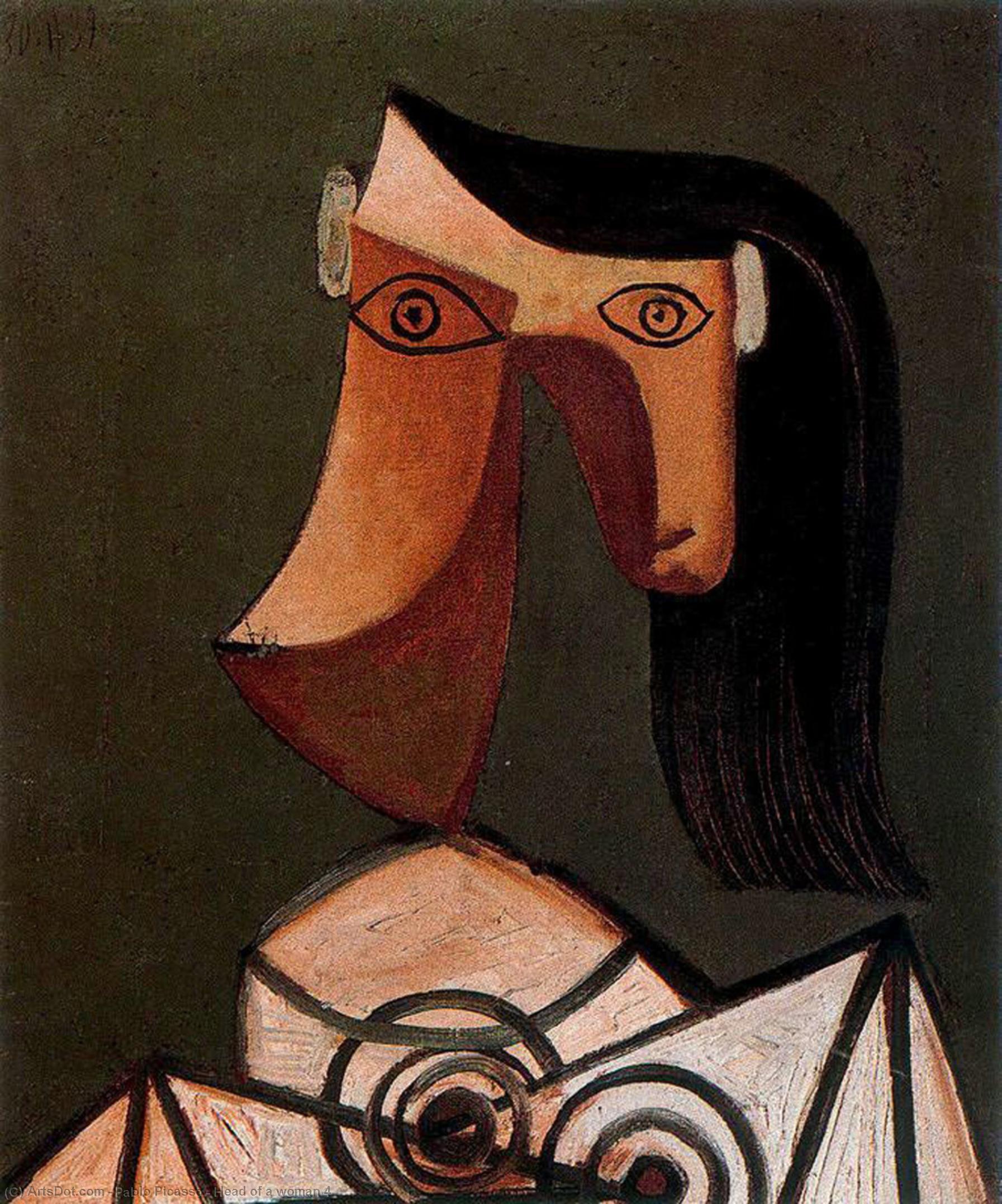
Head of a Woman 4: A Fragmented Portrait of Modernity
“Head of a Woman 4,” also known as "Tête de femme," is an oil painting created by Pablo Picasso in 1907. This iconic work represents a pivotal moment in his artistic journey, marking the nascent stages of Cubism and showcasing his revolutionary approach to portraiture. It’s a compelling example of how Picasso challenged traditional representation, paving the way for modern art's exploration of form and perspective.
The Artist: Pablo Picasso – A Revolutionary Force
- Birth & Early Training: Born on October 25, 1881, in Málaga, Spain, Pablo Ruiz y Picasso demonstrated exceptional artistic talent from a young age. His father, an art teacher, provided early training, but Picasso quickly surpassed his abilities.
- The Blue and Rose Periods: Prior to Cubism, Picasso explored the melancholic tones of his "Blue Period" (roughly 1901-1904), characterized by somber depictions of poverty and despair. This transitioned into the warmer hues of the “Rose Period” (1904-1906), featuring circus performers and harlequins, reflecting a shift towards more optimistic themes while retaining an underlying sense of introspection.
- Co-Founder of Cubism: Picasso, alongside Georges Braque, is credited with co-founding the Cubist movement in the early 20th century. This groundbreaking style fundamentally altered how artists perceived and represented reality.
- A Prolific Experimenter: Throughout his career, Picasso fearlessly experimented with various styles and techniques, including Realism, Symbolism, Surrealism, and Expressionism, constantly pushing the boundaries of artistic expression.
Deconstructing Form: The Painting's Style & Technique
“Head of a Woman 4” exemplifies early Cubist principles. Instead of depicting the subject from a single viewpoint, Picasso fragmented her face into geometric shapes – triangles, rectangles, and trapezoids – presenting multiple perspectives simultaneously. This deconstruction challenges traditional notions of perspective and representation.
- Geometric Fragmentation: The woman's features are broken down into simplified forms, creating an abstract yet recognizable portrait.
- Overlapping Planes: Shapes overlap and intersect, generating a sense of depth and dynamism on the two-dimensional canvas.
- Earthy Palette with Bold Outlines: Picasso employs a muted color palette dominated by earthy tones – ochre, burnt sienna, and browns – contrasted with stark black outlines that define the fragmented forms. This creates visual clarity and emphasizes the geometric structure.
- Oil on Canvas Technique: The painting is executed in oil on canvas, allowing for rich color saturation and subtle variations in texture, despite the overall flattened appearance.
Symbolism & Historical Context
“Head of a Woman 4” was created during a period of significant artistic and social upheaval. The rise of photography challenged traditional painting's role in realistic representation, prompting artists to explore new avenues for expressing ideas and emotions.
- Cubism as a Response: Cubism emerged as a reaction against the Impressionist focus on capturing fleeting moments of light and color. It sought instead to analyze and reconstruct objects from multiple viewpoints, reflecting a more intellectual and conceptual approach to art.
- Influence of Cézanne: Picasso was deeply influenced by Paul Cézanne's exploration of geometric forms in nature, which served as a foundation for the development of Cubism.
- Precursor to Analytical Cubism: This painting is considered an important precursor to "Analytical Cubism," a more complex phase of the movement characterized by even greater fragmentation and abstraction.
Emotional Impact & Legacy
Despite its abstract nature, “Head of a Woman 4” evokes a sense of introspection and mystery. The fragmented form invites viewers to actively engage with the artwork, piecing together the image and interpreting its meaning.
- A Modern Icon: This painting is recognized as one of Picasso's most iconic works, demonstrating his groundbreaking contribution to modern art.
- Influence on Subsequent Artists: Cubism profoundly influenced countless artists who followed, shaping the course of 20th-century art and beyond.
- A Timeless Masterpiece: “Head of a Woman 4” continues to captivate audiences with its innovative style, intellectual depth, and enduring beauty.