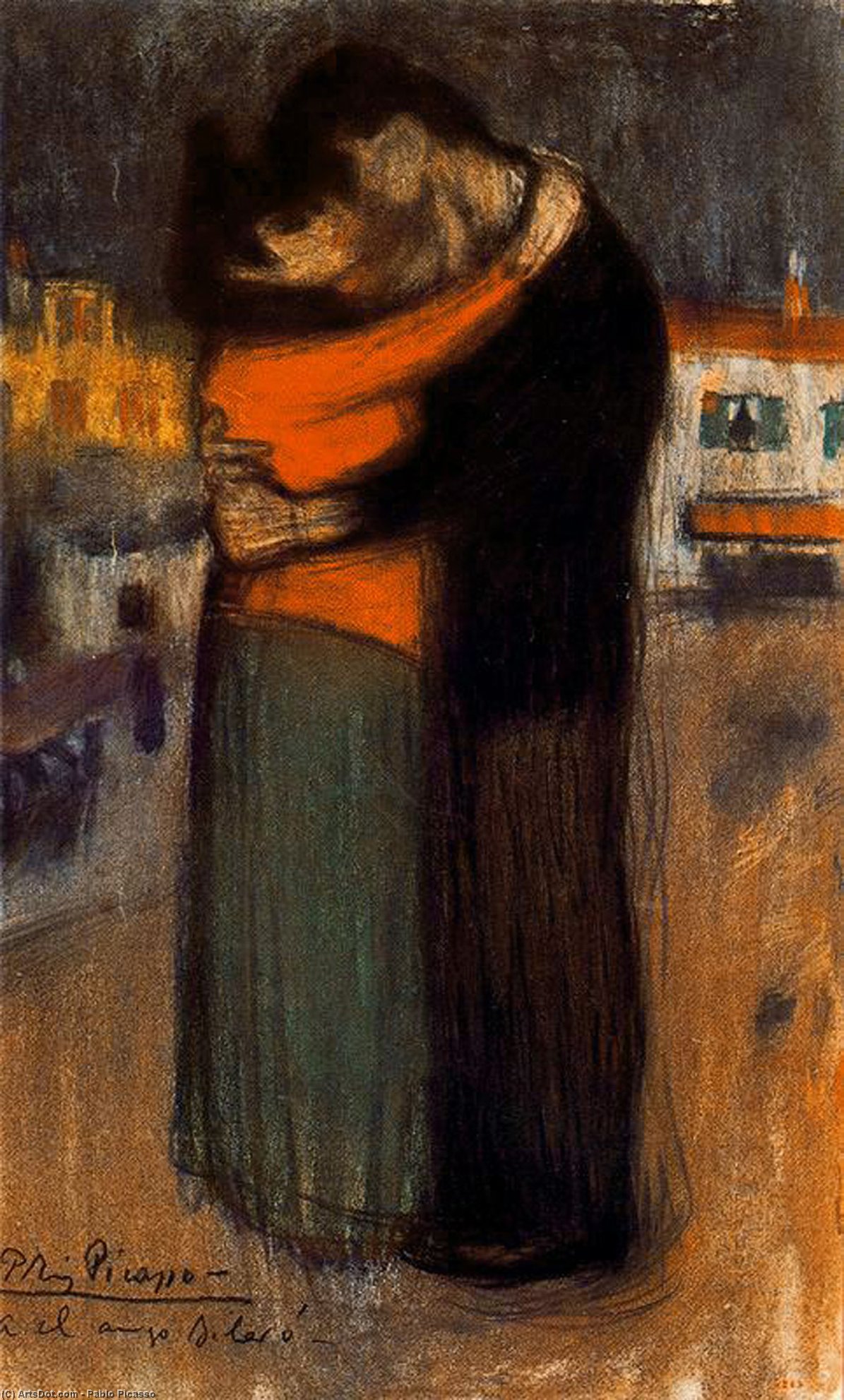
Lovers of the street, 1900 - Pablo Picasso - WikiArt.org
Pablo Pikaso (1881-1973), revolucionarni španski slikar i skulptor, osnivač kubizma i majstor različitih stilova. Poznat po delima kao što su Gernika i Les Demoiselles d'Avignon, njegov uticaj inspirishe generacije.
Lovers of the Street, 1900 - Pablo Picasso
Pablo Picasso’s “Lovers of the Street,” painted in 1900 during his formative years as an artist, stands as a cornerstone of Expressionism and a poignant exploration of human intimacy amidst urban chaos. More than just a depiction of two figures embracing, it embodies Picasso's burgeoning fascination with capturing subjective emotion—a characteristic that would define his entire artistic trajectory. This pastel masterpiece, measuring 59 x 35 cm, resides in the Museo Picasso Barcelona, offering visitors an intimate glimpse into the genesis of one of art history’s most influential visions.
### Context and Composition
The painting captures a moment of profound connection between two individuals set against the backdrop of a bustling Parisian cityscape. Picasso deliberately juxtaposes this private gesture with the impersonal energy of the street—a technique that speaks to the universal desire for human companionship, even within environments devoid of warmth or comfort. The woman, positioned on the right side of the man, leans into him, creating an immediate visual connection. Their bodies intertwine subtly, conveying a sense of vulnerability and tenderness. Surrounding them are blurred figures representing passersby—a deliberate stylistic choice that emphasizes the isolation of the lovers within their shared experience. The inclusion of a parked automobile adds to the urban landscape, reinforcing the contrast between intimacy and anonymity.
### Artistic Style
Picasso’s masterful use of pastel lends “Lovers of the Street” an ethereal quality, softening the harshness of the cityscape and highlighting the emotional core of the scene. Unlike Impressionists who sought to capture fleeting moments of light and color, Picasso prioritized conveying feeling—a hallmark of Expressionism. He achieves this through broad brushstrokes and a deliberate flattening of perspective, prioritizing tonal variation over realistic representation. The pastel medium itself contributes to the painting’s subdued palette, dominated by shades of orange, green, and gray—colors that evoke warmth, serenity, and melancholy respectively. This stylistic approach reflects Picasso's experimentation with various mediums during his early period, demonstrating a willingness to push boundaries and challenge conventional artistic norms.
### Historical Significance
“Lovers of the Street” represents an important step in the evolution of painting from representational art toward abstraction. It aligns with Picasso’s broader engagement with Symbolism and Proto-Cubism—influences that would propel him into the forefront of the avant-garde movement. The painting's creation coincided with a period of intense artistic innovation, mirroring the broader cultural shifts occurring in Europe at the time. Its exhibition at the Paris International Exposition solidified Picasso’s reputation as a visionary artist and cemented his place within the history of modern art. Furthermore, it serves as an enduring reminder that even seemingly simple scenes can convey profound emotional depth—a testament to Picasso's ability to distill complex feelings into visual form.
### Relevance and Legacy
Picasso’s influence on contemporary artists remains undeniable. His bold stylistic choices continue to inspire creatives today, encouraging them to prioritize emotion and experimentation over strict adherence to traditional conventions. “Lovers of the Street” is prominently displayed in institutions like the Tate Modern Museum in London, where it captivates visitors with its evocative imagery and masterful technique—a symbol of Picasso’s enduring legacy as one of the most transformative figures in 20th-century art. Reproductions of this iconic pastel painting are available from Perls Galleries and Museo Picasso Barcelona, allowing enthusiasts to experience Picasso's vision firsthand.