The Blue Coffee Pot: A Cubist Exploration of Everyday Still Life
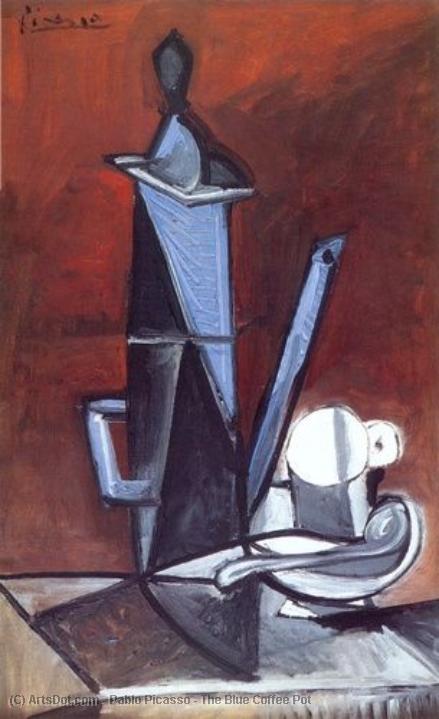
Pablo Picasso’s “The Blue Coffee Pot,” painted in 1944, transcends the simple depiction of a domestic scene; it embodies the core tenets of Cubism and offers a profound meditation on perception and representation. This artwork resides within the esteemed collection of the San Francisco Museum of Modern Art (SFMOMA), where visitors can immerse themselves in Picasso’s groundbreaking vision. The painting itself presents a meticulously constructed tableau featuring a man holding a cobalt blue coffee pot alongside a bowl, cup, and spoon – objects chosen not merely for their visual appeal but as conduits for exploring fragmented perspectives.
- Style: Cubism – Picasso's revolutionary approach shattered traditional artistic conventions by dismantling objects into geometric planes and presenting multiple viewpoints simultaneously.
- Technique: Picasso employed a palette dominated by shades of blue, reflecting the melancholic mood prevalent during World War II. The brushstrokes are deliberately imprecise, prioritizing form over realistic detail.
The historical context surrounding “The Blue Coffee Pot” is inextricably linked to Picasso’s engagement with Surrealism and his ongoing experimentation with artistic language. Following the devastation of the Spanish Civil War and the looming shadow of Nazi Germany, Picasso sought solace in abstraction as a means of conveying emotion and confronting existential anxieties. The deliberate juxtaposition of figures—one holding a knife, the other standing beside him—adds layers of complexity to the composition, hinting at themes of vulnerability and confrontation.
Symbolism: The blue hue itself is often interpreted as representing sorrow and contemplation – emotions deeply felt by Picasso during this turbulent period. Furthermore, the inclusion of everyday objects like a coffee pot symbolizes domesticity and routine, contrasted against the intellectual pursuit inherent in Cubist aesthetics. It’s a deliberate challenge to conventional notions of beauty and invites viewers to consider alternative ways of perceiving reality.
Emotional Impact: “The Blue Coffee Pot” isn't merely an aesthetically pleasing image; it’s a powerful statement about artistic innovation and the artist’s inner landscape. Picasso compels us to question our assumptions about representation, urging us to embrace ambiguity and appreciate the beauty found within fractured perspectives. Like many of his masterpieces, this artwork continues to resonate with audiences today, cementing Picasso's place as one of the most influential figures in modern art history.
- Further Exploration: Interested in delving deeper into Picasso’s artistic journey? Visit Pablo Picasso’s artist database for biographical information and a comprehensive overview of his oeuvre.
- Related Artwork: Discover similar explorations of form and emotion in Guernica, another iconic masterpiece by Picasso.