A Soul in Repose: The Introspective World of Cézanne
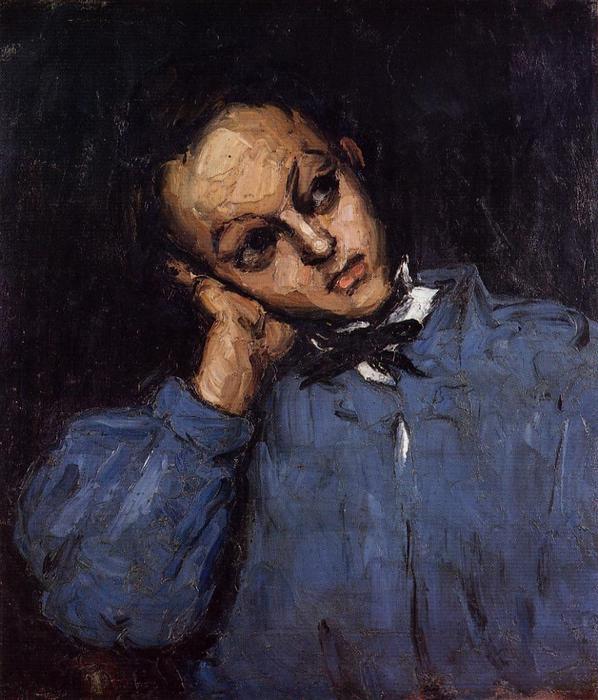
In the quietude of Paul Cézanne’s 1866 masterpiece, Portrait of a Young Man, we encounter more than a mere likeness; we witness the profound threshold between the emotional intensity of Romanticism and the structural revolution of Post-Impressionism. The canvas captures a moment of deep, internal movement—a subject caught in a state of reverie, eyes closed or perhaps gazing upward into an unseen realm of thought. There is a palpable sense of melancholy and quiet contemplation that radiates from the figure, inviting the viewer to pause and share in this private moment of psychological depth. For the discerning collector or interior designer, this piece offers a sophisticated anchor for any space, providing a window into the human condition through a lens of timeless elegance.
The composition is masterfully restrained, focusing our attention entirely on the subject’s face and upper torso. By utilizing a dark, indistinct background, Cézanne strips away the distractions of the external world, forcing an intimate confrontation with the sitter's presence. This deliberate use of negative space creates a sense of monumental stillness, where the shadows seem to press inward, emphasizing the luminous quality of the flesh tones. It is a composition that does not demand attention through spectacle, but rather commands it through its profound, silent gravity.
The Architecture of Emotion: Technique and Texture
To look closely at this work is to observe the artist’s burgeoning mastery over the physical medium of oil paint. Moving away from the polished, invisible brushwork of traditional academicism, Cézanne employs thick, impasto brushstrokes that lend a tactile, sculptural quality to the canvas. These visible marks are not merely decorative; they are the very building blocks of form. The artist builds layers of pigment—deep blues in the subject's attire and earthy, somber tones in the backdrop—to create a sense of weight and permanence.
The technique reveals an early fascination with the fragmentation of form. Rather than relying on sharp, precise outlines to define the young man, Cézanne uses shifts in color and value to suggest shape. This approach creates a soft, diffused lighting effect that avoids harsh shadows, instead bathing the subject in a gentle, atmospheric glow. For those seeking to incorporate art into a modern interior, this textured approach offers a rich, sensory experience, where the play of light across the painted surface adds a dynamic energy to even the most minimalist settings.
A Legacy of Transformation
Historically, this portrait serves as a vital document of an artist in transition. Painted during his "dark period," it reflects the heavy influence of Romanticism—an era that prioritized individual emotion and imagination over objective reality. Yet, within these strokes, one can already sense the seeds of the Post-Impressionist revolution. The way Cézanne begins to flatten the pictorial space and prioritize the structural integrity of color would eventually pave the way for Cubism and the works of masters like Picasso.
Owning a reproduction of such a pivotal work is an opportunity to possess a piece of art history. It is an invitation to surround oneself with the spirit of innovation and the beauty of introspection. Whether placed in a curated gallery setting or as a focal point in a private study, Portrait of a Young Man continues to resonate, offering a timeless connection to the moment when the modern era of painting was first being born.