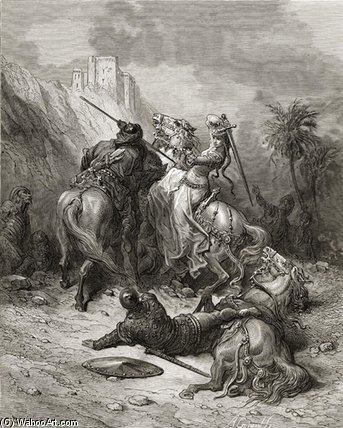
A Dramatic Encounter: Paul Gustave Doré’s ‘A Heroine Florine Of Burgundy’
Paul Gustave Doré's 'A Heroine Florine Of Burgundy,' completed in 1877, isn’t merely an illustration; it’s a visceral plunge into the turbulent heart of medieval warfare. Executed with masterful precision on paper using ink—a technique that speaks volumes about the artist’s dedication to capturing both visual detail and emotional resonance—this monumental engraving transcends simple depiction, becoming a testament to Doré's unparalleled ability to convey narrative power through painstaking linework. The artwork immediately commands attention with its stark monochrome palette, dominated by shades of gray that sculpt dramatic contrasts between light and shadow, mirroring the battlefield’s perilous atmosphere.
- Composition & Setting: The scene unfolds against a formidable mountainous landscape punctuated by a solitary balloon—a visual device deliberately employed to heighten the sense of grandeur and isolation. At its core lies a dynamic confrontation between knights on horseback and foot, engaged in brutal combat amidst jagged rocks and treacherous terrain. Doré skillfully utilizes overlapping figures and diminishing scale to establish depth, transporting viewers into the heart of the action.
- Technique & Style: Doré’s signature style is undeniably illustrative, prioritizing clarity and expressive detail—a hallmark of Romantic art. His meticulous application of cross-hatching and stippling techniques imbues the artwork with remarkable textural richness, convincingly simulating the roughness of stone surfaces and the sheen of armor plating. The artist's unwavering commitment to capturing movement is evident in every gesture of his figures, creating a palpable sense of urgency and drama.
- Symbolism & Emotional Impact: Beyond its visual splendor, ‘A Heroine Florine Of Burgundy’ resonates with profound symbolic implications. The fallen knight at the base of the composition serves as a poignant reminder of mortality and sacrifice—a theme central to Doré's broader artistic vision. Furthermore, the depiction of weaponry and armor underscores the grim realities of medieval warfare, prompting contemplation on courage, honor, and the devastating consequences of conflict.
- Historical Context: Created during Doré’s prolific period, this engraving reflects the Romantic movement’s fascination with heroic narratives and dramatic landscapes—a reaction against Enlightenment rationalism. Doré's work draws heavily upon biblical stories and literary classics, demonstrating his erudition and artistic ambition.
Inspired by Gustave Doré’s masterful technique and evocative storytelling, ‘A Heroine Florine Of Burgundy’ remains a cornerstone of Romantic art history.