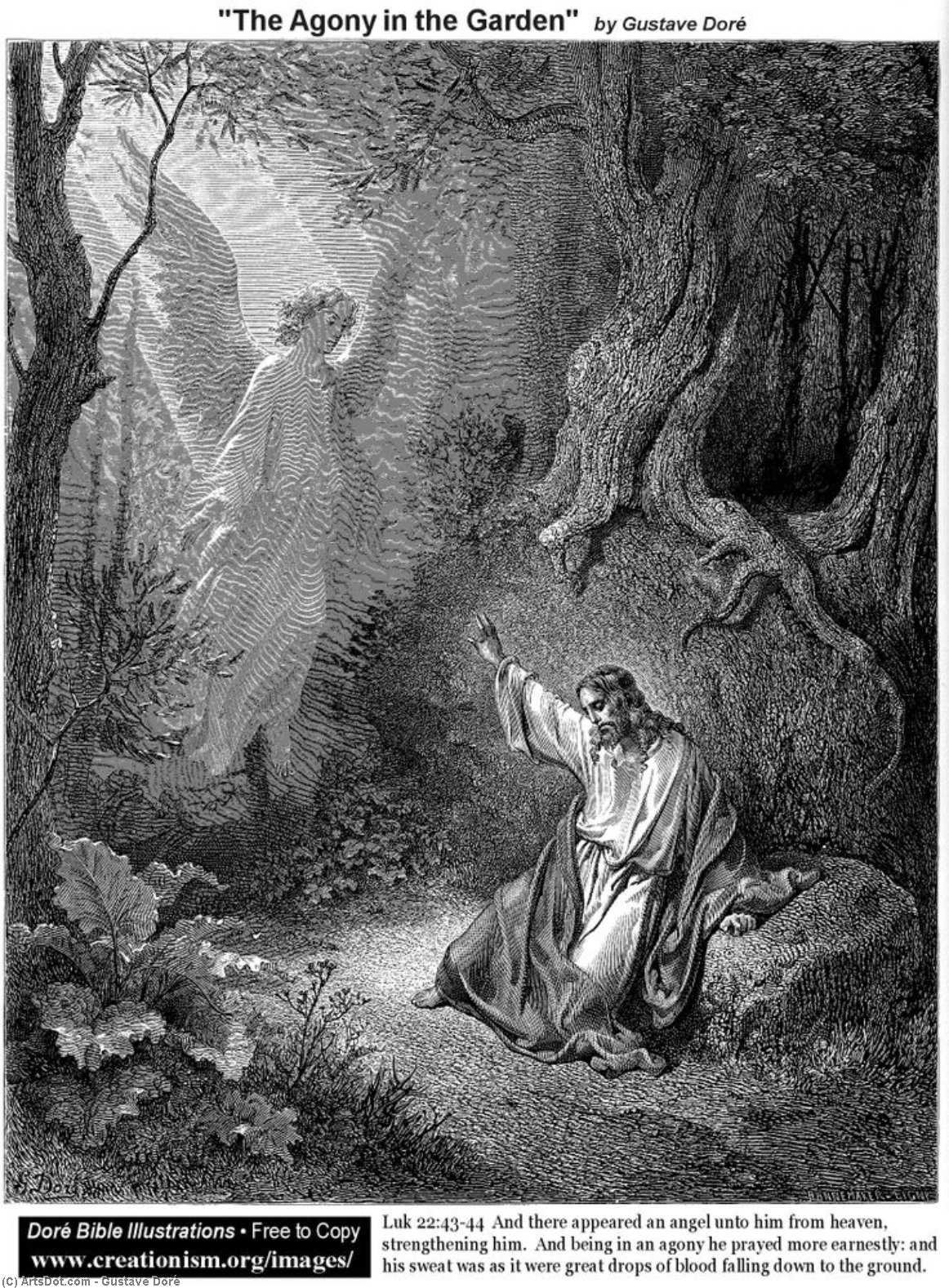
Уметност у стилу романтизма Гстава Доре, "Агонија у Јарду", приказује Исуса Христа молитвољубивог у мрачном шумадињу и анђела који га посетују. Дивљи детаљи и драматична композиција захваћеног изражаја.
The Agony In The Garden by Gustave Dore – A Descent Into Darkness
Gustave Doré’s “The Agony in the Garden,” etched with meticulous detail onto copper plate and painstakingly transferred to paper, stands as a monumental achievement of Romantic illustration. More than just a depiction of biblical scripture—the Gospels recount Jesus's agonizing prayer before his crucifixion—it embodies the very spirit of the era, capturing profound psychological torment alongside breathtaking artistic virtuosity. Published in 1872-1873 as part of “The Holy Bible,” Doré’s engraving cemented his reputation as a master storyteller and solidified his place amongst the titans of Victorian art.
- Historical Context: The late Romantic period witnessed an obsession with emotion, imagination, and the sublime—concepts powerfully reflected in Doré's oeuvre. Artists like Wordsworth and Coleridge championed subjective experience, mirroring the anxieties and spiritual uncertainties prevalent during a time of rapid industrialization and social upheaval. Doré’s work responded directly to this cultural climate, confronting viewers with uncomfortable truths about human suffering and divine compassion.
- Style & Technique: Doré's signature etching technique—known for its ability to render textures and tonal variations with unparalleled accuracy—is evident throughout “The Agony in the Garden.” The artist employed hatching and cross-hatching extensively, layering lines to build up depth and creating a palpable sense of gloom. Fine, closely spaced lines delineate the dense foliage and shadowy recesses of the garden, while bolder lines define Jesus’s form and the angel's presence—a masterful demonstration of artistic control.
- Composition & Symbolism: The central figures – Jesus and the angel – dominate the canvas, positioned with deliberate precision to convey a narrative of profound significance. Jesus kneels in prayer, his arms outstretched in supplication, embodying humility and vulnerability. Simultaneously, the angel appears on the left side, partially obscured by foliage, symbolizing divine intervention and offering solace amidst despair. The dark, wooded setting serves as a visual metaphor for isolation and impending doom—a deliberate choice designed to heighten the emotional impact of the scene.
- Color Palette & Lighting: Strikingly devoid of color, “The Agony in the Garden” relies entirely on grayscale tones to amplify its dramatic effect. Doré skillfully manipulates light and shadow, illuminating Jesus from the right side while casting deep shadows across the landscape—a technique that underscores the psychological tension inherent in the narrative.
- Emotional Impact: Viewing “The Agony In The Garden” evokes a visceral response – a feeling of unease mingled with empathy. Doré’s masterful rendering of human emotion captures the essence of spiritual anguish, prompting contemplation on themes of sacrifice and redemption. It remains a testament to the enduring power of art to confront viewers with uncomfortable truths and illuminate the complexities of the human condition.
Further Exploration: Vincent Willem van Gogh’s “Prisoners’ Round” – Echoes of Doré's Vision
Vincent Willem van Gogh’s “Prisoners’ Round,” painted in 1890 during his confinement at Saint-Paul Asylum, demonstrates a striking kinship with Doré’s artistic sensibilities. Inspired by an engraving depicting the prison yard of Newgate Prison—a poignant commentary on human suffering and institutional injustice—Van Gogh adopted a similar stylistic approach: meticulous detail combined with expressive tonal modulation to convey profound psychological depth. Like Doré's masterpiece, “Prisoners’ Round” seeks to capture not merely visual representation but also the emotional resonance of its subject matter.