The Dramatic Echoes of "Death of Eleazer" by Paul Gustave Doré
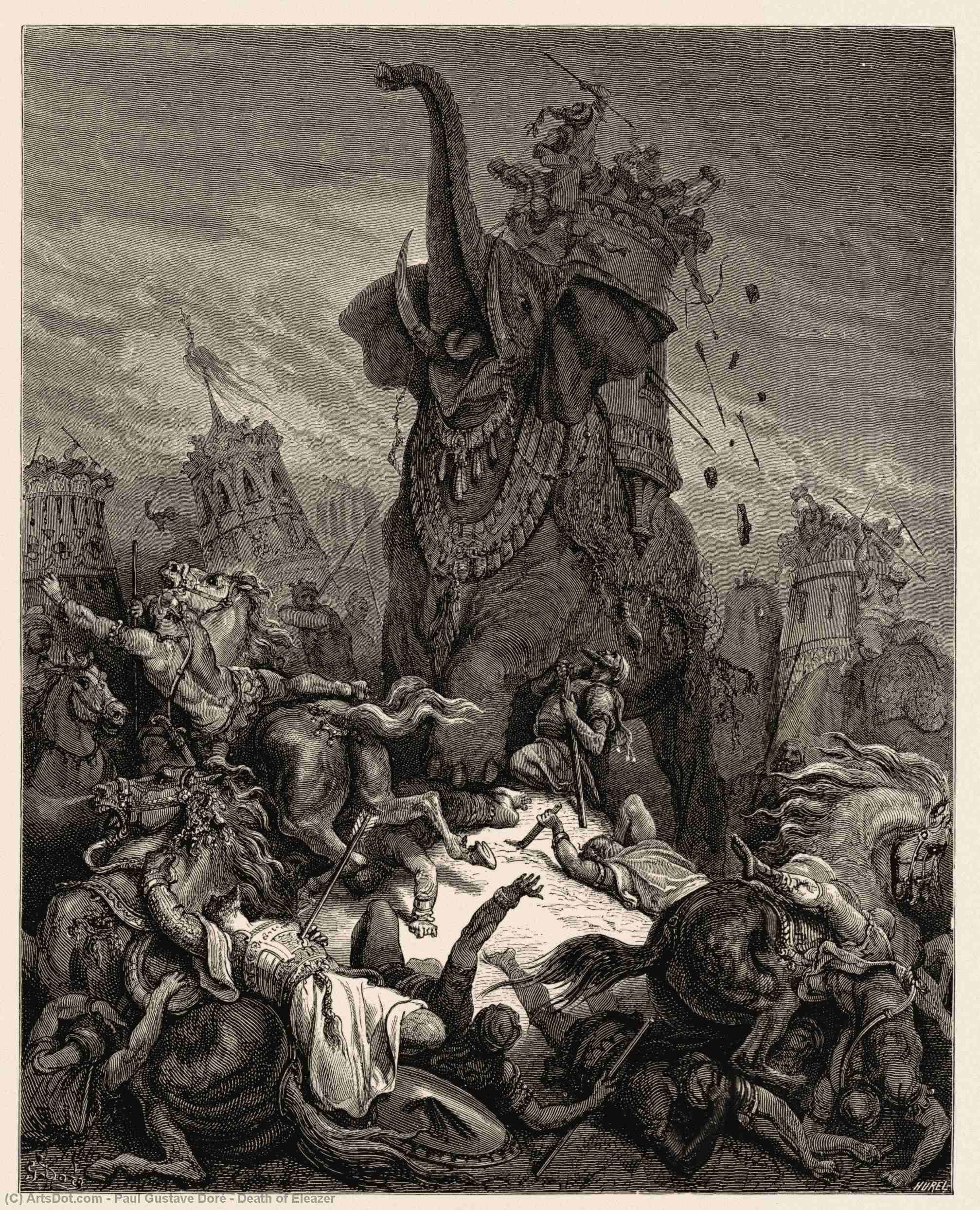
Paul Gustave Doré’s “Death of Eleazer” is not merely an engraving; it's a visceral plunge into the heart of Romantic drama, a testament to the artist’s unparalleled ability to translate narrative intensity onto paper. Created in 1866, this work immediately commands attention with its stark black and white palette, a signature technique employed by Doré that amplifies the scene’s chaotic energy and emotional weight. The image depicts a brutal confrontation – an elephant, felled upon the ground, surrounded by a swirling vortex of humanity engaged in violent conflict. It's a tableau of raw emotion, meticulously rendered with Doré’s characteristic mastery of wood engraving, showcasing his ability to create depth, texture, and a palpable sense of movement within the confines of this medium.
- Subject Matter: The scene is drawn from Dante Alighieri's *Inferno*, specifically Canto 9, line 46 – “Mark thou each dire Erinnys.” This biblical allusion immediately elevates the work beyond a simple depiction of violence; it speaks to themes of sin, punishment, and divine retribution.
- Technique: Doré’s wood engraving process involved meticulously carving lines into a block of wood, which was then inked and pressed onto paper. This technique produced incredibly detailed images with a remarkable sense of texture – the rough bark of the elephant, the polished armor of the combatants, the frantic movement of horses.
- Composition: The composition is deliberately unbalanced, contributing to the overall feeling of chaos and instability. The viewer’s eye is drawn to the central figure of the fallen elephant, while surrounding figures are caught in various states of aggression and despair.
A Masterclass in Romanticism
Doré was a pivotal figure in 19th-century art, deeply rooted in the Romantic movement’s emphasis on emotion, imagination, and the sublime. “Death of Eleazer” embodies these principles perfectly. The scene is not presented with detached observation; instead, it's saturated with feeling – the horror of death, the fury of battle, the despair of those caught within its grasp. Doré’s use of dramatic lighting, though limited to black and white, effectively creates a sense of depth and volume, further intensifying the emotional impact. The sheer scale of the engraving, often produced in large formats, would have been particularly impactful when displayed in grand public spaces – a common practice for Doré's works at the time.
Historical Context: Created during a period of rapid industrialization and social upheaval, “Death of Eleazer” reflects anxieties about power, morality, and the consequences of human action. The engraving’s dramatic intensity resonated with audiences grappling with these complex issues, solidifying Doré's reputation as a master storyteller.
Symbolism and Emotional Resonance
Beyond its narrative content, “Death of Eleazer” is rich in symbolic meaning. The fallen elephant can be interpreted as representing both brute force and the fragility of life. The surrounding figures, engaged in violent conflict, symbolize humanity’s capacity for destruction and self-deception. The act of observation – represented by the figure on the right – suggests a detached contemplation of suffering, perhaps reflecting a broader societal critique of moral indifference. The overall effect is profoundly unsettling, forcing the viewer to confront uncomfortable truths about human nature.
Collecting a Masterpiece: A Reproduction Opportunity
ArtsDot.com offers meticulously crafted hand-painted reproductions of “Death of Eleazer,” allowing you to bring this iconic work into your home or office. Our skilled artisans replicate Doré’s masterful technique, capturing the engraving's dramatic intensity and emotional depth with exceptional fidelity. Whether you are an art collector, interior designer, or simply someone who appreciates powerful imagery, a ArtsDot.com reproduction of “Death of Eleazer” is a timeless investment that will captivate and inspire for generations to come.