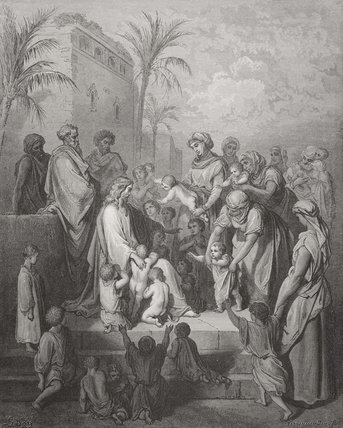
Jesus Blessing The Children – A Vision of Victorian Faith
Paul Gustave Doré’s “Jesus Blessing The Children” isn't merely an engraving; it’s a visceral outpouring of faith and emotion, a cornerstone of Romantic illustration that continues to resonate with viewers over 150 years later. This iconic image, derived from Matthew 18:3-5 – the instruction on how to treat those in need – captures a moment of profound tenderness and spiritual significance, rendered with Doré’s unparalleled ability to translate biblical narratives into powerfully emotive visual form.
Technical Mastery & The Language of Line
Doré's genius lay not just in his subject matter but in his extraordinary technical skill. Executed as a burin engraving on metal – a painstaking process demanding immense patience and precision – the image is built entirely from meticulously crafted lines. Thick lines define the solidity of the temple architecture, while delicate, almost hesitant lines capture the vulnerability of the children and the gentle expression of Jesus. This masterful manipulation of line weight and density creates an astonishing sense of depth and texture, mimicking the feel of rough-hewn stone, the folds of Joseph’s robe, and even the soft skin of the young faces. The monochromatic palette – a rich, deep grey – amplifies this effect, stripping away any distractions and forcing the viewer to confront the raw emotion at the heart of the scene.
Symbolism Woven into the Narrative
Beyond its immediate depiction of a biblical moment, “Jesus Blessing The Children” is layered with potent symbolism. The tightly packed figures represent not just the disciples but humanity itself – a universal call to compassion and inclusivity. Joseph and Mary, presented as central figures, embody unwavering faith and obedience, while Simeon, depicted with his aged face and outstretched hand, represents wisdom, anticipation of Christ’s arrival, and perhaps even a poignant reflection on mortality. The children themselves are powerfully symbolic: innocent, vulnerable, and utterly dependent – a stark reminder of the need for protection and guidance, mirroring Jesus's role as savior. The bustling temple setting underscores the importance of religious devotion within the community, highlighting the scene’s significance within the broader context of early Christian life.
Romantic Drama & Enduring Legacy
Doré’s work exemplifies the Romantic movement’s emphasis on emotion, subjective experience, and the sublime. The dramatic lighting – originating from an unseen source above and to the left – casts deep shadows that heighten the sense of drama and mystery, drawing the viewer into the scene's emotional core. The composition itself is deliberately chaotic, reflecting the potential complexity of faith and the human struggle for understanding. This engraving’s enduring power lies in its ability to tap into fundamental human emotions: compassion, reverence, and a yearning for connection – qualities that transcend time and culture. It remains a testament to Doré's extraordinary talent and his profound understanding of the human condition, solidifying its place as one of the most beloved and influential images in Western art history.