Уживајте у дивним детаљима Пешчаног Раста од Густава Доре – репродукције класичне романтичке слике која преноси дух и величина мира и природе. Откријте више на ArtsDot!
Gustave Doré (1832-1883) – francuski ilustrator i slikar poznat po dramatičnim drvorezima za 'Inferno' Dantea, Bibliju i Cervantesa. Njegov romantični stil oblikovao je vizuelnu kulturu i inspirisao generacije umetnika.
The Mountain's Foot: A Dramatic Encounter with Transcendence
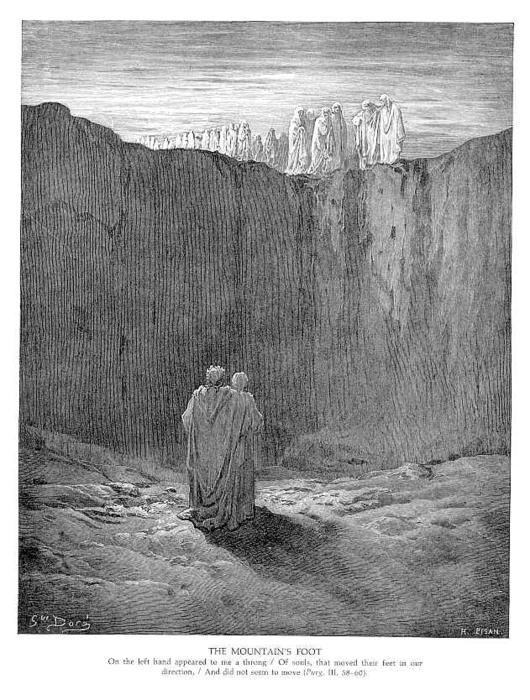
Paul Gustave Doré’s “The Mountain’s Foot” stands as a monumental testament to Romanticism’s obsession with grandeur and spiritual aspiration, rendered in exquisitely detailed black-and-white engraving. Created in 1867, this artwork captures a pivotal moment from Dante Alighieri's *Inferno*, depicting Virgil and Dante traversing the desolate landscape of Hell before ascending towards Mount Purgatory – a symbolic journey toward redemption and divine grace. Doré’s masterful execution elevates the narrative beyond mere illustration; it becomes an immersive experience that compels contemplation on humanity’s relationship with faith and mortality.
Composition and Perspective: A Vertical Dominance
The composition immediately establishes a powerful vertical axis, dominated by the imposing cliff face which occupies nearly half of the canvas. This deliberate choice underscores the immensity of Hell's torment while simultaneously directing the viewer’s gaze upwards towards the ethereal figures perched atop the summit – representing angels and divine messengers guiding Dante and Virgil toward salvation. Linear perspective skillfully creates depth, subtly diminishing the size of the human characters as they ascend, reinforcing the psychological drama unfolding before our eyes. Atmospheric perspective adds to this sense of grandeur, blurring distant elements and conveying the desolate beauty of the mountainous terrain.
Technique: The Art of Burin – Doré’s Signature Style
Doré's technique—primarily burin engraving—is characterized by its painstaking precision and remarkable tonal range achieved through hatching and cross-hatching. Each line is meticulously etched into a steel plate, resulting in an astonishing level of detail that captures the textures of rock formations with breathtaking realism. The artist’s masterful use of hatching creates areas of deep shadow, emphasizing the dramatic lighting conditions and enhancing the overall sense of three-dimensionality. Variations in line weight contribute to visual interest and guide the viewer's eye across the composition, creating a captivating interplay between light and dark.
Symbolism: Hellscape Ascending Towards Heaven
“The Mountain’s Foot” is laden with symbolic significance reflecting Dante’s theological framework. The mountain itself embodies purgatorial purification—a gradual ascent from earthly suffering toward spiritual enlightenment. Virgil represents reason and guidance, assisting Dante in overcoming obstacles and confronting his fears as he progresses through the underworld. The angelic figures symbolize divine grace and compassion, offering solace and assurance to those striving for moral betterment. Doré’s depiction powerfully communicates the transformative potential of faith and underscores the enduring quest for transcendence—a theme central to Romantic art and literature alike.
Emotional Impact: Awe and Vulnerability
The artwork evokes a profound sense of awe mingled with vulnerability. The sheer scale of the cliff face dwarfs the human figures, reminding us of our insignificance in the face of cosmic forces. Yet, Dante’s unwavering gaze upward conveys determination and hope—a testament to the human spirit's capacity for resilience and spiritual yearning. Doré’s emotive rendering captures not only the visual splendor of Hell but also the psychological complexities inherent in confronting existential questions about morality and salvation. It remains a timeless masterpiece that continues to inspire contemplation on the nature of faith, beauty, and the human condition.