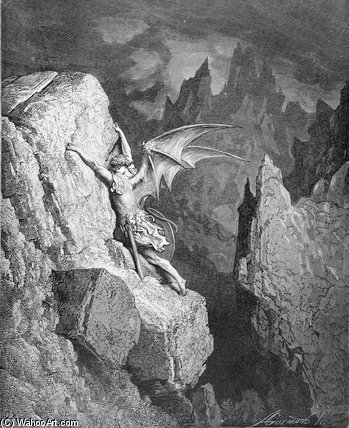
A Descent Into Darkness: Analyzing Gustave Doré’s Satan's Flight Through Chaos
Paul Gustave Doré’s “Satan’s Flight Through Chaos” isn’t merely an illustration; it’s a visceral embodiment of Romantic anxieties about faith, rebellion, and the terrifying consequences of moral transgression. Executed in 1867 for Milton’s *Paradise Lost*, this monumental engraving captures Lucifer’s defiant expulsion from Heaven—a pivotal moment in biblical narrative—with breathtaking dramatic intensity. Doré's masterful technique elevates the scene beyond a simple retelling of scripture into a profound meditation on human fallibility and divine wrath.
- Composition & Technique: Doré employed meticulous etching, utilizing hardened zinc plates painstakingly incised with thousands of lines to achieve astonishing tonal gradation. This painstaking process resulted in an image brimming with texture—jagged mountain peaks rendered with hatching and crosshatching mimic the turbulent atmosphere surrounding Satan’s descent. The diagonal thrust of Lucifer's flight dominates the frame, pulling the viewer’s gaze upwards towards a distant, ethereal glow, subtly hinting at God’s omnipresent judgment.
- Symbolism & Narrative Context: The engraving directly confronts Milton’s depiction of Satan’s rebellion against God—a cornerstone of Western literature. Doré brilliantly conveys Lucifer's fury and determination as he battles the forces of Heaven, symbolizing humanity’s struggle against temptation and spiritual darkness. The desolate landscape serves as a visual metaphor for Hell itself – a realm devoid of comfort or redemption.
- Romantic Ideals & Emotional Resonance: Doré’s work exemplifies the Romantic preoccupation with sublime terror—the awe-inspiring experience of confronting overwhelming power, whether natural or divine. The artist skillfully utilizes chiaroscuro—the dramatic interplay of light and shadow—to heighten emotional impact, emphasizing Satan's vulnerability amidst his monstrous grandeur. It’s a scene designed to provoke contemplation on themes of morality, faith, and the inescapable consequences of disobedience.
- Historical Significance: Published during a period marked by intellectual ferment and religious revival, “Satan’s Flight Through Chaos” reflects the anxieties of Victorian society grappling with questions of morality and spirituality. Doré's engraving solidified Milton’s epic poem as a cultural touchstone, demonstrating the enduring power of visual storytelling to convey complex theological ideas.
- Interior Design Considerations: Reproductions of Doré’s engravings possess an undeniable gravitas that lends itself beautifully to grand interiors—particularly libraries and halls adorned with dark hues. The textural richness of the print captures the spirit of Romanticism, injecting a sense of drama and contemplation into any space.
This engraving stands as a testament to Doré’s unparalleled ability to translate literary narrative into visual grandeur. Its stark monochrome palette—a deliberate choice reflecting the austere beauty of Romantic aesthetics—amplifies the emotional impact of the scene.
The artist's dedication to detail is evident in every line, meticulously etched to capture the rugged contours of the mountains and the tormented expression of Lucifer himself. Consider incorporating a Doré print into a sophisticated living room – its commanding presence will undoubtedly inspire conversation and evoke memories of artistic heritage.