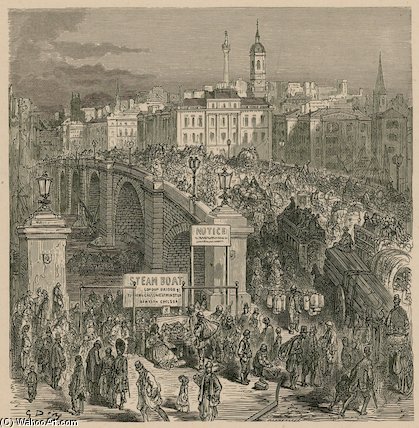
A Window Into Victorian London: Doré’s “Prisoners’ Round”
Gustave Doré's "Prisoners' Round," painted in 1890, isn’t merely a depiction of an exercise yard; it’s a profound meditation on confinement, resilience, and the human spirit grappling with despair. Created during Vincent van Gogh’s stay at Saint-Paul Asylum in Saint-Rémy, France—a period marked by intense psychological struggle—the painting transcends its immediate subject matter to become a timeless emblem of suffering and hope.
- The Inspiration: Doré's engraving for Oscar Wilde’s *The Ballad of Reading Gaol* served as the catalyst for this ambitious project. Wilde’s poem powerfully captured the experience of incarceration, highlighting the monotony and psychological torment endured by prisoners. Van Gogh sought to translate Wilde’s poetic vision into visual form, mirroring its themes of isolation and yearning for freedom.
- Stylistic Echoes: Doré's engraving—characterized by stark contrasts of light and shadow—influenced Van Gogh’s artistic approach. The painter employed a similar chiaroscuro technique, emphasizing dramatic lighting to heighten the emotional impact of the scene. This stylistic choice underscores the painting’s preoccupation with psychological states and its ability to convey profound feelings of melancholy and introspection.
- Composition & Technique: The circular arrangement of prisoners—a deliberate compositional device—emphasizes their cyclical movement and reinforces the sense of entrapment. Van Gogh meticulously rendered each figure with painstaking detail, capturing subtle nuances of expression that communicate inner turmoil. His brushstrokes are loose and expressive, conveying a palpable energy despite the oppressive atmosphere of the prison yard.
- Symbolism: The bleak palette—dominated by blues and greens—reflects the pervasive gloom of the asylum environment and symbolizes sadness and hopelessness. However, amidst this darkness, two butterflies flutter upwards, representing transformation and aspiration. These delicate creatures serve as a poignant counterpoint to the grim surroundings, suggesting that even in the darkest moments, beauty and optimism persist.
- Emotional Resonance: “Prisoners’ Round” resonates deeply with viewers because it confronts universal themes of suffering and resilience. It compels us to contemplate the human condition—the inevitability of hardship—and the capacity for inner strength to overcome adversity. The painting's enduring power lies in its ability to evoke empathy and provoke contemplation on the nature of freedom, confinement, and the pursuit of meaning.
This striking artwork exemplifies Doré’s masterful ability to distill complex emotions into visual form, mirroring Van Gogh’s own turbulent inner life. Its legacy continues to inspire artists and collectors alike, cementing its place as a cornerstone of Symbolist painting and a testament to the transformative power of art.