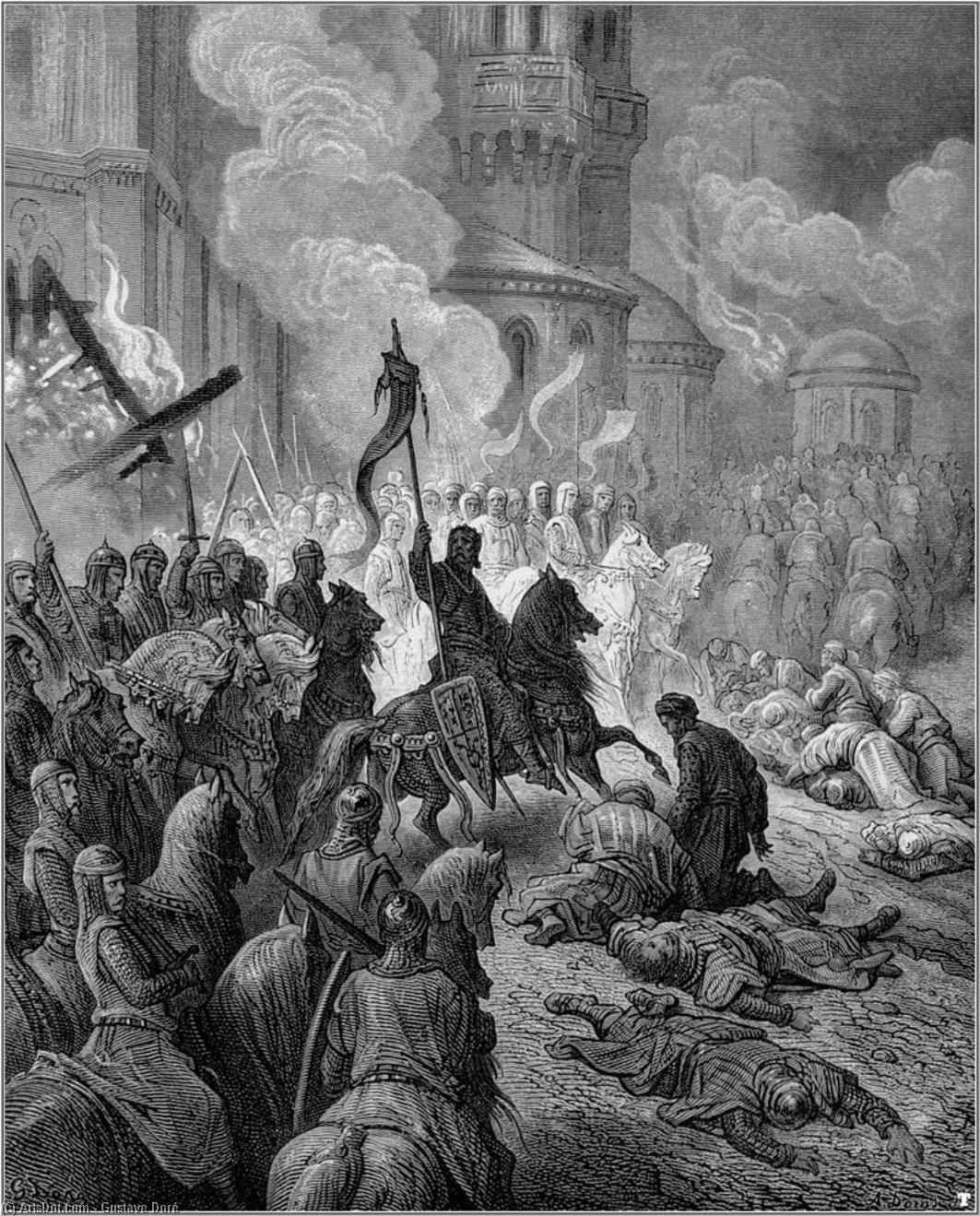
Entry of the Crusaders in Constantinople in 1204: A Dramatic Tableau of Triumph and Ruin
Paul Gustave Doré’s lithograph, “Entry of the Crusaders in Constantinople in 1204,” stands as a monumental achievement of Romantic illustration—a visual chronicle of one of history's most turbulent events. Published in 1877, this artwork transcends mere depiction; it embodies the spirit of its time and delivers a visceral experience to any viewer fortunate enough to encounter its powerful imagery. The scene captures the siege and eventual conquest of Constantinople by crusading armies led by Richard I (“The Lionheart”), Philip II Augustus, and Frederick Barbarossa—a pivotal moment reshaping European geopolitics and marking the end of Byzantine rule.
- Historical Context: The Fourth Crusade began with noble intentions – liberating Jerusalem from Muslim control – but swiftly devolved into avarice and ambition as crusaders turned their gaze toward Constantinople, a city brimming with wealth and prestige. Doré’s depiction powerfully conveys the atmosphere of anticipation and dread preceding the assault, reflecting the anxieties surrounding this audacious undertaking.
- Style & Technique: Doré's mastery lies in his ability to translate narrative into visual form using the lithographic process. Unlike painting, which relies on pigment and brushstrokes, lithography utilizes a stone or metal plate etched with an image, allowing for astonishing tonal precision and detail. The artist’s meticulous hatching and cross-hatching technique dominates the composition, creating textures that mimic the rough surfaces of stone buildings and armor—a testament to Doré's dedication to realism.
Composition & Visual Narrative
The artwork’s dynamic arrangement immediately grabs attention. A central figure – likely Richard I – rides a horse towards the viewer, flanked by a throng of Crusaders eager for battle. Converging lines guide the eye upwards toward this commanding presence, emphasizing his leadership and ambition. The artist skillfully employs perspective to convey depth, layering figures and buildings to create an immersive experience that transports the viewer into the heart of the siege. The fallen warriors scattered across the foreground serve as poignant reminders of the cost of conquest—a deliberate choice designed to heighten the emotional impact.
Symbolism & Emotional Resonance
Beyond its historical accuracy, “Entry of the Crusaders in Constantinople” resonates with profound symbolic meaning. The triumphant posture of Richard I embodies courage and determination, yet shadowed by the grim reality of violence and loss. Doré’s masterful use of light and dark—particularly dramatic chiaroscuro—amplifies these emotions, creating a palpable sense of tension and impending doom. The depiction of Constantinople itself symbolizes Byzantine grandeur and resilience, juxtaposed against the encroaching forces of Western ambition.
Lithographic Detail & Artistic Achievement
Doré’s lithograph technique is remarkable for its ability to reproduce intricate textures with astonishing fidelity. Observe how the artist captures the roughness of stone walls and armor—a feat impossible to achieve with traditional painting methods. The tonal range achieved through hatching and cross-hatching contributes significantly to the artwork's expressive power, conveying not only visual information but also psychological nuance. This image exemplifies Doré’s unwavering commitment to artistic excellence and secures his place as one of Romanticism’s most influential illustrators—a masterpiece that continues to inspire awe and contemplation centuries later.