The Grasshopper and the Ant – A Testament to Aesop’s Wisdom Rendered in Dramatic Line
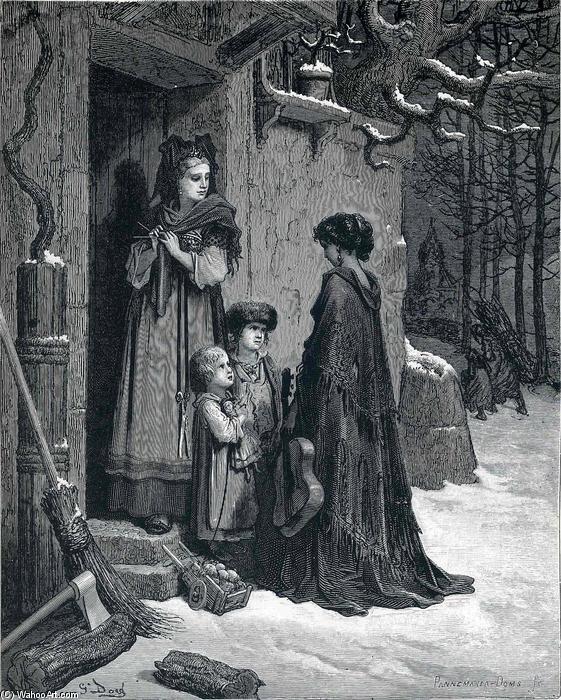
Gustave Doré's “The Grasshopper and the Ant” transcends mere illustration; it embodies a profound moral lesson distilled into breathtaking visual artistry. Created during the Romantic era (1832-1883), this engraving exemplifies Doré’s mastery of tonal gradation achieved through meticulous line work—a technique that elevates the fable's narrative to an unforgettable experience.
- Subject Matter: The artwork depicts a timeless parable about prudence and diligence versus carefree indulgence. A woman, accompanied by two children, stands before a humble wooden structure – representing winter’s hardships – while a broom and logs underscore the preparation for survival.
- Style & Historical Context: Doré's Romantic style prioritizes emotional intensity and dramatic visual storytelling. It reflects the broader artistic movement of his time, reacting against Neoclassical formalism and embracing expressive forms inspired by folklore and mythology. Aesop’s fable itself served as a cornerstone of moral philosophy during the Victorian period, influencing societal values.
- Technique: Doré employed the etching process—a laborious undertaking involving scratching lines into a copper plate—followed by inking and pressing onto paper. This method produced incredibly detailed images with subtle tonal variations achieved through hatching and cross-hatching, capturing the textures of wood, snow, and fabric with remarkable accuracy.
- Composition & Perspective: The central perspective draws the viewer’s gaze towards the figures within the doorway, creating a sense of intimacy and emphasizing the narrative's core message. Aerial perspective subtly softens details in the background forest, reinforcing the scene’s wintry atmosphere and conveying depth.
- Symbolism & Emotional Impact: The stark contrast between the industrious ant and the frivolous grasshopper serves as a powerful symbol for moral virtue versus vice. Doré's masterful use of light and shadow evokes feelings of solemn contemplation and underscores the fable’s enduring relevance—a reminder that foresight and hard work ultimately triumph over fleeting pleasure.
A reproduction of “The Grasshopper and The Ant” by Gustave Dore would bring a touch of Romantic grandeur into any interior space, capturing not only its visual beauty but also its timeless moral message. Explore high-quality reproductions at ArtsDot!