Otkrijte Pedera Balkea (1804-1887), norveškog romantičnog slikara poznatog po dramatičnim pejzažima i društvenom aktivizmu. Istražite njegove uzvišene prikaze prirode Norveške i jedinstvenu umetničku viziju.
Louvre
(Paris, France)
Otkrijte bezvremenske remek-dela Louvra! Putujte kroz istoriju umetnosti od drevnog Egipta do renesansnih ikona – Mona Liza, Venere Miloska i još mnogo toga. Pariško kulturno blago čeka na vas!
A) Kraljevskom dvorcem isključivo za Luja XIV.
B
Prema datom tekstu, šta je bila prvobitna svrha palate Louvre?
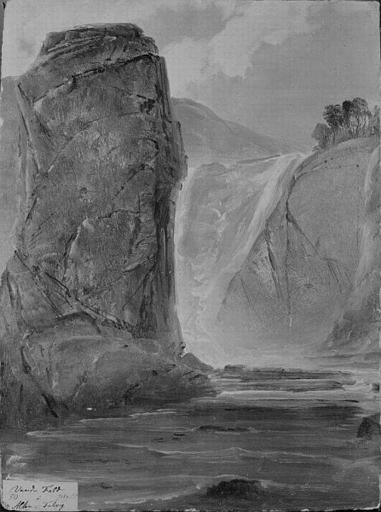
A Symphony of Stone and Mist: Exploring Peder Balke’s “La Cascade de Alten Talvig”
Peder Andersen Balke's "La Cascade de Alten Talvig," painted circa 1860, stands as a cornerstone of Norwegian Romantic landscape painting—a testament to the era’s fascination with untamed nature and its ability to evoke profound emotion. More than just a depiction of a waterfall, it embodies the spirit of a movement that sought solace and inspiration in the grandeur of the Norwegian wilderness, capturing a moment frozen in time with remarkable atmospheric precision. The artwork resides within the National Museum of Art, Architecture and Design in Oslo, Norway (NM 1255), where its serene beauty continues to captivate visitors.
- Composition & Perspective: The painting’s triangular arrangement draws the eye upwards towards the distant mountains—a deliberate strategy mirroring the Romantic impulse to ascend beyond earthly concerns. Atmospheric perspective skillfully diminishes detail in the background, simulating the hazy glow of twilight and reinforcing the sense of depth achieved through overlapping forms. This technique underscores Balke's mastery of capturing not merely what is seen but how it feels to experience a landscape bathed in diffused light.
- Style & Technique: Characteristic of Romanticism, “La Cascade de Alten Talvig” eschews meticulous realism for an impressionistic approach—characterized by loose brushstrokes and a focus on conveying mood rather than precise representation. The artist employs layering and blending techniques to create tonal variations that imbue the scene with texture and luminosity. Oil paints were utilized on cardboard, reflecting the prevalent artistic practices of the period.
- Material & Texture: The artwork’s surface is dominated by rough textures—replicating the jagged contours of the rocky cliffs—contrasting sharply with the smoother surfaces of flowing water. Balke meticulously applied brushstrokes to achieve these textural effects, conveying a palpable sense of physicality and immediacy. This tactile quality invites contemplation and enhances the viewer's connection to the depicted environment.
- Symbolism & Emotion: Beyond its visual splendor, “La Cascade de Alten Talvig” resonates with symbolic themes—namely, the sublime—representing the awe-inspiring power of nature and humanity’s insignificance within its vastness. The cascade itself symbolizes transformation and renewal, mirroring the Romantic preoccupation with cycles of life and death.
- Historical Context: Painted during Balke's formative years in Paris (circa 1849), “La Cascade de Alten Talvig” reflects the influence of luminism—a movement prioritizing tonal harmony and atmospheric effects—and aligns with Louis-Philippe Ier’s patronage of artists exploring the beauty of Norway. The painting was acquired by the National Gallery of Norway in 1855, cementing its place as a seminal work within Norwegian art history.
The artwork's enduring appeal lies not only in its aesthetic qualities but also in its ability to transport viewers back to a time when artists sought communion with nature—a quest for beauty and transcendence that continues to inspire artistic endeavors today.