Otkrijte Petrusa Krista, pionirskog flamanskog slikara poznatog po linearnoj perspektivi i pedantnoj tehnici ulja. Istražite njegova uticajna dela i nasleđe u Brudžu.
Истражите светски познати музеј у Канзас Сити! Откријте велику колекцију уметности, дивну архитектуру и бесплатни премаштенје у Канзас Сити.
Национална галерија Канзас Сити, Уметност Канзас Сити, Колекција азијске уметности, Зграда Блох, Каравђао, Моне, Савремена уметност, Скулптура Парк, Бесплатни премаштенје, Архитектура, Фине уметности, Американска уметност
Национална галерија Канзас Сити
СА
A Sanctuary of Light and Devotion
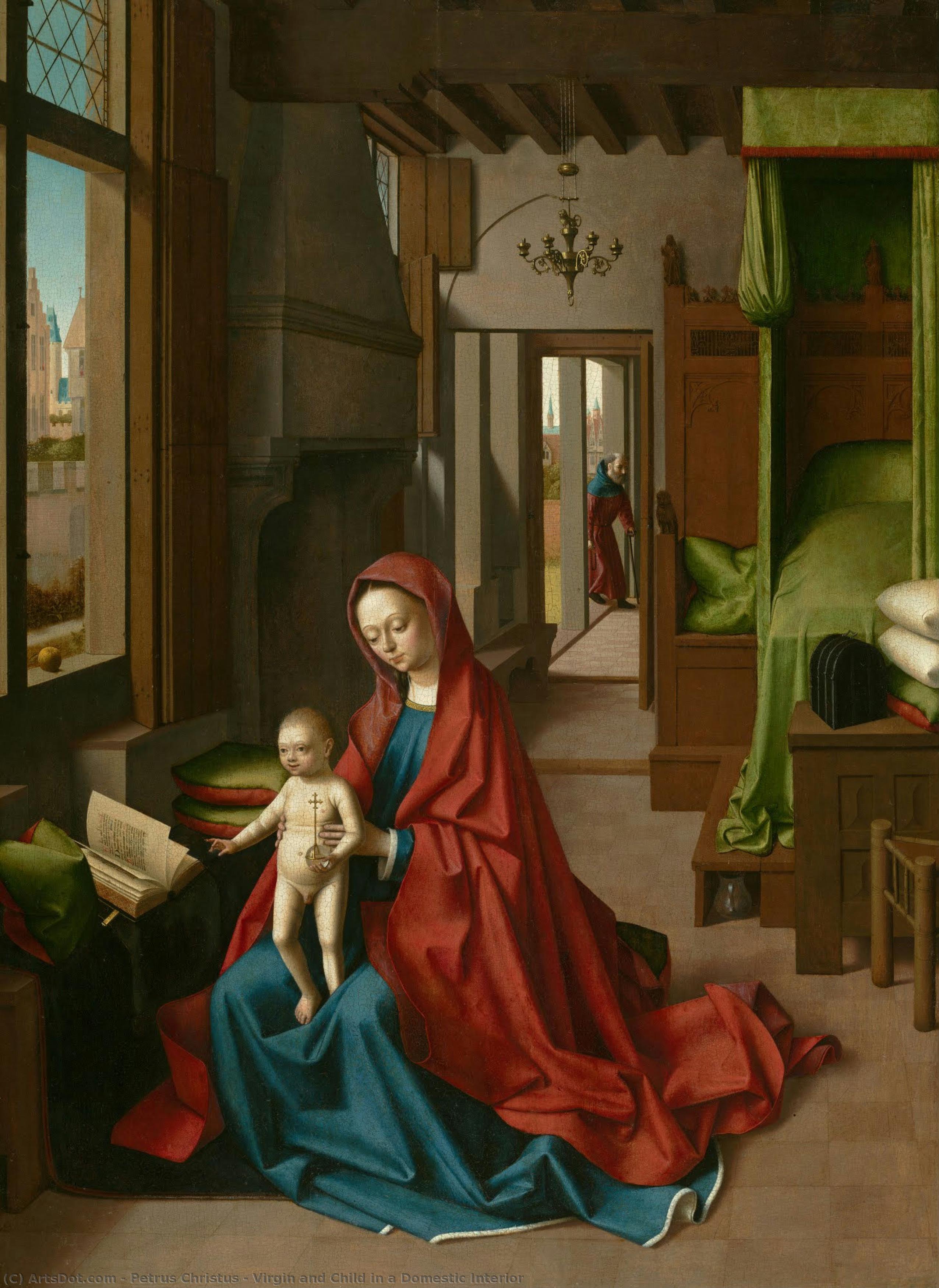
In the quiet corners of the Northern Renaissance, where the boundaries between the earthly and the divine often blurred, Petrus Christus captured a moment of profound stillness. His masterpiece, “Virgin and Child in a Domestic Interior,” is far more than a religious icon; it is an invitation into a private, sacred space. As one gazes upon the Virgin Mary cradling the infant Jesus, there is an immediate sense of being a silent witness to a tender, domestic ritual. The painting does not shout its divinity through grand, celestial spectacles; instead, it whispers through the soft glow of light filtering through a window and the meticulous rendering of a humble room. This is Early Netherlandish art at its most intimate, where the sanctity of the family unit is elevated to a state of quiet worship.
The composition is masterfully orchestrated to guide the viewer’s soul toward contemplation. Christus utilizes a shallow, architectural space—defined by elegant arches and structured moldings—to create a sense of three-dimensional reality that was revolutionary for its time. By positioning the central figures within a recognizable domestic setting, the artist bridges the gap between the viewer's world and the holy subjects. The light, streaming from the left, does not merely illuminate; it sculpts. It dances across the heavy textures of fabrics and the solid presence of wooden furniture, casting soft shadows that lend a palpable weight to the figures. For the collector or the designer, this interplay of chiaroscuro offers a sophisticated balance of light and shadow that can anchor any room with its serene, commanding presence.
The Mastery of Flemish Realism
To behold this work is to appreciate the technical zenith of the 15th-century Bruges school. Petrus Christus, a successor to the monumental legacy of Jan van Eyck, employed a technique of layering thin, translucent glazes of oil paint to achieve a luminous depth that seems to glow from within. Every surface is a testament to his observational genius: the tactile roughness of the wooden elements, the soft, heavy folds of Mary’s robes, and the delicate skin of the Christ child are all rendered with an almost microscopic precision. This meticulous attention to detail—a hallmark of the Flemish Renaissance—creates a hyper-realistic texture that invites the eye to linger on every nuance of the material world.
The color palette is a masterclass in understated elegance, dominated by muted earth tones such as ochre, deep browns, and mossy greens. These organic hues are punctuated by subtle accents of blue and red, providing just enough visual rhythm to keep the eye moving through the composition without breaking the overall atmosphere of tranquility. This restrained use of color ensures that the painting remains timeless, possessing a sophisticated neutrality that allows it to integrate seamlessly into luxurious, classical, or even contemporary interior designs. It is a piece that does not compete with its surroundings but rather harmonizes with them, providing a focal point of intellectual and aesthetic depth.
Symbolism and Emotional Resonance
Beyond the technical brilliance lies a profound symbolic narrative. The domestic setting serves as an allegory for the purity and sanctity of the home. In this era of burgeoning humanism, the depiction of holy figures within a recognizable, everyday interior reflected a shift toward finding the divine within the human experience. The architectural stability of the room—its geometric squares and arches—mirrors the spiritual stability offered by the Virgin’s maternal devotion. There is a palpable sense of peace emanating from the canvas, an emotional resonance that speaks to the universal themes of protection, love, and the quiet strength found in moments of solitude.
For those seeking to bring a piece of art history into their personal sanctuary, this reproduction offers more than mere decoration. It offers a window into a period of unparalleled artistic discovery. Owning such a work is an act of preserving a legacy of beauty and devotion. Whether placed in a sunlit study or a grand hallway, the “Virgin and Child in a Domestic Interior” serves as a constant reminder of the profound grace that can be found in the simplest, most quiet moments of life.