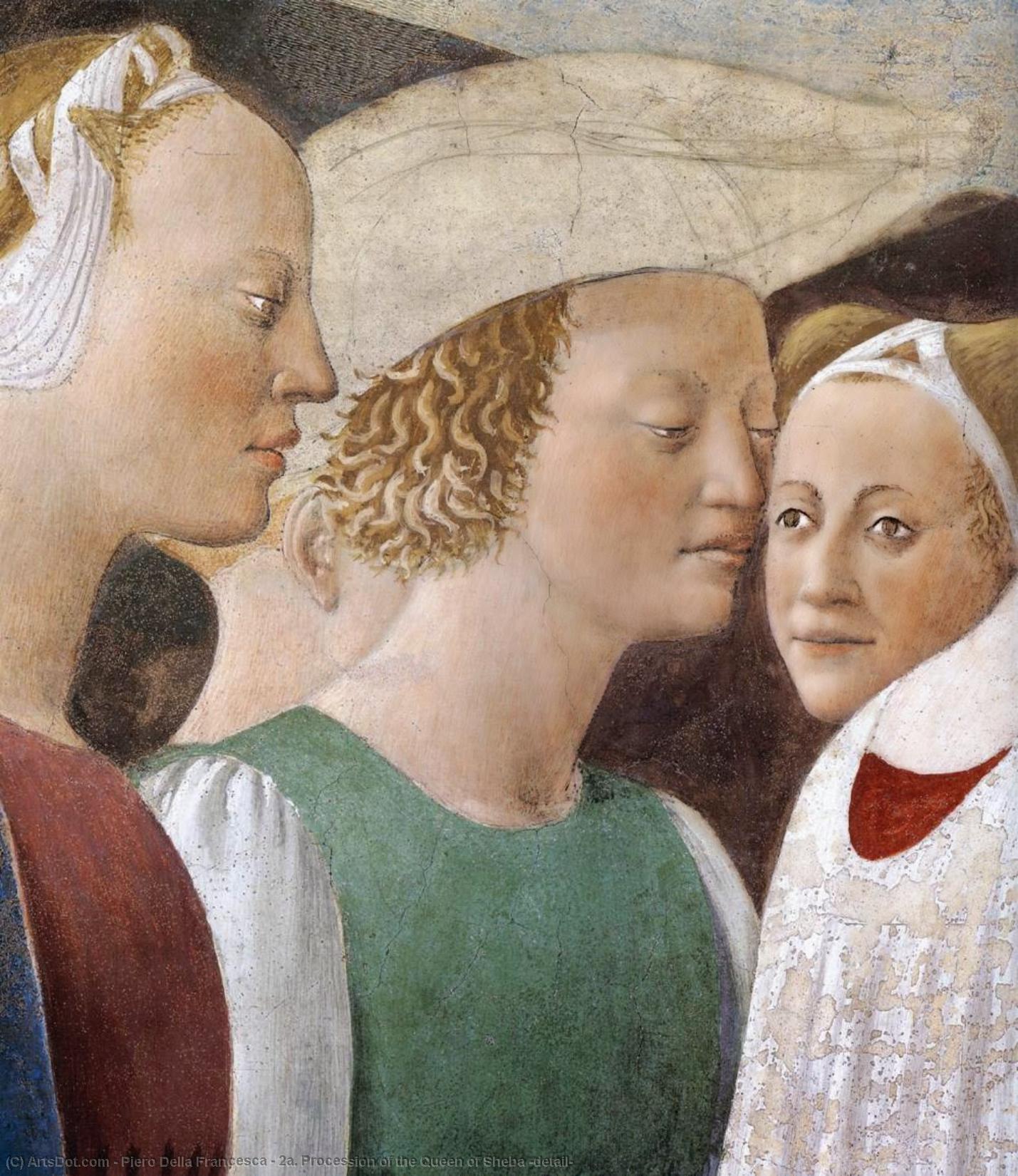
The Legend of the True Cross by Piero della Francesca
Piero della Francesca’s “The Legend of the True Cross” stands as a monumental achievement in Early Renaissance art, captivating viewers with its serene beauty and masterful execution. Painted between 1452 and 1466 for the Basilica di San Francesco in Arezzo, Tuscany, this fresco transcends mere depiction; it embodies a profound exploration of faith, geometry, and humanism—themes that continue to resonate centuries later.
Historical Context and Symbolism
The artwork recounts the biblical tale of Solomon’s encounter with Queen Sheba, who prophesied the crucifixion of Jesus Christ and the downfall of Jerusalem. Piero della Francesca skillfully weaves theological symbolism into his composition, reflecting the intellectual fervor of Florence during this period. The fresco's central scene portrays Solomon and Sheba discussing the significance of the Holy Cross—a symbol representing divine redemption—before a congregation of noble ladies.
Artistic Significance
What distinguishes “The Legend of the True Cross” is Piero’s revolutionary approach to perspective. Unlike preceding artists who relied on illusionistic techniques, he employs mathematical precision to create an unprecedented sense of spatial realism. The fresco's composition—characterized by balanced figures and architectural elements—demonstrates Piero’s mastery of visual storytelling. Each detail contributes to a harmonious whole that conveys both grandeur and contemplative solemnity.
Conservation and Accessibility
The Basilica di San Francesco meticulously preserves this masterpiece, offering guided tours and educational programs designed to illuminate its artistic complexities for visitors worldwide. Recognizing the importance of sharing Piero della Francesca’s legacy with a broader audience, ArtsDot.com presents exceptional reproductions of “The Legend of the True Cross,” crafted by skilled artisans who faithfully recreate the fresco's vibrant colors and textural nuances.
Conclusion
"The Legend of the True Cross" remains an enduring testament to Piero della Francesca’s artistic genius. Its harmonious blend of narrative, geometric precision, and psychological depth secures its place as one of the most influential artworks of the Renaissance—a timeless inspiration for artists and connoisseurs alike.